
Changing Your Child's Home Care Agency in Georgia: A Step-by-Step Path

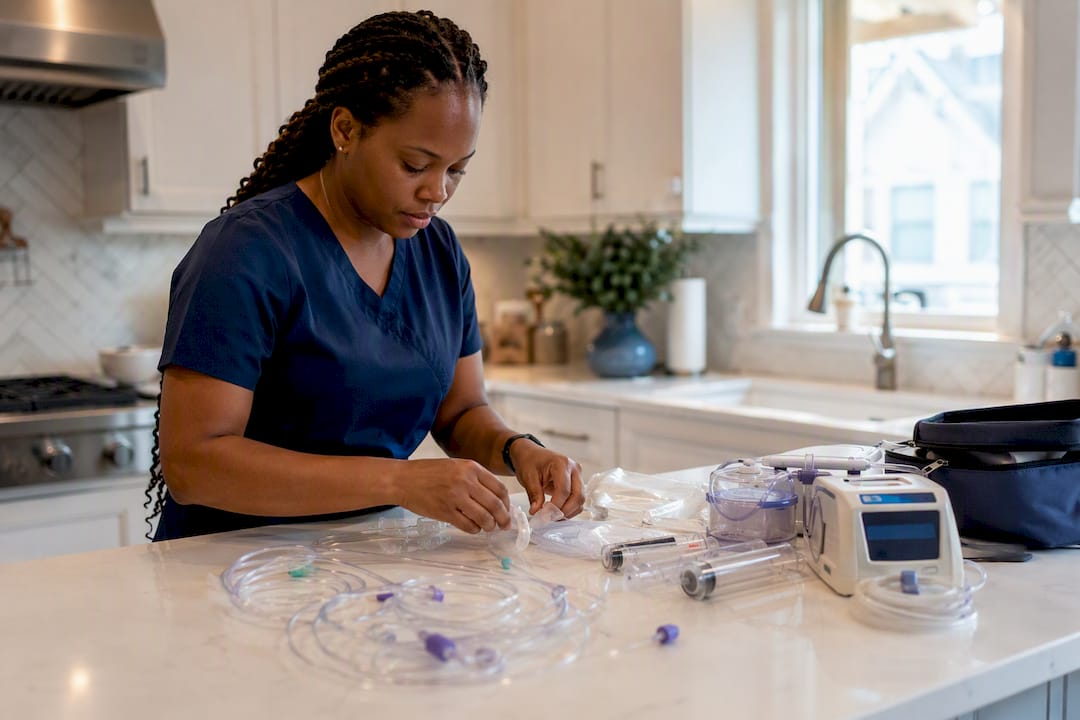
Yes. You can change your child’s home care agency under GAPP without losing Medicaid authorization or restarting eligibility from scratch. The child’s coverage stays intact; only the provider changes. Your first move is to line up a new agency and get a written start date before you tell your current one anything.
Secure the new agency first, confirm they accept GAPP and have capacity in your county
Keep current shifts running until the new agency confirms a start date in writing
Let the new agency file the transfer and prior authorization paperwork, not you
Statistic to know: the DCH home health application checklist shows agencies routinely handle service-area and branch-addition paperwork with the state, which is often the real reason a switch stalls, not your child’s eligibility.
Key Takeaways
Switching your child’s GAPP provider preserves Medicaid eligibility, requires the new agency to file the transfer paperwork, and works best when you secure a written start date before ending your current service.
Point | Details |
Eligibility stays intact | GAPP and Medicaid authorization belong to the child, not the agency, so switching providers doesn’t restart the clock. |
Secure the new agency first | Never end current care until the new agency confirms a written start date and shift schedule. |
New agency files paperwork | Prior authorization and transfer documents typically go through the receiving agency, not the parent. |
Ask for real metrics | Request shift fill rate and nurse retention numbers before committing to a new provider. |
Opulent’s matching process | Opulent Private Care uses its 3 Thumbs Up Rule and publishes staffing metrics to reduce mismatch during transfers. |
Table of Contents
Why Georgia Families Decide to Change Home Care Agency
Most parents don’t switch on a whim. A pattern usually builds over weeks or months until the gap between what was promised and what’s happening becomes impossible to ignore.
Staffing gaps: shifts go uncovered, or your child sees a rotating cast of unfamiliar nurses instead of one consistent caregiver
Clinical mismatch: the agency lacks deep experience with your child’s specific needs, whether that’s a tracheostomy, ventilator, feeding tube, or seizure management
Communication and billing breakdowns: missed callbacks, confusing invoices, or authorization paperwork that never seems to get filed on time
Safety concerns: a caregiver fit issue that never gets resolved despite repeated complaints
Any one of these is a legitimate reason to look elsewhere. You don’t need a dramatic incident to justify a change that home care Georgia families make every year.
How Do You Transfer to a New GAPP Provider?
The transfer process under Georgia’s Pediatric Program follows a fairly consistent sequence, and knowing who does what keeps you from doing work that isn’t yours to do.
Research and vet a new agency. Confirm they’re enrolled in GAPP, licensed for your county, and have real capacity, not just a name on a list.
Gather your documents. Have your child’s Medicaid ID, current prior authorization details, and the most recent care plan ready to hand over.
Let the new agency start intake. They typically submit the transfer or prior authorization through the state’s Medicaid systems, referencing GHP and mmis.georgia.gov where required.
Notify your current agency in writing. A short email or letter stating your intent to transfer, and a request that they forward medical records and nursing notes, creates a paper trail if anything gets disputed later.
Coordinate an overlap start date. Ask both agencies to confirm shifts in writing so there’s no ambiguity about who is covering which day.
Escalate if things stall. If paperwork sits for too long, contact the DFCS/GAPP prior authorization unit directly, or reach out to Georgia’s Department of Community Health for licensing questions.
Pro Tip: If an agency’s directory listing says “not accepting new patients,” call anyway. Many agencies still take stable transfer cases even when their general intake is paused, especially when a family is already GAPP approved and simply switching providers.
The new agency owns most of the procedural weight here. Your job is mainly to supply documents quickly and keep pressure on the timeline, not to become the go-between for two agencies’ internal paperwork.
What Paperwork and State Forms Are Involved?
Parents rarely touch state forms directly. Most of the administrative load sits with the agencies, but knowing what’s happening behind the scenes helps you ask better questions.
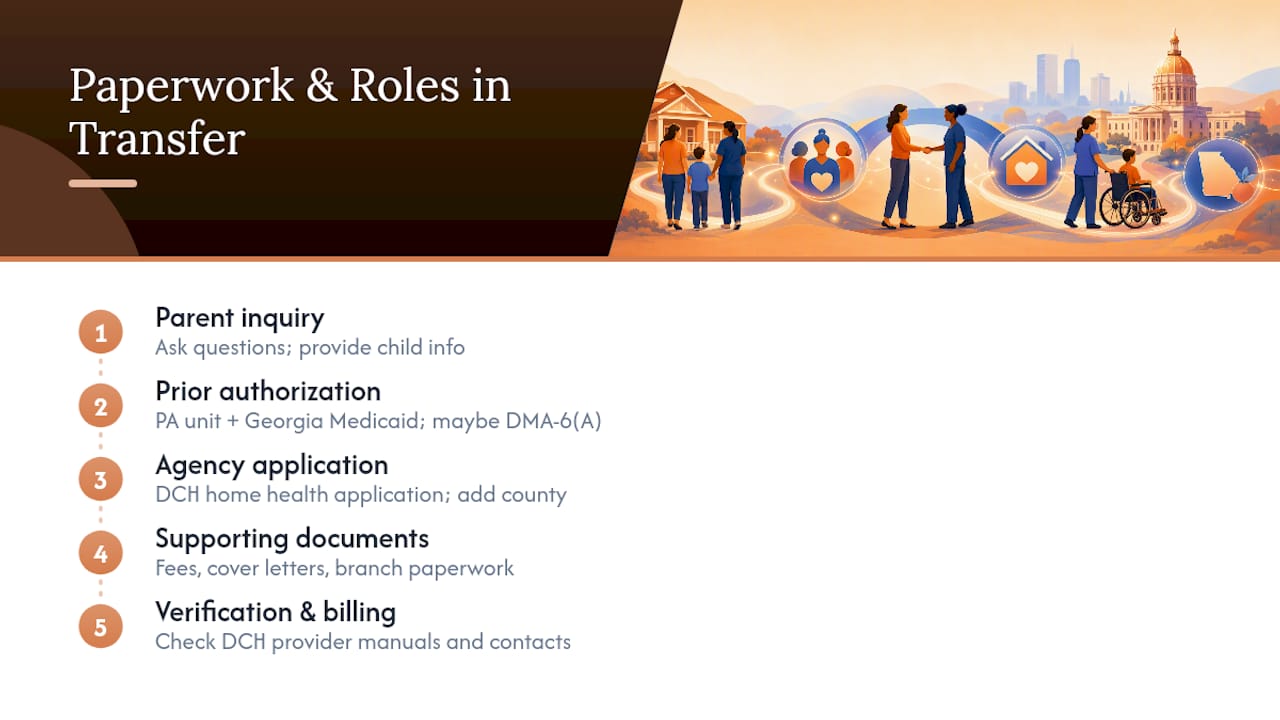
Prior authorization for GAPP services runs through the PA unit and Georgia’s Medicaid systems, sometimes involving a DMA-6(A) form when the case requires additional physician certification. On the agency side, if your new provider needs to add your county to its service area, they’ll work through the DCH home health agency application process, which lists specific fees, including a fee for changes such as a name change, plus cover letters and supporting documents for branch additions or service-area expansions.
If you ever need to verify an agency’s licensing status or find the right state contact, Georgia’s Department of Community Health maintains the provider manuals and reporting requirements that govern how home health agencies operate and bill under Medicaid.
How Long Does a Provider Transfer Take?
Timelines vary, but a clean transfer with no complications often moves faster than families expect, especially when the new agency submits paperwork promptly instead of waiting for the state to chase them.
Most delays trace back to three causes:
Parents quitting the old agency too early, before the new one has a confirmed start date
Slow paperwork submission on the receiving agency’s side, sometimes because they’re waiting on records from the outgoing provider
Staffing shortages at the new agency that push back the actual first shift even after authorization clears
To protect against a gap, insist on a written start date before ending service with your current agency. Ask both agencies to schedule at least one overlap shift if your child’s condition allows it. And if authorization paperwork seems to be sitting untouched for more than a week or two, follow up directly with the PA unit rather than assuming it’s moving.
What Should You Ask a New Agency Before Switching?
Choosing the next agency deserves more scrutiny than the first one probably got, since you now know exactly what went wrong last time.
Confirm GAPP enrollment and county licensing. Ask directly whether they’re authorized to serve your specific county today, not “in process.”
Ask about clinical experience with your child’s condition. A generic “we handle complex cases” answer isn’t enough. Ask how many current patients have tracheostomies, ventilators, or G-tubes if that’s your child’s need.
Ask how they handle nurse continuity. Do they promise a consistent primary nurse, or is rotation standard practice?
Request actual numbers. Ask for their shift fill rate and nurse retention rate. An agency that can’t produce these isn’t tracking them, which tells you something on its own.
Ask who handles the transfer paperwork. If the answer is vague, that’s a red flag for how the rest of your experience will go.
Pro Tip: Ask for two family references you can actually call, not just a testimonial page. A five-minute conversation with another GAPP parent reveals more than any brochure.
How Opulent Private Care Supports a Smooth Transfer
Opulent Private Care builds its process around one core problem families run into repeatedly: mismatch between the child, the caregiver, and the agency. The 3 Thumbs Up Rule requires sign off from the family, the assigned nurse, and Opulent before care ever begins, which cuts down on the trial-and-error rotation that drives most families to switch in the first place.
GAPP enrollment with direct experience managing tracheostomy, ventilator, feeding tube, seizure, cardiac, and neurological cases
Published shift fill rates and nurse retention numbers instead of vague promises
Paperwork support during the transfer process, including coordination around prior authorization
Families switching agencies are often exhausted from chasing answers. Publishing real staffing numbers, rather than asking families to take continuity on faith, is what actually shortens the disruption of a transfer.
Opulent’s model works for both a skilled nurse arrangement and a family caregiver structure, depending on what your child’s care plan requires.
Why Continuity and Transparency Change the Outcome
Medically fragile children don’t handle instability well, and neither do their parents. Continuity of caregiver isn’t a nice extra; it’s what keeps a transfer from becoming a second crisis on top of the first one. Opulent tracks matching and retention because guessing is what causes families to switch again six months later. Use the checklist above, and reach out for a consult before you make a final call.

Ready to Start Your Transfer? Here’s What Opulent Needs From You
Opulent Private Care exists as the alternative to the rotating-staff model that pushes Georgia families to switch agencies in the first place. Instead of hoping a new nurse works out, the 3 Thumbs Up Rule means you, the assigned nurse, and Opulent all sign off before care starts, so you’re not gambling on a stranger showing up to manage a tracheostomy or ventilator.
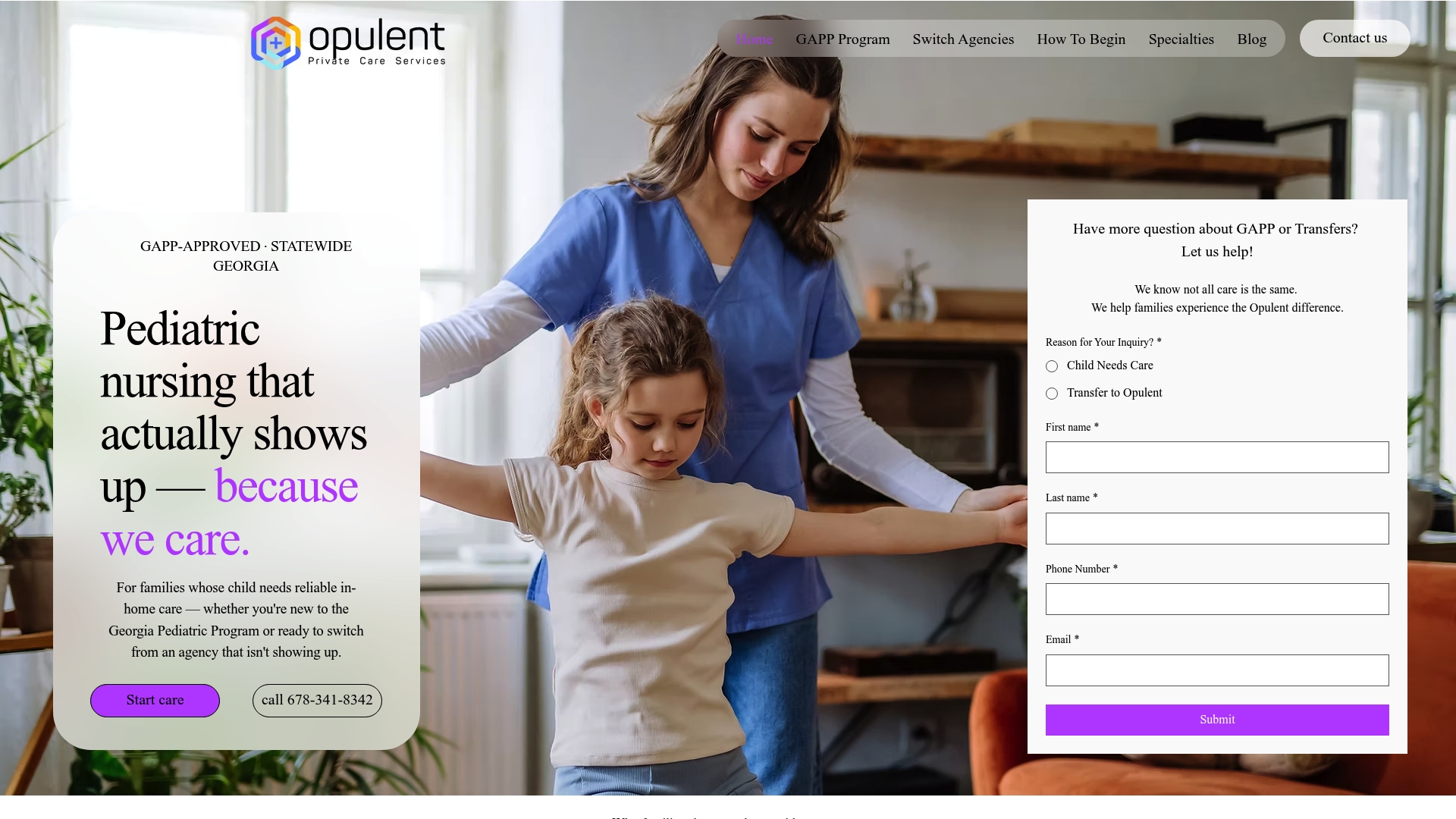
Starting a transfer consult is straightforward. Have your child’s Medicaid ID, current prior authorization paperwork, and most recent care plan ready. Opulent’s intake team uses that to begin the GAPP enrollment and transfer process, including coordinating overlap shifts with your current agency so care doesn’t lapse while paperwork moves through the state system. For children with tracheostomy, ventilator, or G-tube needs specifically, the clinical specialty page outlines exactly what that support looks like day to day.
If your current agency has left you without answers, start a transfer conversation with Opulent and get a real timeline instead of a guess.
Where to Verify Transfer Paperwork and Licensing
Confirm any provider’s licensing status and required forms directly through state sources rather than relying on an agency’s word alone.
DCH home health agency application checklist for name changes, branch additions, and service-area updates
GAPP and DFCS Medicaid policy manual for prior authorization procedures
DCH provider forms portal for downloadable provider-side forms and change requests
Frequently Asked Questions
Will changing home agencies in Georgia affect my child’s Medicaid or GAPP eligibility? No. Eligibility is tied to your child, not to any single agency, so a provider change doesn’t require re-establishing Medicaid or GAPP status from scratch.
Do I need to notify my current agency before the new one starts? Yes, but timing matters. Notify them in writing once your new agency has a confirmed start date, not before, so you avoid a coverage gap between the two.
Who submits the prior authorization for the new provider? The new agency typically submits the transfer or prior authorization through the state Medicaid system on your behalf, coordinating with the PA unit as needed.
How do I switch home insurance in Georgia if it’s tied to my child’s care plan? Home insurance and GAPP nursing authorization are handled separately. If you’re evaluating Georgia home insurance options alongside a care transition, that process runs through your insurer directly and doesn’t affect Medicaid-funded nursing services.
What if my new agency isn’t licensed for my county yet? Ask directly whether they need to file a service-area addition with DCH. This is common and doesn’t disqualify them, but it can add processing time you’ll want to plan around.
Sources
Recommended
Comments