
3 Steps to Start an Emergency Plan for a Medically Fragile Loved One

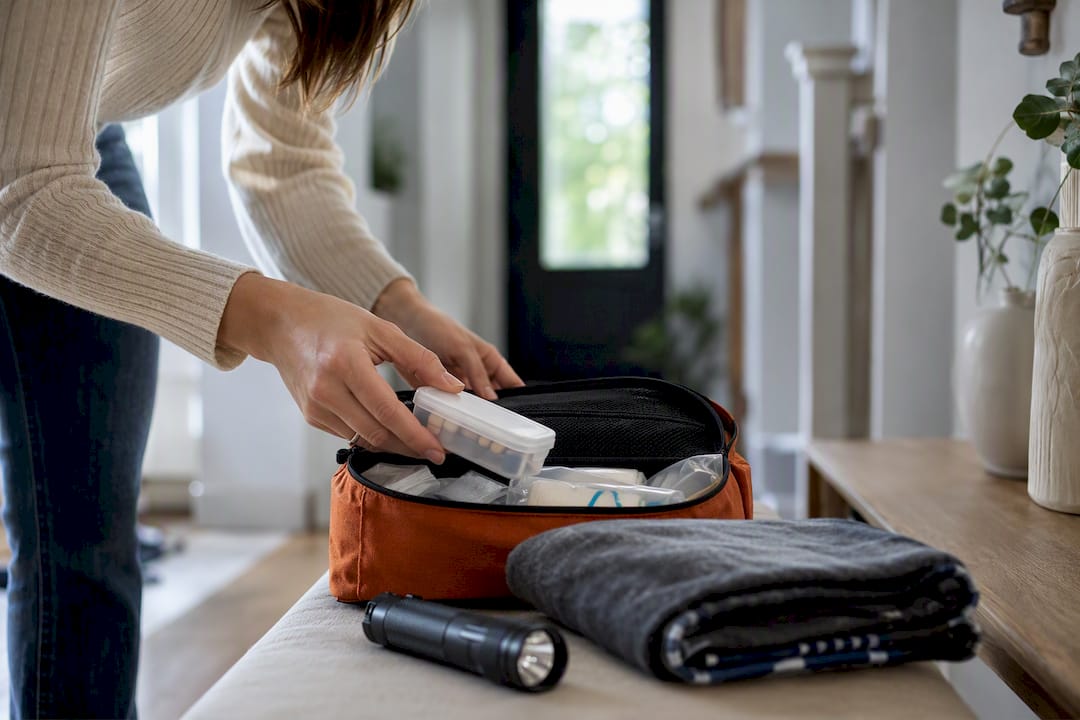
An emergency plan for a medically fragile person starts with a complete Medical Emergency Profile, a 72-hour kit built around your loved one’s exact equipment and medication needs, and a confirmed refill arrangement with your prescribing clinician. Do those three things first. Everything else in this guide, from backup generators to shelter registries, only works once that foundation exists.
TL;DR:
A comprehensive Medical Emergency Profile must include detailed medication doses, device information, and caregiver contacts, stored securely in multiple formats.
Families should prepare three separate kits for home, vehicle, and on-person to ensure continuous access to supplies over different timelines, with regular check-ups scheduled every three to six months.
Keep at least a two-week supply of critical medications, with an emphasis on obtaining early refills and maintaining temperature-sensitive meds with proper refrigeration backups.
Matching backup power sources to actual device wattage and registering for priority utility restoration are essential for maintaining power-dependent medical equipment during outages.
Establish and regularly practice a detailed evacuation and shelter plan, including multiple destinations, transportation considerations, and a trained caregiver network ready to respond.
Table of Contents
What Is a Medical Emergency Profile and How Do You Build One?
Many children in the U.S. have special healthcare needs, and most standard family disaster plans never account for what that actually requires: exact drug dosages, device serial numbers, and instructions a stranger could follow under pressure. The American Academy of Pediatrics recommends every medically fragile child have a completed Emergency Information Form kept in the kit, the car, and with every backup caregiver and school.
Your profile should include:
Full name, date of birth, and primary language, plus diagnoses in plain terms
Current medications with exact doses, timing, and route (oral, G-tube, IV)
Allergies, device types, model numbers, and serial numbers
Feeding and respiratory needs, plus any behavioral or sensory cues responders should know
Specialist names and direct phone lines, and consent or guardianship notes
Write simple, numbered startup and shutdown steps for each device, since a substitute caregiver or EMT may need to operate a feeding pump or suction machine with zero prior training. Keep a laminated copy in the kit, an encrypted version on your phone, and printed copies with the school and every backup caregiver. Use the official AAP or ACEP EIF template rather than building one from scratch, and date-stamp every revision so nobody grabs an outdated version mid-crisis.
How Do You Pack a Medically Ready Go-Bag?
Most families default to a single duffel bag. That is a mistake for anyone managing tracheostomy care, tube feeding, or seizure medication, because you need different kits for different timelines. Build three.
Home kit — a two-week reserve of meds and consumables, sized to the CDC’s guidance on emergency preparedness for households with special healthcare needs.
Vehicle kit — a three-day grab-bag with syringes, tubing, spare batteries, a portable power bank, and a cooler with ice packs for refrigerated meds.
On-person kit — a small pouch with one day of meds, the Medical Emergency Profile, and a phone charger, for evacuations with seconds of notice.
Every bag needs waterproof labels, a printed contents list taped inside the lid, and copies of device manuals. Check expiration dates and battery charge every three to six months, which lines up with the CDC’s own recommended review cycle for special-needs emergency kits.
Pro Tip: Set a recurring phone reminder tied to a date you already track, like a birthday or daylight saving time change. Kit rotation gets skipped when it depends on memory alone.
How Many Days of Medication Should You Keep on Hand?
The CDC recommends families keep at least a two-week supply of critical prescription medications on hand, with three days as the bare floor for general emergency supplies. Two weeks is the real target, not three days. Insurance and pharmacy policies often resist early refills, so this takes a phone call, not just a request at pickup.
Ask your prescribing clinician directly about an emergency-supply exception; many insurers allow it for chronic, high-risk conditions.
Keep a written list of every medication’s exact name, dosage, and NDC or device model number, along with an out-of-area pharmacy contact in case your usual pharmacy is unreachable.
For temperature-sensitive medications like insulin or certain biologics, plan for refrigeration failure with an insulated container, chemical ice packs, and a backup location, such as a community fridge or a neighbor’s generator-powered refrigerator.
Pediatricians engaged ahead of an emergency, rather than during one, are far more likely to help you work out an early-fill pathway before you need it.
How Do You Keep Power-Dependent Equipment Running?
Ventilators, feeding pumps, and oxygen concentrators do not pause for a blackout. Start by capturing each device’s wattage and expected run time on battery, since guessing at capacity is how families end up with a backup that dies four hours into an eight-hour outage.
Match a UPS, battery pack, or generator to the actual load your equipment draws, not a rough estimate.
If using a generator, run it outdoors only, away from windows and doors, to avoid carbon monoxide buildup, and keep enough stored fuel for at least 72 hours.
Contact your electric utility now to register for medical priority restoration; most utilities require this registration before an outage, not during one.
Test every backup power source monthly and store a quick-start card with each device.
Pro Tip: Laminate a one-page “switch to backup power” card and tape it directly to the device. In a blackout at 2 a.m., nobody wants to dig through a binder.
What Should Your Evacuation and Shelter Plan Include?
Responders may take up to 72 hours to reach some households after a disaster, which is exactly why a solid evacuation plan cannot depend on rescue arriving quickly.
Map at least two evacuation destinations that can physically accommodate your loved one’s equipment, and confirm power availability and space with each one in advance.
Identify shelters and pharmacies near each destination that can genuinely support disability and medical needs, not just ones listed as “accessible” on paper.
Plan transport around the actual size and weight of your equipment; a folding wheelchair and a ventilator cart need very different vehicles.
Register with local emergency registries if available, but treat them as a communication layer, not a rescue guarantee. Registries help responders find you, but they can be overwhelmed in a large-scale event, so build human backups regardless.
Who Should Be in Your Backup Caregiver Network?
A plan that lives only in your own head fails the moment you are the one who needs help. Identify at least two trained backups, whether family, friends, or paid caregivers, and hand each one a copy of the Medical Emergency Profile and every device manual well before an emergency.
Train each backup on medication administration, device operation, and basic calming or communication techniques.
Cover shelter intake procedures and the consent paperwork they may need to present on your behalf.
Run supervised practice sessions and use a written checklist to confirm competency, not just a verbal walkthrough.
Schedule refreshers on the same cadence as your plan review, so skills stay current instead of fading between crises.
The Pediatric Caregiver Guide covers device training in more depth if you are starting this network from scratch.
How Often Should You Practice and Update the Plan?
A plan on paper is not the same as a plan your family can execute under stress. Run a quick check every three months, rotate kit contents and review medications every six months, and schedule a full clinician review and plan update annually or immediately after any clinical change.
Time a pack-and-leave drill to see how fast you can actually get out the door.
Run a device-switch drill, moving from wall power to battery backup, start to finish.
Role-play a handoff to a backup caregiver, including where the Medical Emergency Profile and meds live.
Keep a versioned plan document, a refill log, and a running list of contact changes, since old phone numbers and expired prescriptions are two of the most common ways plans quietly go stale.
How Professional In-Home Nursing Strengthens a Family Plan
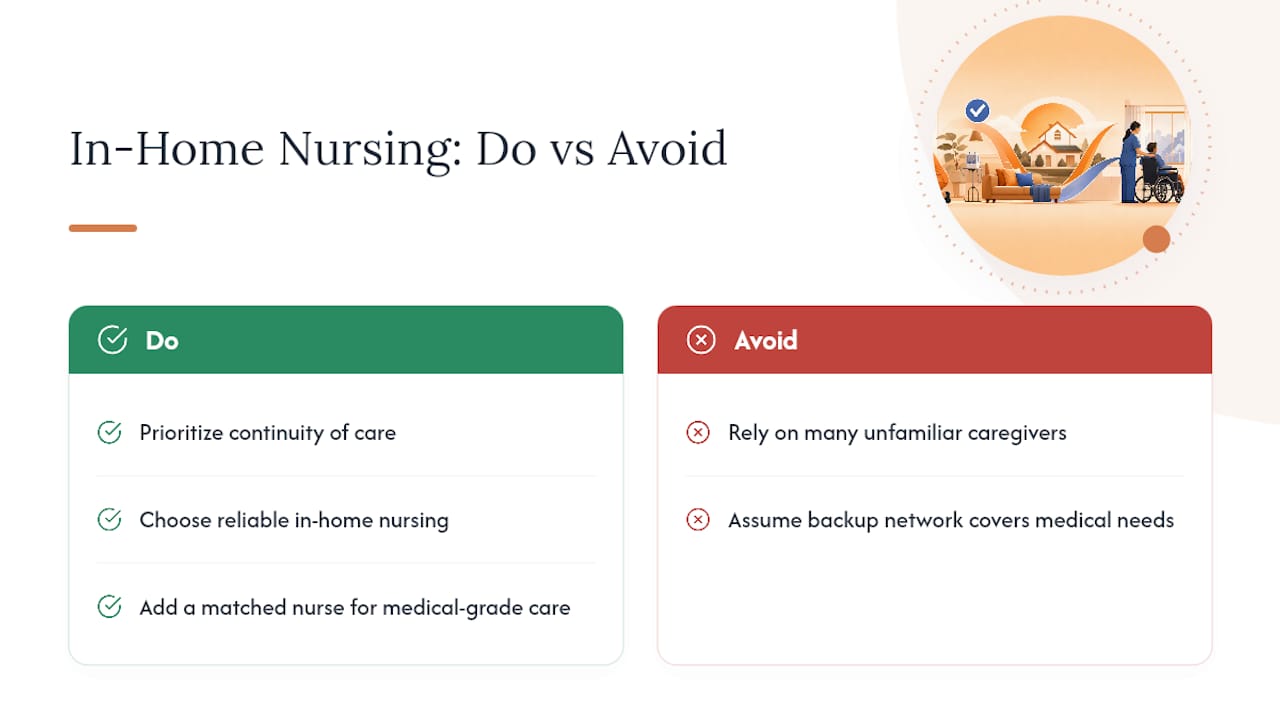
A family plan is only as strong as the people who can execute it, and reliable in-home nursing reduces the number of unfamiliar hands your child ever depends on. Certain providers emphasize continuity because it matters most when things go wrong. Families managing tracheostomy, ventilator, or feeding-tube care often add a matched nurse once their backup caregiver network still leaves gaps in medical-grade coverage. Learn more in the continuity of pediatric care guide.
Where to Find Professional Support for Your Plan
A backup network of family and friends covers a lot, but medication continuity and device management during an actual crisis often need a trained nurse who already knows your child. Some in-home nursing services match families with skilled pediatric nurses for tracheostomy, ventilator, feeding, seizure, and cardiac care, aiming to avoid rotating staff that can undermine home care arrangements.
If your emergency plan has power-dependent equipment or complex device management written into it, that is exactly where a matched, continuity-focused nurse closes the gap between what a family can safely handle alone and what a medical crisis actually demands. Opulentprivatecare’s trach, vent, and G-tube care services are built around the same documentation and training habits this guide walks through, so the transition between your plan and professional support stays seamless instead of chaotic. Visit Opulentprivatecare to start a consultation and see how a matched nurse fits into your family’s existing preparedness plan.
Official Resources and Templates to Download
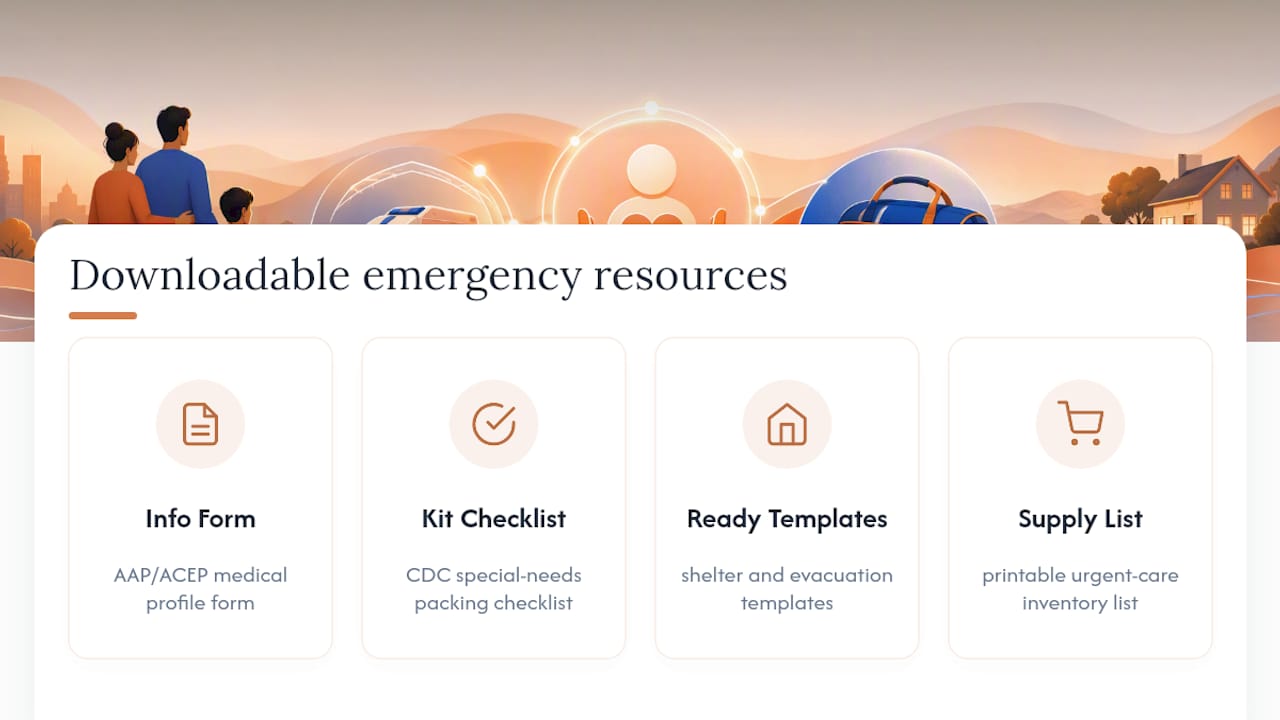
Start with the AAP/ACEP Emergency Information Form for your medical profile, the CDC’s special-needs emergency kit checklist for packing, and Ready for shelter and evacuation templates. The printable urgent care supply list helps with kit inventory tracking.
This article is general information, not a substitute for advice from a qualified doctor. Consult a qualified healthcare professional about your own circumstances before acting on anything here.
Sources
FAQ
What Are the 6 Requirements of an Emergency Plan?
A complete plan covers a Medical Emergency Profile, medication and supply continuity, power backup for equipment, a trained caregiver network, an evacuation and shelter strategy, and a regular review and drill schedule.
What Does It Mean to Be a Medically Fragile Adult or Child?
A medically fragile person depends on medications, medical equipment, or specialized care to maintain stable health, often involving conditions like tracheostomy dependence, ventilator use, tube feeding, or seizure disorders that require rapid, informed intervention during a disruption.
What Are the 5 Components of an Emergency Plan?
Most frameworks center on communication, evacuation and shelter, supplies and medication, backup power, and a trained support network, all documented in writing and reviewed on a set schedule.
Can You Give an Example of a Family Emergency Plan?
A working example: a completed Medical Emergency Profile stored in three places, a two-week medication reserve confirmed with the pharmacist, a battery backup sized to the ventilator’s wattage, two trained backup caregivers, and a mapped evacuation site with confirmed shelter accessibility.
How Much Medication Should a Medically Fragile Person Keep on Hand?
Aim for a two-week supply of critical prescriptions, following CDC guidance, with a documented plan for early refills through your prescribing clinician and pharmacy.
Recommended
Comments