
Parents: Nurse Backed Steps to Manage G Tube Granulation Tissue

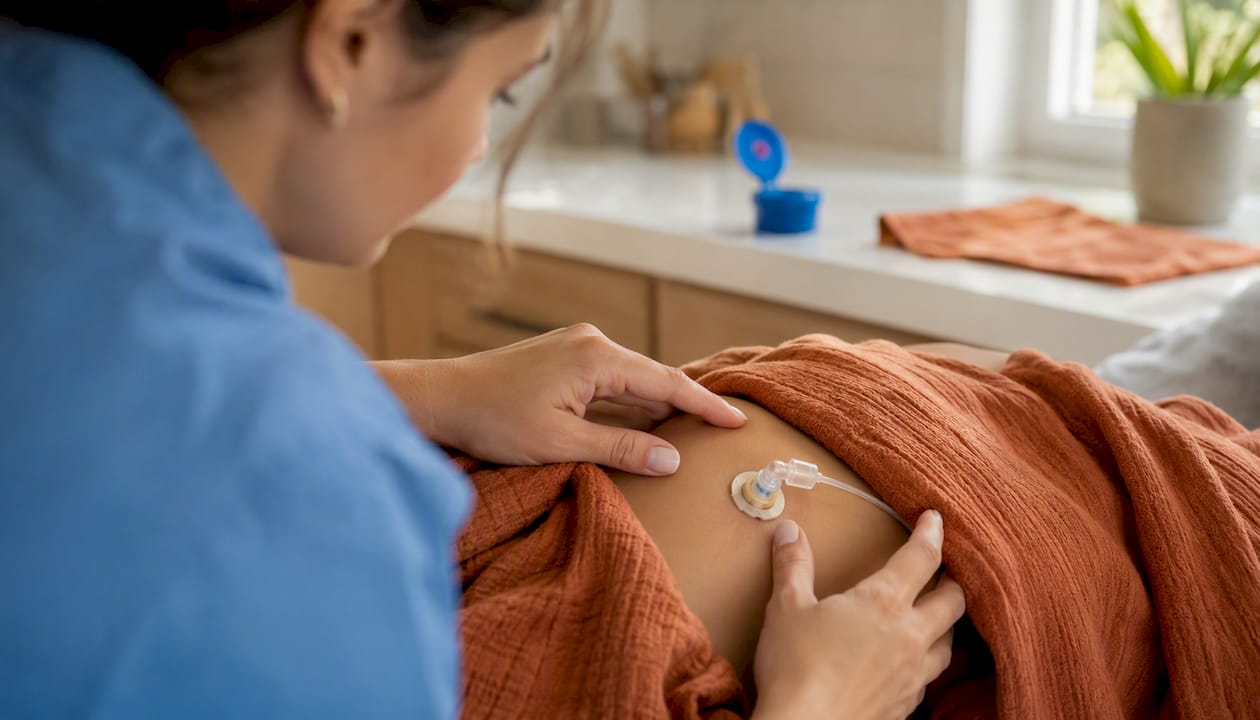
Granulation tissue is the pink or dark red bump of extra tissue that forms where the tube meets the skin, and it is one of the most common issues in gastrostomy care. It is usually not an emergency, but call your child’s care team if the site bleeds heavily, grows fast, hurts more than usual, or leaks more than it did before. Treatments range from clinician-applied silver nitrate to topical steroids and salt protocols backed by small clinical trials.
TL;DR:
Most children with gastrostomy tubes develop granulation tissue, especially within the first year, due to persistent irritation from tube movement or pressure.
Mechanical issues like tube instability, improper fit, or tight bolster tension frequently trigger granulation tissue growth, making adjustment keys to prevention.
Silver nitrate cautery is the most common treatment, but addressing underlying mechanical causes is essential for long-term resolution and recurrence prevention.
Dressing choice alone does not prevent hypergranulation, but daily care practices like cleaning, securing the tube, and managing moisture are critical.
Observe for signs of infection, bleeding, or rapid growth; routine granulation usually does not require urgent care unless accompanied by pain or systemic symptoms.
Table of Contents
What Does G Tube Granulation Tissue Look Like?
Granulation tissue is easiest to spot once you know what you’re looking for. It usually shows up as tissue that is pink to dark red, feels bumpy or spongy to the touch, and looks shiny or moist. Press it gently with a clean finger and it may bleed a little. That’s normal for granulation tissue, though it can look alarming the first time.
The tricky part is telling it apart from other stoma problems that need different care.
Prolapsed stomach lining looks velvety and smooth rather than bumpy, often deep red, and it can protrude further out of the stoma than typical granulation.
Contact dermatitis looks flat and irritated, tends to itch, and doesn’t bleed on contact the way granulation does.
Infection brings pus, spreading redness beyond the stoma edge, warmth, and sometimes a fever, none of which are typical of plain granulation tissue.
When in doubt, document what you see instead of guessing. Take a photo in daylight, place a coin or small ruler next to the site for scale, and jot down whether there’s pain, drainage, or bleeding and when it started. That record helps the tube team triage the issue over the phone instead of waiting for an in-person visit.
How Common Is Granulation Tissue After Gastrostomy Placement?
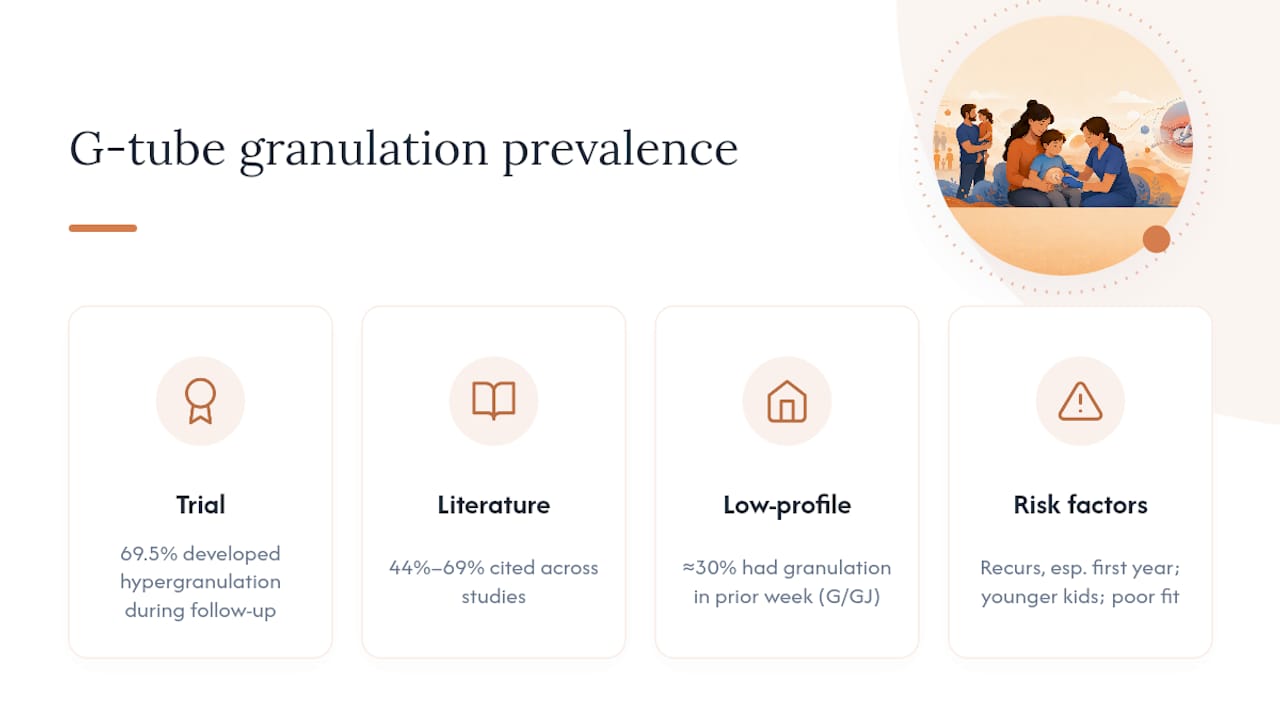
If your child has developed granulation tissue, you’re in the majority, not the exception. A randomized trial following pediatric gastrostomy patients found that 69.5% of children developed hypergranulation tissue during follow-up, with the broader medical literature citing a range of 44% to 69% depending on the study population and tube type.
Tube design matters too. A cross-sectional study of children with low-profile G and GJ tubes found nearly 30% had granulation tissue in just the previous week, which tells you this isn’t a one-time problem you solve and forget. It can recur, especially in the first year after placement, when the stoma tract is still maturing and the tube is more likely to shift or rub. Younger children and kids with tubes that don’t fit the tract length well tend to see it more often and more persistently.
What Causes Granulation Tissue Around a G-Tube?
Most granulation tissue traces back to something mechanical you can actually fix, not bad luck. The body forms this tissue as a healing response to ongoing irritation, so removing the irritation is often the real treatment.
Friction and movement. A tube that slides in and out of the stoma, even slightly, keeps the skin in a constant state of micro-injury and repair.
Bolster tension problems. An external bolster that’s too tight presses into the skin; one that’s too loose lets the tube move around more than it should.
Poor tube-to-tract fit. Low-profile devices sized shorter or longer than the actual tract length put uneven pressure on the stoma edges.
Trapped moisture. Occlusive dressings that hold in drainage, or ongoing leakage from a loose-fitting tube, keep the skin softened and more prone to overgrowth.
Low-grade infection or inflammation. This can compound any of the above and make tissue grow back faster after treatment.
Pro Tip: Before your next clinic visit, check your child’s tube for side-to-side wiggle and note it. A tube that moves more than a few millimeters at the skin is a strong clue that bolster tension or tube length is the real problem, not the dressing you’re using.
How Do You Treat G Tube Granulation Tissue?
Treatment for granulation tissue tends to follow a stepwise path, starting conservative and escalating only if needed. Here’s what that usually looks like in practice.
Clinician-applied silver nitrate cautery. This is the most common in-office treatment. The clinician touches a silver nitrate stick to the tissue, which chemically cauterizes it. It can sting for a few minutes afterward, and it can leave a dark scab. Surrounding healthy skin needs to be protected during application, because silver nitrate can damage normal skin if it’s misapplied.
Topical steroid ointments. Triamcinolone or hydrocortisone creams are sometimes prescribed to shrink the tissue over days to weeks. These are prescription-only and clinician-directed, not something to start on your own.
Hypertonic salt protocols. A 2025 prospective study compared clinician-applied silver nitrate against a table-salt protocol using roughly one-third teaspoon of salt applied once daily for six days. This is a supervised medical protocol, not a general home remedy every family should try on their own initiative.
Gentle dressings for drainage. Foam or antimicrobial dressings can help manage weeping tissue when the clinical team recommends them, mainly to protect surrounding skin from moisture.
Surgical excision. Reserved for tissue that keeps coming back despite repeated treatment, or tissue large enough to interfere with tube function.
Never apply silver nitrate or a prescription steroid without direct instruction from your child’s care team, and skip dressings that trap moisture against the skin or press down on the tube. Both mistakes tend to make granulation tissue worse, not better.
Daily G-Tube Care That Helps Prevent Granulation Tissue
Prevention comes down to a routine you repeat every day, not a single product switch. Clean the site with mild soap and water once daily, pat it dry completely, and leave it open to air when drainage is minimal. If the site is actively leaking or draining, a light absorbent dressing changed regularly works better than one left on for days.
Securing the tube matters just as much as cleaning it. Use a stabilizing device or tape that holds the tube snug against the skin without pinching or twisting the stoma. The goal is zero side-to-side or in-and-out play, but without cutting off circulation to the surrounding skin.
Clean daily with mild soap and water, then dry the site fully before covering it.
Secure the tube so it can’t slide, using a commercial stabilizer or tape as directed by your team.
Skip occlusive dressings on a dry, stable site. Save absorbent dressings for active drainage.
Check the balloon volume on schedule (most balloon tubes need a monthly check) and flag any leakage or loose bolster fit to the team right away.
Pro Tip: If granulation tissue keeps coming back within weeks of treatment, don’t just repeat the same silver nitrate visit. Ask specifically about bolster tension and low-profile tube length. Mechanical fit is one of the most common, correctable causes of recurrence.
What Does the Research Say About Preventing Granulation Tissue?
The clearest finding in the pediatric literature might surprise you: dressing choice alone doesn’t prevent hypergranulation. A randomized controlled trial testing standard care against hydrocolloid dressings and silver-impregnated hydrocolloid dressings found no significant difference in hypergranulation rates between the three groups. Prevention hinges on mechanical factors like movement and pressure, not on which dressing brand sits on the site.
Study | Design | Key finding |
Hydrocolloid dressing trial | Randomized controlled trial, pediatric patients | No difference in hypergranulation rates across standard care, hydrocolloid, and silver-impregnated hydrocolloid groups |
Salt versus silver nitrate protocol | Prospective study, 2025 | Salt protocol (1/3 teaspoon daily for six days) studied as a clinician-supervised alternative to silver nitrate |
Low-profile tube prevalence study | Cross-sectional survey | Nearly 30% of children with low-profile G/GJ tubes had granulation tissue in the prior week |
The overall pediatric evidence base here is still thin, and treatment protocols remain largely stepwise and based on clinical experience rather than large trials. That’s exactly why your child’s tube team may adjust the plan based on how your child responds, rather than following one fixed script.
A Nurse’s Take on Avoiding Common Mistakes
The biggest mistake caregivers make isn’t a treatment error. It’s assuming every red mark is granulation tissue without checking texture, drainage, and how the spot has changed over a few days. Photograph it, note if it’s spongy or smooth, and write down whether it bleeds on contact before calling in.
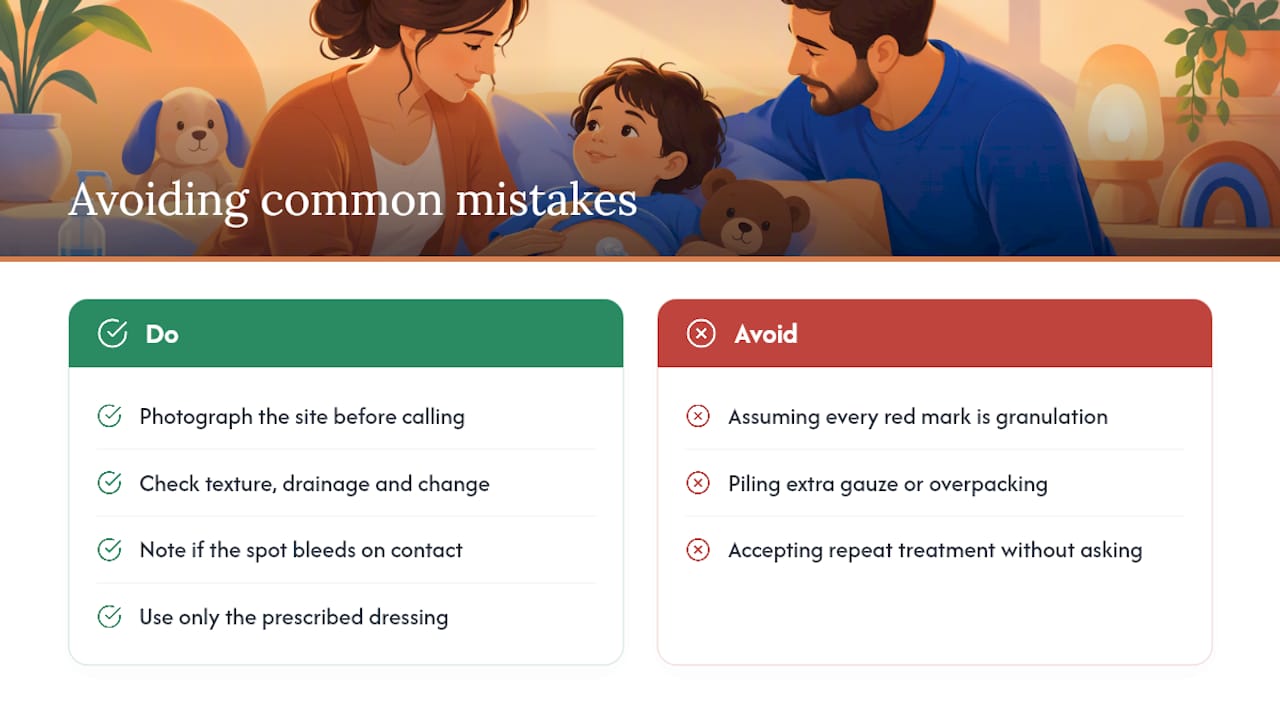
The second mistake is over-dressing the site. Piling on extra gauze feels protective, but packing traps moisture against skin that needs to stay dry to heal. Use only what the plan calls for.
If granulation keeps returning every few weeks despite good home care, that’s a signal worth raising directly. Ask about tube sizing and bolster tension before agreeing to another round of the same treatment.
— Opulent
How Opulent Private Care Supports Families Managing G-Tube Issues
Opulent Private Care provides in-home skilled nursing for families across Georgia raising medically fragile children, and G-tube complications are exactly the kind of ongoing issue a dedicated nurse in your home can help you stay ahead of, rather than reacting to each flare-up alone. Instead of juggling clinic calls between shifts, families get a matched nurse who performs dressing changes according to the clinician’s plan, trains caregivers on daily site care, and keeps communication flowing with your child’s tube team when something looks off.

Opulent’s trach, vent, and G-tube nursing services are built around continuity, so the same nurse who learns your child’s tube history and skin tendencies stays on the case instead of rotating out. Families who qualify through Medicaid’s Georgia Pediatric Program often work with agency teams on eligibility and paperwork from day one. If you’re managing recurring granulation tissue or any complex feeding tube need, reach out to find out if your family qualifies for in-home nursing support.
Sources
For deeper reading beyond this guide, the randomized trial on hydrocolloid dressings, CHOP’s patient instructions on G-tube skin problems, and Children’s Wisconsin’s teaching sheet on feeding tube granulation cover the clinical basis for most of what’s discussed here. Bring these links to your next tube team appointment if you want to compare notes on your child’s specific plan.
This article is general information, not a substitute for advice from a qualified doctor. Consult a qualified healthcare professional about your own circumstances before acting on anything here.
FAQ
How Do You Treat Granulation Tissue on a G-Tube?
Treatment usually starts with clinician-applied silver nitrate cautery or a prescribed topical steroid ointment, and some clinics now use a supervised salt protocol as an alternative. Addressing the underlying mechanical cause, like tube movement or bolster tension, matters as much as the treatment itself.
Does Granulation Tissue Hurt Around a G-Tube?
Granulation tissue itself is often not painful day to day, though it can bleed easily when touched or rubbed. Pain, especially sudden or worsening pain, is one of the signs that warrants a call to your child’s care team rather than home management.
Will Granulation Tissue Go Away on Its Own?
Small patches sometimes shrink once friction, moisture, or leakage causing them gets corrected, but most cases need active treatment to fully resolve. Given that up to 69.5% of children develop hypergranulation after gastrostomy placement, waiting it out isn’t the typical path most families end up on.
What Does G-Tube Granulation Tissue Look Like?
It typically appears pink to dark red, with a bumpy or spongy texture and a shiny, moist surface that bleeds easily when touched. That appearance sets it apart from prolapsed stomach lining, which looks smoother and more velvety, or infection, which brings pus and spreading redness.
When Should I Call the Doctor About G-Tube Granulation Tissue?
Call promptly if you see heavy bleeding, rapid growth, increasing pain, fever, pus, or a sudden jump in leakage around the tube. Routine granulation without those red flags can typically wait for a scheduled appointment, but it’s always reasonable to call and describe what you’re seeing.
Recommended
Comments