
GAPP Denial Appeal in Georgia: What to File and When
- Opulent Private Care Services

- Aug 19
- 6 min read

If your child’s GAPP services got denied, you have two possible paths forward: request reconsideration through the Prior Authorization (PA) Unit, or request a fair hearing through the Office of State Administrative Hearings (OSAH). Which one applies depends on what your denial letter says, and the clock starts the day it was mailed.
Before you do anything else:
Find your denial notice (sometimes called an EDN) and locate the Prior Authorization Request ID.
Confirm your Medicaid ID is active by checking Georgia Gateway.
Call the number listed on your denial letter. If it’s a prior authorization issue, that’s typically Alliant Health Solutions. If it’s an eligibility issue, that’s Georgia Pathways or Georgia Access.
Missing the deadline on your notice can end your appeal before it starts, so treat that date as non-negotiable.
Key Takeaways
Filing the correct GAPP appeal route within the deadline on your denial notice is the single factor most likely to determine whether your child’s services get restored.
Point | Details |
Identify the right route | Clinical denials go to PA Unit reconsideration; eligibility denials go to Pathways or OSAH. |
Watch the deadline on your notice | Pathways, Georgia Access, and PA reconsiderations each publish their own filing windows. |
Pull your Prior Authorization Request ID | Reconsideration forms cannot be processed without this number from your denial letter. |
Fix the actual denial reason | Inactive Medicaid, missing physician orders, and missing LOC documentation each need a specific remedy. |
Get documentation help early | Opulent Private Care assists Georgia families with medical necessity letters and continuity of nursing care during appeals. |
This article is general information, not a substitute for advice from a qualified lawyer. Consult a qualified legal professional about your own circumstances before acting on anything here.
Table of Contents
How Long Do You Have to File a GAPP Appeal in Georgia?
Deadlines vary depending on which agency issued the denial, and the notice you received controls, not general assumptions about any fixed GAPP appeal window. Georgia Pathways to Coverage publishes its own appeal window for eligibility decisions, while Georgia Access outlines separate timeframes measured from the date on your Eligibility Determination Notice. Prior authorization reconsiderations through the PA Unit run on their own clock too.
A denial for a clinical or prior-authorization reason (not enough documented medical necessity, missing Level of Care paperwork) usually routes to reconsideration with the PA Unit. A denial tied to Medicaid eligibility itself routes to Pathways, Georgia Access, or ultimately OSAH for a fair hearing.
Priority actions while the deadline is running:
Request a copy of the full denial packet, not just the summary letter.
Ask your child’s physician for a written statement of medical necessity now, before you need it.
Note the exact date you received the notice, not just the date printed on it.
Pro Tip: If your child has an urgent medical need, say so explicitly in writing when you file. Expedited handling is not automatic. You have to ask for it.
Where Do You File: PA Unit Reconsideration or OSAH Fair Hearing?
Georgia runs two distinct appeal tracks for GAPP-related denials, and filing in the wrong one wastes time you may not have.
Reconsideration with the Prior Authorization Unit. If your denial came from a prior authorization decision, the Georgia Prior Authorization portal hosts the Parent/Guardian Request Form for Reconsideration. You cannot submit this form without your Prior Authorization Request ID, so pull that number off your denial letter before you start. Alliant Health Solutions administers this process on behalf of the PA Unit.
Fair hearing with OSAH. If reconsideration fails, or if your denial is an eligibility decision rather than a clinical one, OSAH is the next stop. OSAH provides a neutral forum, separate from the agency that denied you, and gives instructions for requesting a hearing by phone or mail.
Practical filing tips:
Confirm your Medicaid status through Georgia Gateway before filing either route.
DFCS local offices can help in person if you’re stuck on paperwork.
Keep a copy of everything you submit, and send by a method that gives you proof of delivery.
Why Was GAPP Denied? Common Reasons and Fixes
Most GAPP denials fall into a handful of categories, and each has a specific fix rather than a vague “resubmit everything” response.
Medicaid is inactive or still pending. GAPP cannot be approved while a Medicaid application is pending, since the PA Unit of Georgia Health Partnership requires active Medicaid before it will authorize services. Check status through Georgia Gateway and follow up with DFCS if it’s stuck.
Missing physician documentation of medical necessity. Ask your child’s doctor for an updated, specific order describing the diagnosis, needed interventions, and why in-home nursing is required.
No Level of Care (LOC) documentation on file. The PA Unit is responsible for obtaining LOC documentation, but delays happen. Contact your hospital discharge planner or case manager to confirm it was submitted.
Prior authorization submitted incorrectly. Confirm the Prior Authorization Request ID matches your file and that the request included all required clinical attachments.
Aged-out or category-of-assistance issues. Some children lose GAPP eligibility due to age or a shift in Medicaid category. This usually requires a separate Medicaid eligibility appeal through Pathways rather than a PA reconsideration.
Pro Tip: When the denial reason is unclear, call and ask the reviewer to state it in plain language. “Insufficient documentation” can mean five different things, and you need to know which one before you can fix it.
Steps to Prepare a Strong GAPP Appeal
Gather these documents before you write a word of your appeal:
The full denial notice or EDN, with the date you received it.
Your Medicaid ID and Georgia Gateway login confirmation.
The Prior Authorization Request ID from your denial letter.
Updated physician orders describing medical necessity.
Level of Care documentation, or a note confirming who is responsible for submitting it.
Hospital discharge summaries or specialist letters supporting the need for skilled nursing.
Keep your written request short and specific: state the date of denial, the Prior Authorization Request ID, the reason you’re disputing, and the new or existing documentation you’re attaching. Avoid restating your entire medical history. Reviewers want the specific gap addressed, not a general appeal for sympathy.
Send everything by certified mail or fax with a confirmation page, or screenshot the submission if you use an online portal. Write down the date you filed and set a reminder to follow up if you haven’t heard back within the timeframe your agency quotes.

Pro Tip: Legal standing to request a fair hearing belongs to the parent or legal guardian, not the care agency. Agencies can help gather documents, but you have to be the one who files.
What Happens After You File a GAPP Appeal?
Once you submit, the review path depends on which route you used. PA Unit reconsiderations go back through Alliant Health Solutions for clinical review. Eligibility appeals route through Georgia Access or land in front of OSAH for a formal hearing.
Expect one of three outcomes:
Approval. Services resume or begin, often retroactive to the original request date.
Partial approval. You may receive fewer hours or a modified care plan than requested. You can appeal that decision too.
Denial upheld. If reconsideration fails, your next step is requesting an OSAH fair hearing, if you haven’t already.
If OSAH rules against you, you generally retain the right to seek further review or consult an attorney familiar with Medicaid appeals. That’s the point where legal counsel or an advocate becomes genuinely useful, not just optional.
A note from a Georgia pediatric nursing provider
We work with medically fragile children across Georgia every day, and we’ve seen how much a clean physician letter or updated care plan can matter. While your appeal moves through the system, providers can often help document medical necessity and keep care steady in the meantime.
How Opulent Private Care Supports Families During a GAPP Appeal
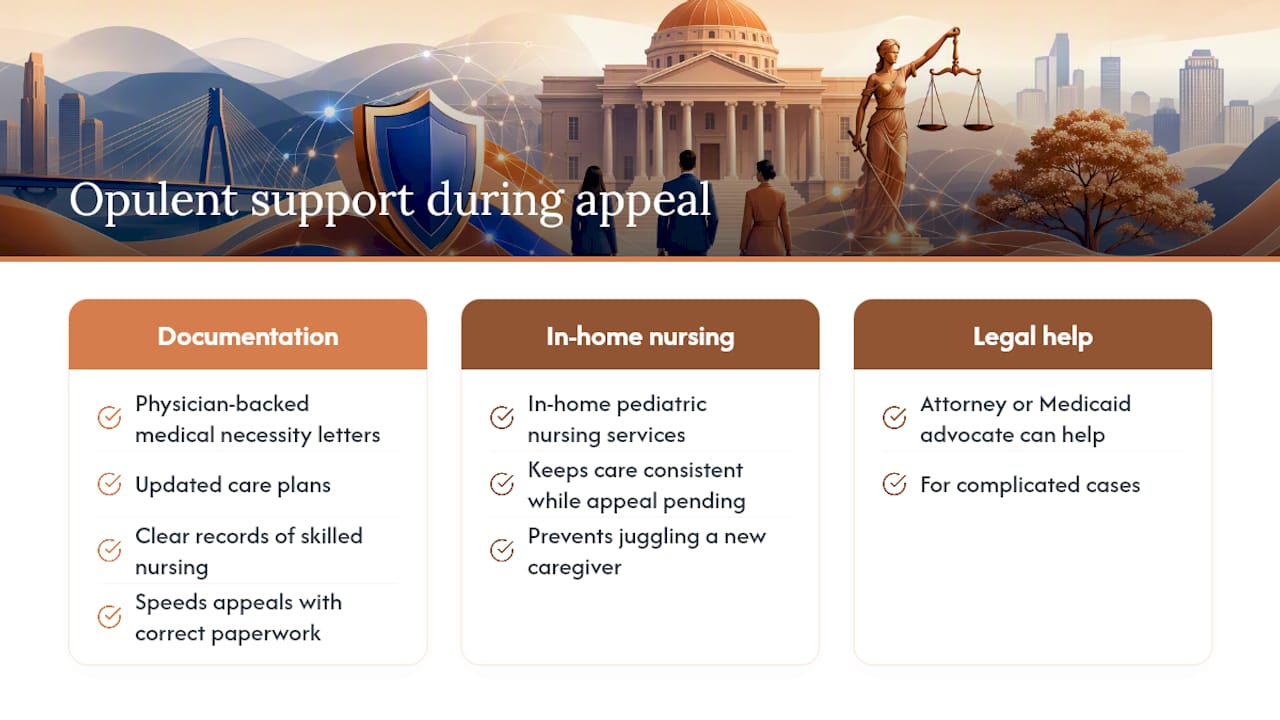
Appeals move faster when the paperwork is right the first time. Opulent Private Care works with families across Georgia to put together the kind of clinical documentation that PA Unit reviewers and OSAH hearing officers actually look for: physician-backed medical necessity letters, updated care plans, and clear records of the skilled nursing your child needs.
Beyond paperwork, Opulent’s in-home pediatric nursing services keep care consistent while your appeal is pending, so your family isn’t juggling a new caregiver on top of a denial letter. This is general information, not legal advice. If your case is complicated, an attorney or Medicaid advocate can help too.
If you’re waiting on a GAPP decision or need help documenting medical necessity, reach out to Opulent Private Care to talk through your options and get your paperwork moving.
Sources
Recommended
Comments