
Parents: 3 Thumbs Up Rule to Keep the Same Home Nurse for Appointments
- Opulent Private Care Services

- 2 days ago
- 7 min read
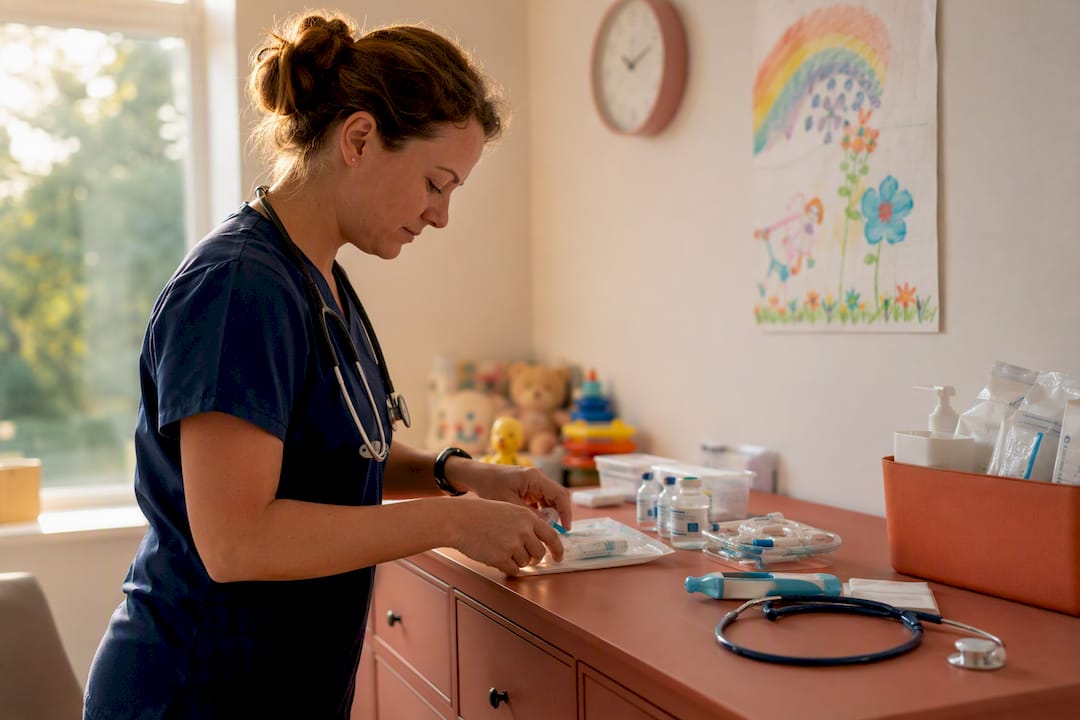
Yes, a licensed home nurse can attend appointment-style visits for people who are medically complex, recovering from surgery, or mobility-limited, and it’s usually the right call when clinical tasks need to happen outside a clinic. The main routes are a hospital or clinician referral, a licensed home health agency, or a private-pay visiting nurse. Call your clinician’s office or a trusted in-home nursing provider first. Coverage rules and getting the same nurse each time matter more than almost anything else.
TL;DR:
A licensed home nurse can perform skilled medical tasks at appointment visits, especially after hospital discharge or when mobility is limited.
Verifying the nurse’s credentials, licensing, and certification before each visit ensures safe and appropriate care.
Insurance coverage like Medicare and Medicaid generally supports these visits if the patient is homebound and needs skilled care, but eligibility verification is essential.
Ensuring the same nurse is assigned consistently improves detection of subtle health changes and enhances overall care quality.
Booking usually requires a physician’s order, insurance authorization, and timely coordination through hospitals, agencies, or private services.
Table of Contents
What Does a Home Nurse Do at an Appointment-Style Visit?
A visiting nurse is a licensed clinician, either a Registered Nurse (RN) or a Licensed Practical Nurse/Licensed Vocational Nurse (LPN/LVN), who performs skilled medical tasks in the home instead of a nonmedical caregiver or home health aide handling bathing and light housekeeping. The distinction matters: aides support daily living, nurses manage clinical care.
At an appointment-style visit, a home nurse at appointments typically checks vital signs, changes wound dressings, manages medications, monitors a tracheostomy or feeding tube, draws labs, or provides post-surgical follow-up assessment. RNs generally handle more complex assessments and care planning; LPNs work under supervision for defined tasks.
Scope of practice varies by state license, so an RN in one state may be authorized for something an LPN in another cannot do. Always confirm what a specific nurse is credentialed to perform before the visit, especially for pediatric conditions like ventilator management or seizure response.
Who Actually Needs a Home Nurse for Appointments?
Families reach for this option most often after a hospital discharge, when a patient can’t safely travel, or when a child has a medically complex diagnosis requiring trained oversight. Common triggers include post-operative wound checks, infusion therapy follow-up, tracheostomy or feeding tube management, and mobility limitations that make clinic trips risky or exhausting.
Many of these visits require a physician’s order or insurance authorization before a nurse can bill for the service, so ask your discharge planner or pediatrician early. Structured home visiting models, like the Nurse-Family Partnership, show that scheduled clinical visits over months can catch problems early, including issues like postpartum pre-eclampsia that a PLOS ONE evaluation found home visits identified sooner than clinic-only care. Sudden fever, breathing changes, or unresponsiveness call for emergency care, not a scheduled visit.
How Do You Book a Home Nurse for an Appointment Visit?
Getting a nurse into your home for appointment-style care usually follows one of a few well-worn paths. Here’s how they break down:
Ask for a clinician or hospital referral. Your doctor’s office or hospital discharge planner can generate the orders that authorize a home nursing visit and often connects you directly with an approved agency.
Contact a licensed home health agency. Agencies handle staffing, credential verification, and billing, and many also offer transportation or accompaniment support so patients who can’t travel alone still make it to outside appointments, according to the Visiting Nurse Health System.
Hire a private-pay visiting nurse or concierge service. This route skips insurance paperwork but shifts cost and vetting responsibility to the family.
Use a vetted nurse registry or app. Some platforms match independent nurses with families directly, though verification quality varies widely.
You’ll typically need a physician’s order, proof of insurance or Medicaid authorization, and a summary of the patient’s diagnosis and care needs. Build in lead time. Same-week scheduling is common for routine visits, but specialized pediatric cases (trach or vent care) often take longer to match. If reading up on discharge planning helps, see this guide to hospital discharge and home nursing for the intake steps agencies usually follow.
What Does a Home Nurse Visit Cost, and Does Insurance Cover It?
Medicare covers home health nursing when a doctor certifies the patient is homebound and needs skilled, intermittent care, not custodial help alone. Medicaid coverage for pediatric skilled nursing varies by state program, and private pay fills the gap when no coverage applies or when families want a level of service insurance won’t authorize.
To confirm eligibility, check Medicare.gov directly, call your insurer’s customer service line, or ask your hospital discharge planner to walk through authorization before the first visit. A significant gap exists between eligible families and those actually receiving nurse home visiting services, research shows, particularly among Medicaid-insured populations, so don’t assume you’re automatically enrolled just because you qualify.
Price drivers include clinician level (RN visits cost more than LPN visits), visit length, specialized skills like ventilator management, and after-hours or weekend scheduling. If you hire a nurse directly rather than through an agency, review the IRS household employer tax guide since you may take on employer tax obligations.
What Happens During the Actual Visit?
Most appointment-style visits follow a predictable rhythm: a focused assessment first (vitals, wound or device check, symptom review), then any scheduled treatment, followed by caregiver education and documentation. The nurse typically notes findings in an electronic health record or a written care log shared with the referring clinician, keeping the physician looped in without a separate office visit.
Before the nurse leaves, ask what changed since the last visit, whether any findings need physician follow-up, and what to watch for before the next scheduled check. For families managing a complex pediatric case, the parent training roadmap covers what documentation and handoff should look like between visits.
How Do You Vet a Home Nurse Before They Arrive?
Verification isn’t optional. Confirm these before the first visit:
Active state nursing license, checked through your state’s board of nursing website.
Agency background check policy, including criminal history and reference checks.
Current immunizations, particularly flu and COVID-19 boosters for medically fragile patients.
Proof of the specific certification needed for the case (pediatric, wound care, infusion).
The FTC’s guidance on hiring caregivers recommends verifying credentials and running background checks before anyone provides care in the home, and for a deeper walkthrough, this background check breakdown covers what to ask an agency directly.
Pro Tip: Ask the nurse to show photo ID and a printed or digital copy of the care plan on arrival. A legitimate nurse expects this and won’t be offended.
Why Does Getting the Same Nurse Every Time Matter?
Consistent assignment isn’t a convenience feature. It’s a clinical safeguard. A nurse who sees the same patient repeatedly builds the baseline knowledge to catch subtle changes, like a slight shift in breathing pattern or wound color, that a rotating stranger would likely miss, according to PHI’s consumer fact sheet on consistent assignment.

When vetting an agency, ask directly: how do you match nurses to families, what’s your retention rate, and what’s the contingency plan if my regular nurse is out? A shared calendar and a named care coordinator contact go a long way toward keeping everyone aligned. The continuity of pediatric care guide walks through what strong continuity looks like in practice for families managing complex conditions.
Getting Ready for Appointment Day
A little prep turns a rushed visit into a genuinely useful one:
Gather the current medication list, a recent symptom log, and any authorization paperwork the nurse or agency requested.
Clear a quiet, well-lit space for the exam and designate one family member as the point person for questions.
Write down two or three specific questions in advance so you don’t forget them once the visit starts.
After the nurse leaves, store the visit notes somewhere accessible and confirm what happens next, whether that’s a follow-up call, a lab result, or the next scheduled visit.
How Opulent Private Care Builds Reliable, Consistent Nursing
Opulentprivatecare matches pediatric nurses to families through what it calls the 3 Thumbs Up Rule: the family, the nurse, and Opulent all have to sign off before care begins. That extra checkpoint exists because a clinical skill match isn’t the same as a good fit for a specific child and household.
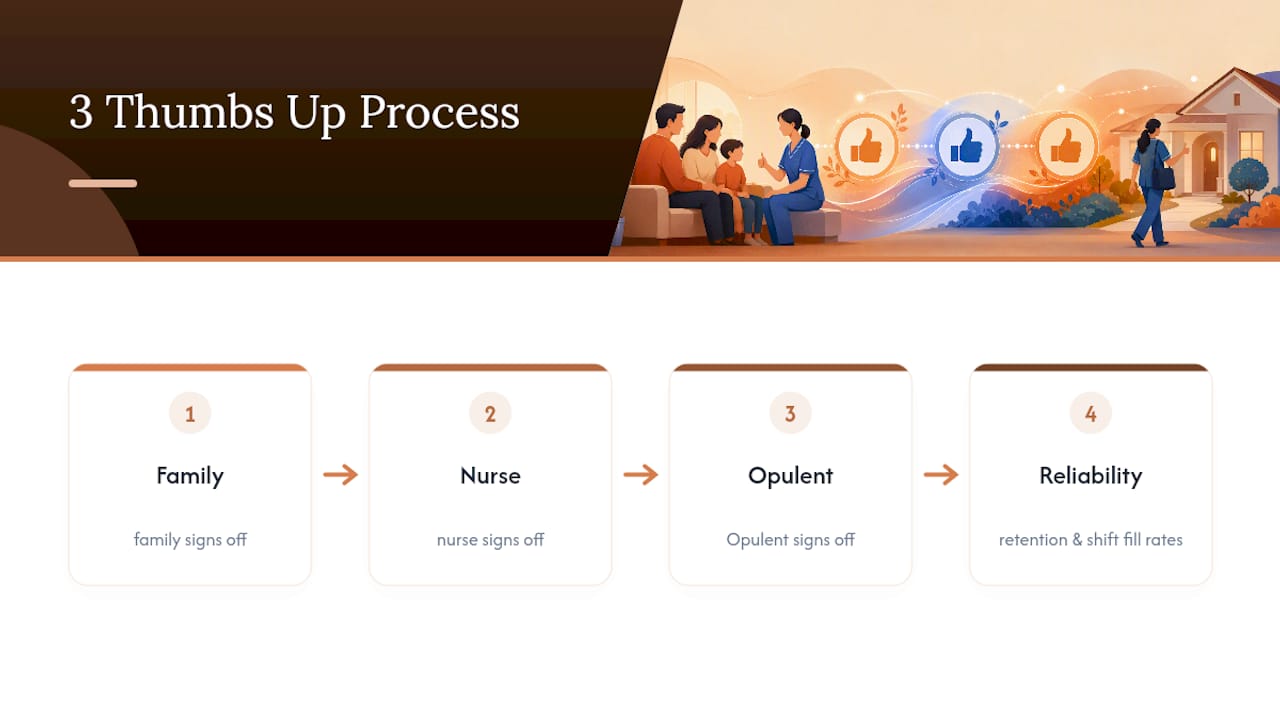
Opulent also publishes its shift fill rates and nurse retention numbers, giving families a real basis for judging reliability instead of relying on marketing language alone. That transparency matters most for kids managing tracheostomy care, feeding support, or complex neurological conditions, where a new face every week isn’t just inconvenient. It disrupts care.
A Caregiver’s Take on the First Visit
Preparing for our first home nurse visit felt like homework: medication list, symptom notes, questions written on an index card. The nurse arrived, worked through the checklist calmly, and left notes our pediatrician could actually use at the next appointment. Continuity did the rest. By the third visit, she knew our son’s baseline better than we did.
— Opulent
Start Arranging In-Home Nursing With Opulent Private Care
Opulentprivatecare gives Georgia families a clearer path to appointment-style nursing care than piecing together a private hire or navigating a rotating agency roster. Its pediatric nursing services cover tracheostomy, ventilator, feeding tube, seizure, and cardiac care, with staff who help families complete Medicaid and GAPP paperwork instead of leaving them to figure it out alone.
The 3 Thumbs Up Rule and published retention metrics mean you’re not guessing whether a nurse will show up consistently. Getting started is straightforward: reach out through Opulent’s pediatric in-home nursing intake to begin the matching process, or visit the Opulent Private Care homepage to review services before your first call. If your child’s condition involves specialized pediatric needs, the pediatric home visit guide is worth reading before that first intake conversation. For broader context on staffing trends across the home care industry, Home Care industry coverage offers useful background.
Where to Verify Coverage and Continuity Claims
Check Medicare’s home health coverage page for eligibility rules, review PHI’s consistent assignment research on why continuity matters, and confirm licensure through your state’s nursing board before any visit begins.
This article is general information, not a substitute for advice from a qualified doctor. Consult a qualified healthcare professional about your own circumstances before acting on anything here.
Sources
Recommended
Comments