
How to Get Into Pediatric Nursing: 2026 Career Guide

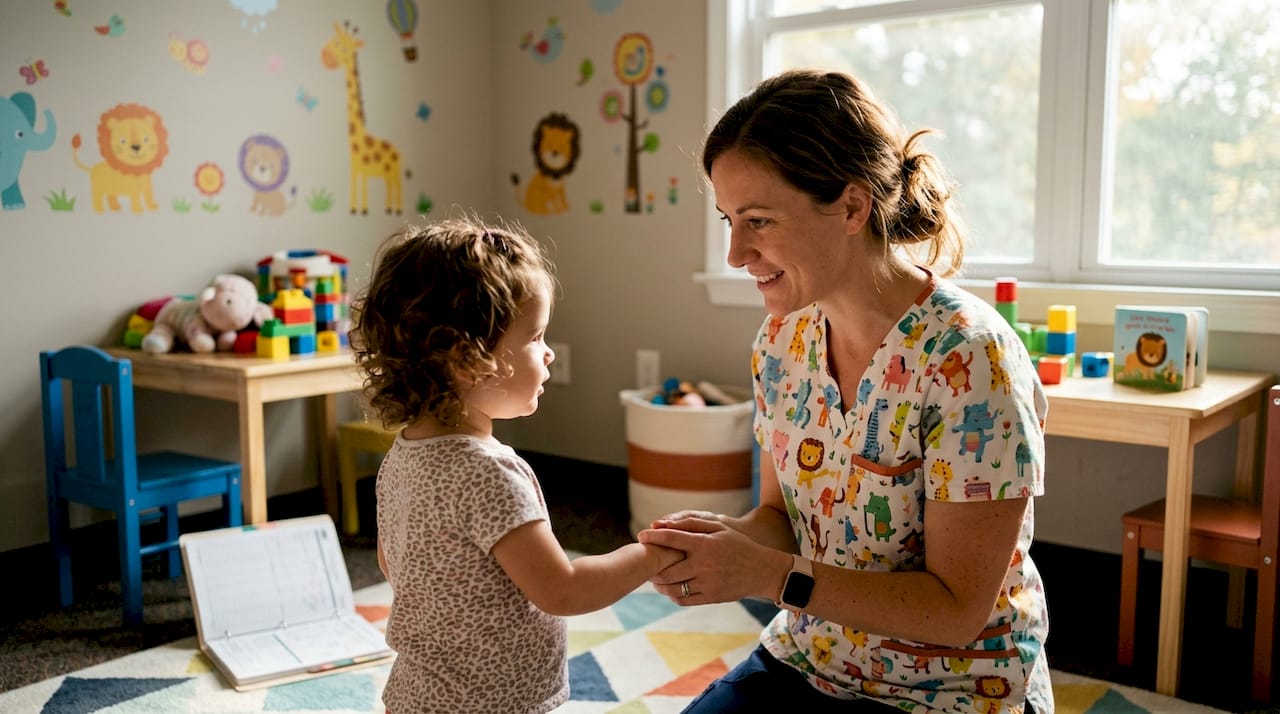
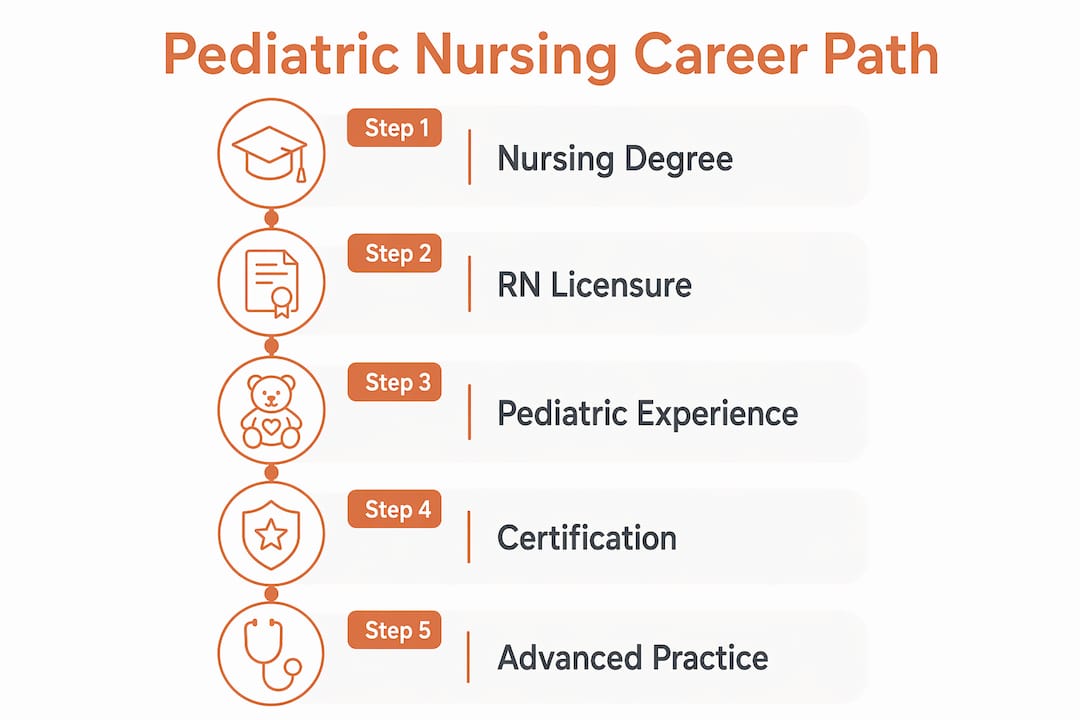
Pediatric nursing is defined as a registered nursing specialty focused on the health and development of children from birth through young adulthood. Getting into pediatric nursing follows four clear milestones: earning a nursing degree, passing the NCLEX-RN exam, gaining pediatric clinical experience, and obtaining specialty certification such as the Certified Pediatric Nurse (CPN). Employment in this field is projected to grow 6–9% over the next decade, with an average salary of $71,280. That growth rate reflects strong, sustained demand for nurses who can care for children across hospital, clinic, and home settings.
How to get into pediatric nursing: your education options
The first step on the pediatric nursing career path is completing an accredited nursing program. Two main degree options exist: the Associate Degree in Nursing (ADN) and the Bachelor of Science in Nursing (BSN). ADN programs take roughly 2 years, while BSN programs take 4 years and include additional coursework in leadership, research, and community health.
Major children’s hospitals prefer or require a BSN for pediatric nursing roles to support better clinical outcomes. That preference is not arbitrary. BSN-prepared nurses demonstrate stronger critical thinking and are better positioned for specialty practice and advancement. If you already hold a non-nursing bachelor’s degree, an accelerated BSN program can compress the path to roughly 12–18 months.

Both programs cover anatomy, pharmacology, pediatric health, and clinical rotations. The quality of your clinical rotation experience matters as much as the degree itself. Look for programs that include dedicated pediatric placements in children’s hospitals or outpatient clinics.
Pro Tip: When evaluating nursing programs, ask directly whether pediatric clinical rotations are guaranteed or only possible. A program that places you in a pediatric unit, even for one semester, gives you a measurable advantage when applying for your first pediatric role.
Feature | ADN | BSN |
Program length | 2 years | 4 years |
Pediatric specialty preference | Less common | Preferred or required at major hospitals |
Leadership and research coursework | Minimal | Included |
Path to advanced practice | Requires additional education | Direct bridge to MSN or DNP |
Best suited for | Fast entry into nursing | Long-term pediatric career growth |
How do you become a licensed RN and gain pediatric experience?
Passing the NCLEX-RN exam is the mandatory gateway to practicing as a registered nurse. After passing, state licensure typically takes 2–8 weeks. That window is a good time to research pediatric nurse residency programs and target facilities with dedicated pediatric units.
Gaining pediatric-specific experience early is the single most important factor in building a specialty career. Here are the most effective pathways to get that experience:
Apply to a pediatric nurse residency program. Residency programs lasting 6–12 months provide structured mentorship and specialty preparation that general entry-level roles cannot match. Children’s hospitals like Children’s Healthcare of Atlanta run formal residency tracks specifically for new graduates.
Target inpatient pediatric units. Medical-surgical pediatric floors, pediatric intensive care units (PICUs), and pediatric emergency departments all build the clinical depth employers look for in specialty candidates.
Consider neonatal or primary care as a bridge. Starting in neonatal units or primary care builds transferable skills in developmental assessment and family communication that translate directly to pediatric specialty work.
Pursue outpatient pediatric clinics. Pediatric outpatient settings offer exposure to well-child visits, chronic disease management, and vaccine administration. These roles are often more accessible for new graduates than hospital units.
Build pediatric-specific clinical skills. Mastering weight-based dosing math and age-appropriate communication, including play therapy and distraction techniques, sets you apart from generalist applicants.
Pro Tip: Pediatric nursing requires you to treat parents as clinical partners, not bystanders. Practice explaining procedures to caregivers clearly and calmly from your first clinical rotation. That skill is what hiring managers at children’s hospitals test for in interviews.
Family-centered care is the standard model in pediatric nursing. It requires emotional intelligence and communication skills that go well beyond typical patient-centered care. Nurses who master this model become indispensable in both hospital and home-based settings.
What certifications advance a pediatric nursing career?
Certification is the clearest signal to employers that you have committed to pediatric nursing as a specialty. The two primary credentials are the Certified Pediatric Nurse (CPN), administered by the Pediatric Nursing Certification Board (PNCB), and the Pediatric Nursing Certification (PED-BC), offered by the American Nurses Credentialing Center (ANCC).
The CPN requires an active RN license and 1,800 hours of pediatric clinical experience. Nurses who earn the CPN report 97% personal fulfillment and 88% increased clinical confidence. Those numbers reflect a real shift in how certified nurses approach their work, not just a credential on a resume.
Certification | Issuing Body | Experience Required | Renewal |
Certified Pediatric Nurse (CPN) | PNCB | 1,800 pediatric hours | Every 3 years |
Pediatric Nursing Certification (PED-BC) | ANCC | 2 years RN experience, 2,000 pediatric hours | Every 5 years |
Pediatric Nurse Practitioner (PNP-PC or PNP-AC) | PNCB / ANCC | MSN or DNP required | Every 5 years |
For nurses who want to advance to an advanced practice role, the Pediatric Nurse Practitioner (PNP) track requires a Master of Science in Nursing (MSN) or Doctor of Nursing Practice (DNP), which takes an additional 2–4 years of graduate education. Two distinct PNP tracks exist: Primary Care (PNP-PC) and Acute Care (PNP-AC). These tracks are not interchangeable. PNP-PC nurses work in outpatient and community settings, while PNP-AC nurses manage complex, critically ill children in hospital environments. Choose your track based on the patient population you want to serve long-term.
Pro Tip: Start logging your pediatric clinical hours from your first day on a pediatric unit. The PNCB requires documentation of 1,800 hours, and many nurses underestimate how quickly those hours accumulate when tracked consistently.
What are practical strategies for entering the pediatric workforce?
Landing your first pediatric nursing role requires more than a degree and a license. The job search itself is a skill, and pediatric nursing is competitive enough that preparation matters.
Build a pediatric-focused resume. List any pediatric clinical rotations, volunteer work with children, and relevant coursework. Hiring managers at children’s hospitals scan for pediatric exposure before reading anything else.
Target facilities that support new graduates. Children’s hospitals with formal residency programs, pediatric home care agencies, and outpatient pediatric clinics all offer structured onboarding. Agencies like Opulentprivatecare, which specialize in in-home pediatric nursing, provide focused environments where new nurses build specialty skills quickly.
Be flexible with location and setting. Rural pediatric clinics and home health agencies often have more openings than urban children’s hospitals. Starting in a less competitive market builds your record faster.
Network through professional organizations. The Society of Pediatric Nurses (SPN) and the PNCB both offer student memberships, job boards, and mentorship connections. These relationships often surface unadvertised openings.
Maintain current certifications and skills. Pediatric Advanced Life Support (PALS) certification is required or strongly preferred at most pediatric facilities. Complete it before you apply, not after you receive an offer.
Embrace the family-centered care model as a differentiator. Nurses who can articulate how they engage parents as partners in care stand out in interviews and perform better in practice.
Career advancement in pediatric nursing follows a clear arc: bedside experience, specialty certification, and then advanced practice or leadership. Each stage builds on the last, and the nurses who progress fastest are those who pursue certification before they feel “ready.”
Key Takeaways
Becoming a pediatric nurse requires completing an accredited nursing degree, passing the NCLEX-RN, accumulating pediatric clinical hours, and earning specialty certification such as the CPN or PED-BC.
Point | Details |
Degree choice matters | BSN is preferred or required at major children’s hospitals for pediatric roles. |
Licensure timeline | State RN licensure takes 2–8 weeks after passing the NCLEX-RN exam. |
Certification threshold | The CPN requires 1,800 pediatric clinical hours and an active RN license. |
Residency programs accelerate entry | Pediatric nurse residencies (6–12 months) provide mentorship that general roles cannot match. |
Advanced practice tracks differ | PNP-PC and PNP-AC are distinct, non-interchangeable roles requiring targeted graduate education. |
What I’ve learned about building a pediatric nursing career
The most common mistake I see aspiring pediatric nurses make is waiting for the perfect opportunity before pursuing certification. They accumulate hours, then wait until they feel confident, then wait until the timing is right. The nurses who advance fastest do the opposite. They log hours from day one, apply for the CPN as soon as they hit 1,800 hours, and let the credential open doors rather than waiting for doors to open first.
The other thing I’d push back on is the idea that starting in a general med-surg unit is always the right first move. For pediatric nursing specifically, any pediatric-adjacent experience, whether neonatal, primary care, or home health, builds more relevant skills than a general adult unit. The clinical language, the developmental framework, and the family communication style are all different in pediatric care. Starting in a related pediatric setting shortens the learning curve considerably.
Choosing between the PNP-PC and PNP-AC tracks is a decision I’d encourage you to make early, not after you’ve already started a graduate program. Shadowing a PNP in each setting before you apply to graduate school takes a few hours and can save you years of retraining. The GAPP program in Georgia is one example of how specialized pediatric care settings create distinct career environments worth exploring before committing to a track.
— Opulent
Opulentprivatecare: where pediatric nursing meets specialized home care
Pediatric nurses who want to work in a focused, family-centered environment will find that in-home pediatric care offers something hospital units rarely can: continuity. Opulentprivatecare provides specialized in-home pediatric nursing services across Georgia, serving children with complex needs including tracheostomy care, ventilator support, and feeding tube management.
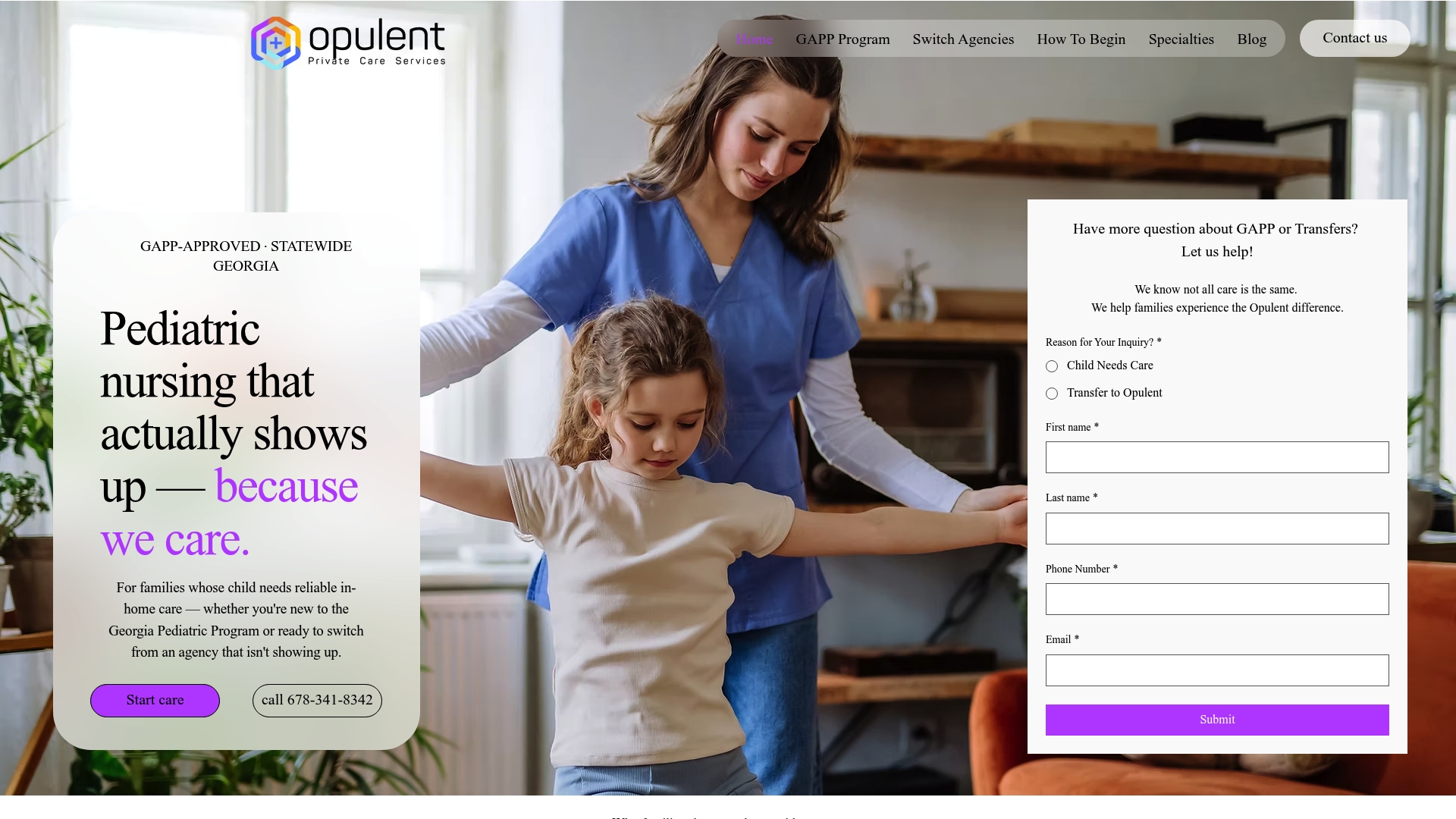
Opulentprivatecare’s “3 Thumbs Up Rule” requires approval from the family, the caregiver, and Opulentprivatecare before any care begins. That process protects both the child and the nurse. For nurses building a pediatric specialty career, working with an agency that publishes shift fill rates and nurse retention metrics means you join a team built around reliability, not rotation. Families and nurses both benefit from that standard.
FAQ
What degree do you need to become a pediatric nurse?
You need at minimum an Associate Degree in Nursing (ADN) or a Bachelor of Science in Nursing (BSN) to become a registered nurse. Most major children’s hospitals prefer or require a BSN for pediatric nursing roles.
How long does it take to become a pediatric nurse?
The full path takes roughly 4–6 years: 2–4 years for your nursing degree, a few weeks for state licensure after passing the NCLEX-RN, and additional time building the 1,800 clinical hours required for CPN certification.
What does a pediatric nurse do on a typical shift?
A pediatric nurse assesses children’s health, administers weight-based medications, performs procedures, and communicates with parents as active partners in care. Specialized skills like trach care, feeding support, and age-appropriate communication are central to the role.
What is the CPN certification and who needs it?
The Certified Pediatric Nurse (CPN) is a specialty credential issued by the PNCB that requires an active RN license and 1,800 hours of pediatric clinical experience. Nurses who earn it report significantly higher clinical confidence and career satisfaction.
Can you work in pediatric nursing without hospital experience?
Yes. Outpatient pediatric clinics, home health agencies, and school nursing programs all employ pediatric nurses. Starting in neonatal or primary care also builds transferable skills that support a later move into pediatric specialty settings.
Recommended
Comments