
Yes, You Can Increase GAPP Hours in Georgia. Here's How.
- Opulent Private Care Services

- Aug 22
- 7 min read
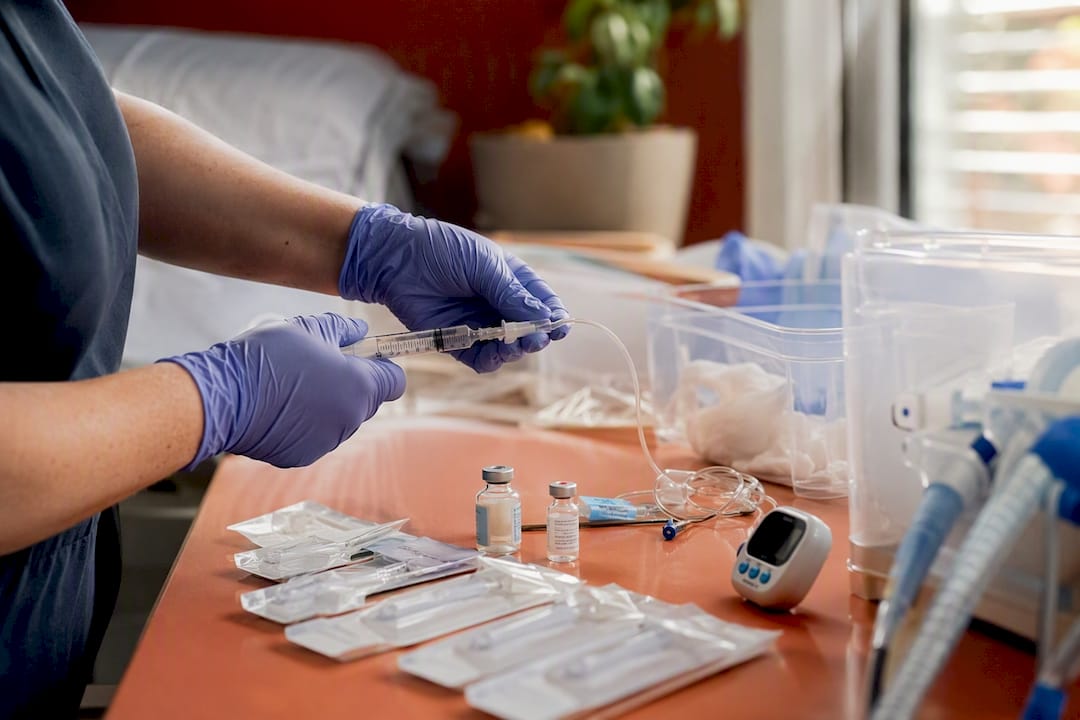
Georgia Pediatric Program hours can go up when your child’s medical needs change, but Medicaid requires fresh prior authorization before that happens. The single most important step is getting your child’s physician to sign a current Physician Plan of Treatment (PPOT) that names the exact number of skilled nursing hours and tasks you’re requesting.
Get a dated PPOT from the attending physician stating the requested hours and skilled tasks.
Submit it with updated DMA forms through your GAPP agency.
If the situation is urgent, ask the agency to request expedited review or interim coverage while the paperwork processes.
Pro Tip: Bring a list of specific incidents (dates, times, what happened) to the physician visit. A PPOT built on vague language like “needs more support” gets challenged far more often than one built on documented events.
Key Takeaways
Increasing GAPP hours in Georgia requires a fresh, dated physician order specifying exact hours and skilled tasks, followed by complete DMA paperwork submitted without delays.
Point | Details |
Start with a current PPOT | A physician must sign a dated order naming specific hours and skilled nursing tasks requested. |
Document medical necessity thoroughly | Incident logs, hospital notes, and ADL evidence carry far more weight than general statements. |
Expect a 2 to 6 week timeline | Incomplete forms or mismatched hour totals are the main causes of delay. |
Know your appeal rights | Denied or reduced hours can be challenged through a formal Fair Hearing request. |
Choose an agency with usage data | Opulentprivatecare publishes shift fill and retention rates and assists directly with PPOT and PA paperwork. |
Where to Find Official GAPP Forms and Policy Guidance
Georgia Pediatric Program policy 2933 for eligibility and procedural rules.
MMIS GAPP presentation for PPOT, DMA-6A, and DMA-80 form guidance and Program Specialist contact details.
This article is general information, not a substitute for advice from a qualified doctor. Consult a qualified healthcare professional about your own circumstances before acting on anything here.
Table of Contents
How Increasing GAPP Nursing Hours Georgia Cases Get Decided
Medical necessity drives every hour decision under GAPP. Reviewers with Alliant, the Prior Authorization Unit, and the Department of Community Health look at whether your child’s clinical picture justifies the level of skilled nursing requested, not just what would be convenient for your family.
Approved hours vary widely. Some children qualify for a few hours a week, while the most medically complex cases receive round-the-clock coverage. Most families typically receive a moderate number of hours per day, with the exact amount depending on condition severity and specific skilled tasks., with the gap explained almost entirely by condition severity and the specific skilled tasks involved (ventilator management versus intermittent seizure monitoring, for example).
Reviewers respond to documentation, not descriptions. Strengthen a request for more hours with:
Recent hospital discharge summaries or specialist notes showing a change in condition.
Incident logs with dates and times (seizures, desaturation events, feeding complications).
Evidence your child can’t independently perform activities of daily living.
A nurse’s in-home clinical assessment backing the requested hour count.
GAPP isn’t a fixed entitlement. Approved hours get reviewed on a recurring basis, typically every 6 to 12 months, so the same documentation habits that win an increase also protect you at recertification.
What Forms Do You Need to Request More Hours?
Four documents drive every GAPP hours decision, and getting them wrong is the most common reason requests stall.
PPOT (Appendix Y format). The attending physician must develop, sign, and date this plan. Since January 2023, Appendix Y is the required PPOT format, and it needs to be signed within 30 days of certification to stay valid.
DMA-6A. Certifies medical need and supports the hours requested on the PPOT.
DMA-80. Filed by the agency through the GAMMIS portal to formally request the prior authorization.
Appendix Z. Only needed if hours are being shared or transferred between two GAPP-approved agencies.
Forms typically stay valid until the next scheduled recertification, so mark that date and start renewal paperwork well before it lapses.
Ask your child’s physician to write the order in concrete terms: name the skilled task (“tracheostomy suctioning every 2 to 3 hours,” “G-tube feeding administration four times daily”) and state the exact number of hours requested. A PPOT that just says “increased nursing care needed” almost always gets sent back for clarification, which adds weeks to the timeline.
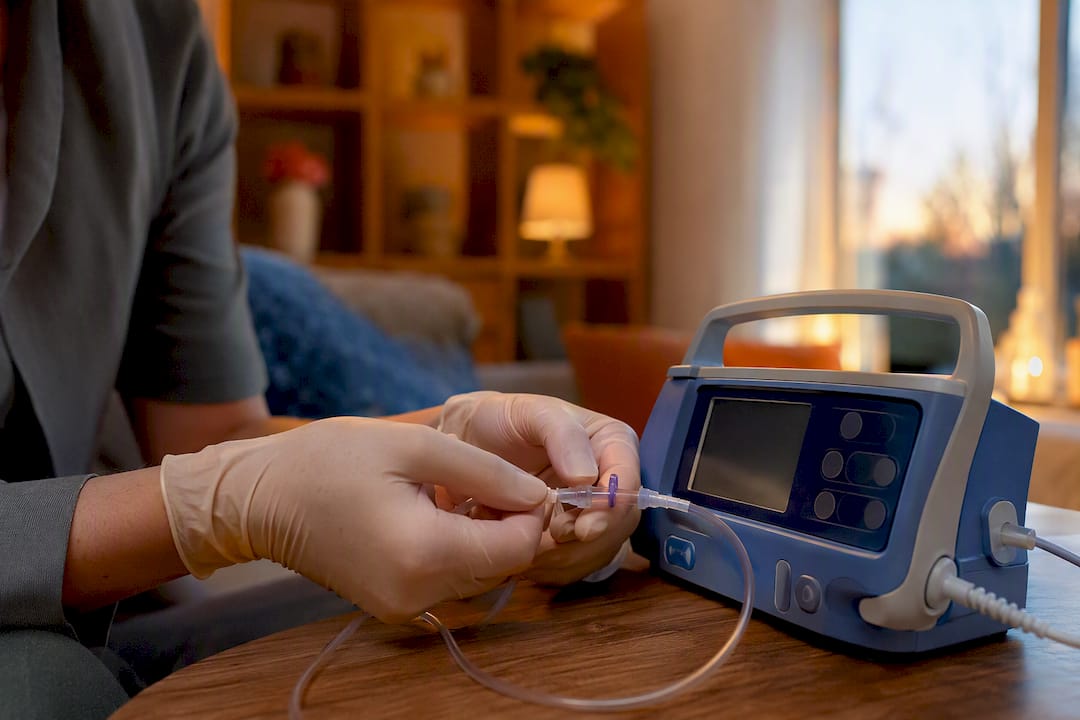
Pro Tip: Missing signatures and mismatched hour totals between the PPOT and DMA-80 are the two most common reasons GAPP paperwork bounces back. Have your agency review both forms side by side before submission.
How Do You Actually Request an Increase and Track It?
Requesting more hours is a sequence, and skipping a step is what turns a six-week approval into a three-month ordeal.
Get an updated PPOT. Schedule the physician visit, bring incident documentation, and confirm the order lists the exact hours and skilled tasks you’re requesting.
Contact your GAPP agency. They prepare the DMA-6A and DMA-80 package and submit it through GAMMIS on your behalf, since agencies typically handle the formal prior authorization submission.
Log everything. Write down the submission date, confirmation number, and who at the agency you spoke with.
Follow up. Check in with your agency and, if needed, county DFCS or DCH around the two week mark. If your child’s situation is medically urgent, ask specifically for expedited review.
If the paperwork sits without movement:
Call the GAPP Program Specialist listed on your agency’s most recent correspondence.
Reference your submission date and confirmation number in every call.
Keep a written log of every contact, including the name of who you spoke to and what they told you.
Georgia caseworkers handle a heavy volume of files. A polite, specific follow-up call referencing your exact submission date moves things faster than a general “checking in” message ever will.
Coordinating GAPP Hours With School Nursing and Other Agencies
GAPP hours can’t duplicate what your child’s school already provides. If your child has an IEP or 504 plan with school nursing services, document exactly what the school covers so reviewers can see what’s left for GAPP to fill during non-school hours.
Sharing hours between two agencies is allowed and fairly common for families needing both day and overnight coverage. Each agency files its own DMA-6A and DMA-80 for its portion, and a signed Appendix Z ties the arrangement together so there’s no overlap or duplicate billing.
Before signing with a second agency, ask directly:
What’s your typical shift fill rate for nights and weekends?
What’s your nurse retention rate, and how do you handle continuity if someone leaves?
Who coordinates with my child’s school to avoid documentation gaps?
What’s the Timeline, and What If Hours Get Denied?
Approval typically takes two to six weeks once Medicaid eligibility and a physician order are active. Incomplete forms, missing signatures, and hour mismatches between the PPOT and DMA-80 are what stretch that timeline toward the longer end.
If hours get reduced or denied, you have the right to appeal, including requesting a Fair Hearing under Georgia Medicaid policy. Watch the appeal deadline listed on your denial notice closely. Strengthen your case with:
Recent progress notes showing your child’s current clinical status.
Incident logs covering the period since the last approval.
A clear explanation if approved hours went unused (illness, scheduling conflicts), since gaps in usage can otherwise be read as evidence the hours aren’t needed.
Pro Tip: Keep a standing folder, digital or physical, with every PPOT, DMA form, and incident log by date. When recertification or an appeal comes around, you want to hand over a timeline, not scramble to reconstruct one.
Opulentprivatecare’s Practical Advice on Matching and Continuity
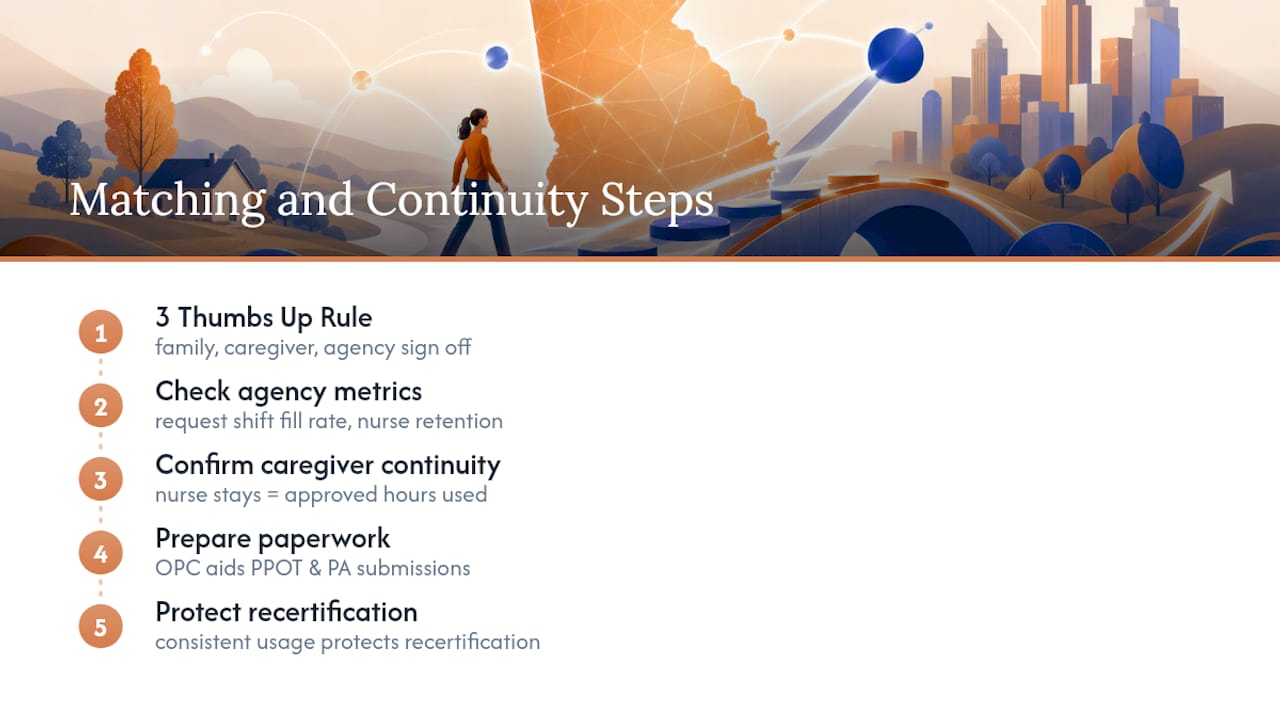
A hard-won hour increase means nothing if the nurse assigned to fill it doesn’t show up consistently. Opulentprivatecare built its 3 Thumbs Up Rule around that reality: care starts only after the family, the caregiver, and Opulentprivatecare all sign off on the fit. That three-way approval cuts down on the mismatches that lead to early turnover and unused hours.
Before signing with any agency, ask for their shift fill rate and nurse retention numbers. Both connect directly to whether your approved hours actually get used, and consistent usage protects you at recertification.
A GAPP approval sets the ceiling. Whether your child gets that care every week depends entirely on whether the agency can keep a nurse in the home.
Opulentprivatecare also helps families prepare PPOT documentation and PA submissions alongside GAPP intake guidance, aiming to catch the signature and hour-total mismatches that typically cause delays.
My Checklist for the Next 48 to 72 Hours
I’m calling my child’s doctor for a dated PPOT today, then calling our agency to submit the PA and logging every date. I’m pulling together recent records now and writing down who to call if we need to appeal or ask for expedited review.
Let Opulentprivatecare Handle the Paperwork While You Focus on Your Child
Georgia families requesting a GAPP hour increase are usually juggling a physician’s office, a Medicaid caseworker, and an agency’s intake team all at once. Opulentprivatecare takes the paperwork off your plate entirely: preparing the PPOT documentation, filing DMA-6A and DMA-80 through GAMMIS, and matching a nurse through the 3 Thumbs Up Rule so your child’s newly approved hours actually get filled, shift after shift.
Opulentprivatecare also publishes its shift fill rate and nurse retention numbers, so you’re not guessing whether an approved hour will translate into an actual nurse at the door. If you’re preparing a request for more hours, or your child needs trach, ventilator, or G-tube support, start with a free intake consultation. Have your child’s most recent hospital or specialist notes and current Medicaid information on hand, and visit the Opulentprivatecare team to get the process moving this week.
Sources
Recommended
Comments