
Pediatric Home Care Alternatives: A Parent's Guide

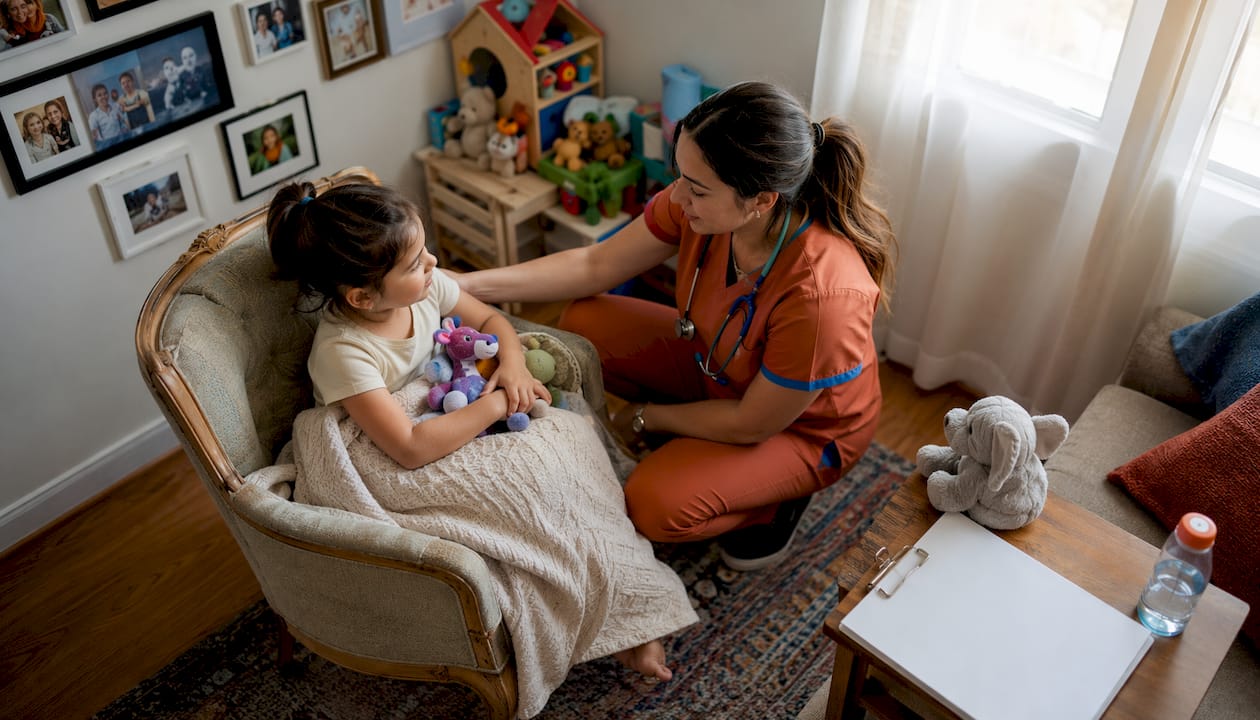
For children with complex medical needs, pediatric home care alternatives deliver hospital-level treatment in the one place your child feels safest: home. These aren’t watered-down versions of clinical care. Programs like Atrium Health Levine Children’s Hospital at Home and Nemours Children’s Advanced Care at Home provide 24/7 monitoring, in-person clinical visits, and full care coordination, all without a hospital admission.
Here’s what that looks like in practice:
24/7 clinical oversight via virtual pediatric hospitalists and on-call nurses
In-person visits from paramedics or skilled nurses at least twice daily
Medication administration, IV placement, and vital sign monitoring at home
Care coordination covering daily plans, specialist referrals, and supply delivery
Lower infection risk compared to inpatient stays, with better rest and family involvement
Medicaid-funded options like Georgia’s GAPP program for qualifying families
The children who benefit most are those who are medically stable but still need skilled clinical attention: kids on ventilators, feeding tubes, or tracheostomies, as well as those recovering from surgery or managing chronic neurological conditions. Opulentprivatecare, for example, specializes in exactly this population in Georgia, matching families with nurses trained in trach, vent, and feeding tube care.
Table of Contents
What types of pediatric home care alternatives are available?
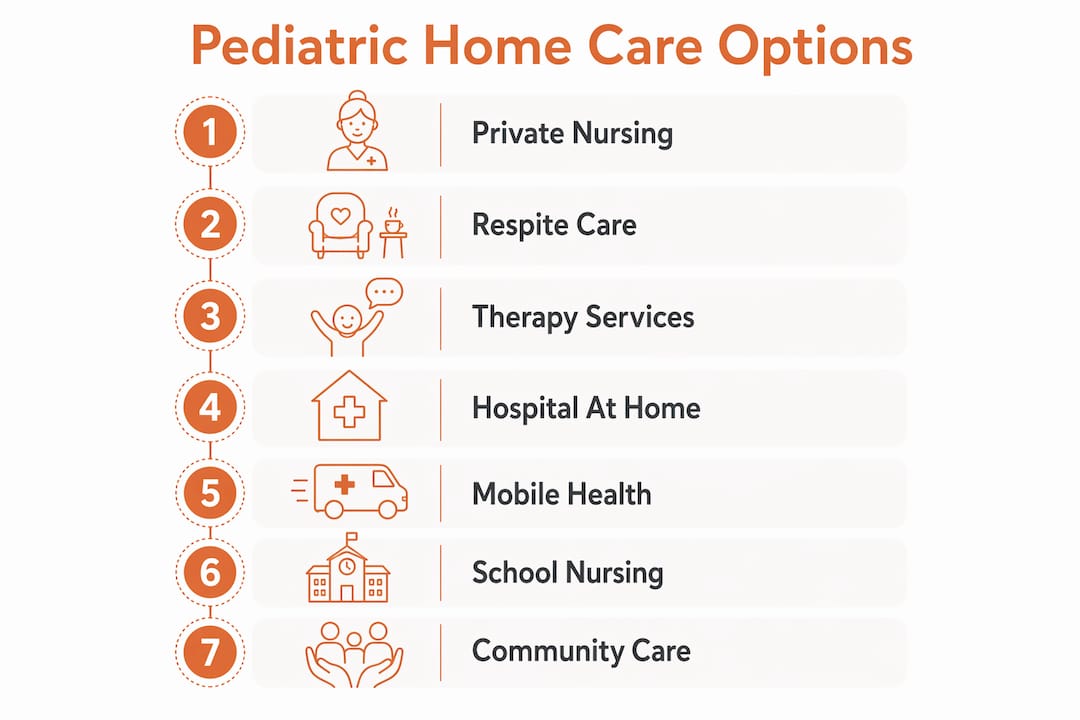
The term “pediatric home care” covers a wide range of service models, and the right fit depends entirely on your child’s medical complexity and daily care needs.
Private duty nursing
Private duty nursing (PDN) is shift-based skilled nursing care ordered by a physician, typically delivered in the home for extended hours or around the clock. A registered nurse (RN) or licensed practical nurse (LPN) manages medications, monitors vitals, and handles complex clinical tasks like trach suctioning or tube feeding. For families with medically fragile children, PDN is often the backbone of a home care plan. You can explore private duty nursing providers to compare models.
Respite care
Respite nursing gives primary family caregivers planned breaks while a trained nurse or aide covers care. It’s not a luxury. Caregiver burnout directly affects a child’s care quality, and respite services are specifically designed to prevent it.
Therapy services
Physical therapy, occupational therapy, and speech therapy can all be delivered at home. For children with neurological conditions or developmental delays, receiving therapy in a familiar environment often produces better engagement and faster progress than clinic-based sessions.

Hospital at Home programs
These are the most intensive home care models. Atrium Health’s program sends certified paramedics trained in pediatrics to visit at least twice daily, while a pediatric hospitalist manages care virtually around the clock. Wireless monitors track heart rate, respiratory rate, and oxygen levels continuously. This model currently serves children ages 0–17 within 30 minutes of Levine Children’s Hospital in North Carolina.
Mobile integrated health
This model uses community paramedics paired with virtual clinical oversight to deliver acute care at home. It’s distinct from traditional PDN and is increasingly used for post-discharge monitoring and short-term illness management.
School-based nursing
For children who attend school with complex medical needs, a private duty nurse can accompany them throughout the school day, managing medications, monitoring devices, and responding to emergencies.
Transitional and community-based care
Facilities like Almost Home Kids in Illinois serve as transitional care bridges between hospital discharge and full home care. They teach families clinical skills and provide respite while children stabilize. Availability varies by state.
Which conditions can pediatric home care safely manage?
Home-based care isn’t appropriate for every situation, but the range of conditions it can handle is broader than most parents expect.
Respiratory infections, including moderate COVID-19 cases and bronchiolitis
Post-surgical recovery, with wound care, IV antibiotics, and monitoring
Infusion therapy for conditions requiring IV medications or nutrition
Tracheostomy and ventilator management for children with chronic respiratory needs
Feeding tube support, including G-tube and NG-tube care
Neurological conditions such as epilepsy, cerebral palsy, and spinal muscular atrophy
Newborn jaundice and other neonatal monitoring needs
Urinary tract infections requiring IV or oral antibiotic courses
Chronic illnesses including congenital heart conditions and metabolic disorders
Eligibility hinges on medical stability. A child who needs emergency intervention or intensive monitoring beyond what home technology can provide still belongs in the hospital. But for children who are stable and whose primary needs are monitoring, medication, and skilled nursing tasks, home care is often the right setting. Telehealth and remote monitoring have expanded this list further, enabling real-time specialist support for families in underserved or rural areas.
Why home care often beats hospitalization for stable children
The Nemours Children’s Advanced Care at Home program launched in June 2025 and, since inception, has returned 177 hospital days to families, prevented 27 inpatient readmissions, and avoided 91 emergency department visits. Those numbers reflect something parents already know intuitively: children heal better at home.
The clinical case for home care includes:
Lower infection risk from hospital-acquired pathogens, particularly for immunocompromised children
Better sleep and rest without the constant interruptions of inpatient care
Family-centered routines that reduce anxiety for both child and caregiver
Personalized attention from a consistent nurse rather than rotating hospital staff
Reduced costs for families and payers compared to inpatient stays
Continuity with specialists through coordinated virtual and in-person follow-up
The honest caveat: geographic availability remains uneven. Workforce gaps in pediatric-trained home health providers mean that families in rural areas or smaller states may find fewer options. Telehealth is helping close that gap, but it hasn’t closed it entirely.
How pediatric home care is actually organized and delivered
The care team for a home-based pediatric patient looks different from a hospital floor, but the clinical depth is comparable for the right cases.
A typical multidisciplinary team includes a pediatric hospitalist managing the overall care plan virtually, a pediatric nurse available 24/7 for monitoring and clinical questions, paramedics or home health aides for in-person tasks, and a social worker coordinating family support and community resources. Therapists, pharmacists, and child life specialists round out the team as needed.
Operationally, families can expect:
Daily care plans updated based on the child’s status
Medications, supplies, and nutrition delivered to the home
Wireless monitors for continuous vital sign tracking
Scheduled in-person visits with clear appointment windows (no surprise arrivals)
Immediate escalation pathways to emergency services if needed
Opulentprivatecare builds its delivery model around one specific problem: rotating nurses. Their approach assigns a consistent nurse to each child, matched on both clinical skills and family fit, and tracks nurse retention publicly so families can see the data before they commit.
How to find and access pediatric home care providers
Start with your child’s hospital discharge planner or pediatrician. They can identify which service types your child qualifies for and initiate referrals to home health agencies. From there, the process typically involves:
Verify pediatric specialization. Not every home health agency has nurses trained in trach care, ventilator management, or pediatric IV therapy. Ask directly about clinical competencies before moving forward.
Check Medicaid eligibility. Most pediatric home care for medically complex children is funded through Medicaid. In Georgia, the GAPP program covers skilled nursing for qualifying children, and agencies like Opulentprivatecare assist families with the paperwork.
Ask about nurse continuity. Will your child have the same nurse consistently, or will you see rotating staff? This question separates reliable providers from the rest.
Request performance data. Shift fill rates and nurse retention figures tell you more about a provider’s reliability than any marketing language.
Understand the intake process. A thorough intake should include a clinical assessment, a family interview, and a matching process that accounts for your child’s specific conditions and your household’s needs.
Pro Tip: Ask any prospective provider how they handle a shift gap. Their answer reveals more about their operational reliability than their website ever will.
For a broader comparison of pediatric home health companies near you, reviewing multiple providers against these criteria helps you make a confident decision.
What separates a quality pediatric home care provider from an average one
The difference between a good provider and a great one usually comes down to three things: consistency, transparency, and communication.
Consistent caregiver assignment reduces the learning curve for each shift and builds trust with the child
Published performance metrics like shift fill rates and nurse retention signal that a provider holds itself accountable
Thorough nurse qualifications specific to the child’s conditions, not just general pediatric experience
Ongoing training in specialized skills such as trach management, seizure protocols, and ventilator troubleshooting
Active family involvement in care planning, not just as observers but as decision-makers
Coordination with the medical home, including the child’s pediatrician and any specialists
Opulentprivatecare’s “3 Thumbs Up Rule” operationalizes this principle. Before any nurse begins with a family, three parties must approve the match: the family, the nurse, and Opulentprivatecare itself. No placement moves forward without all three. Combined with publicly tracked nurse retention metrics, this approach gives families something rare in home health: verifiable continuity before care even starts.
Payment reform and coordinated training partnerships between pediatric hospitals and home health agencies are gradually raising the floor across the industry, but families shouldn’t wait for systemic change. Asking the right questions now gets you to the right provider faster.
Opulentprivatecare: specialized pediatric nursing for Georgia families
For Georgia families navigating the transition from hospital to home, Opulentprivatecare offers something most agencies can’t match: a nurse who shows up consistently, knows your child’s conditions, and stays.
Opulentprivatecare focuses exclusively on medically complex children, with clinical expertise in tracheostomy, ventilator management, G-tube feeding, seizure care, and neurological conditions. Every placement goes through the “3 Thumbs Up Rule,” so you never start care with a nurse who isn’t the right fit. Shift fill rates and nurse retention are published openly, not buried in a brochure. Medicaid and GAPP paperwork support is included, so families spend less time on administrative hurdles and more time with their child. If your child needs specialized in-home pediatric nursing in Georgia, reach out to Opulentprivatecare to start the matching process.
Key Takeaways
Pediatric home care alternatives deliver hospital-level clinical care at home, reducing readmissions, lowering infection risk, and keeping families together through a child’s recovery or ongoing medical management.
Point | Details |
Proven outcomes | Nemours’ program returned 177 hospital days to families and prevented 27 inpatient readmissions since inception. |
Service range | Options span private duty nursing, Hospital at Home, therapy services, respite care, and school-based nursing. |
Access pathway | Start with your child’s discharge planner, verify pediatric specialization, and confirm Medicaid or GAPP eligibility early. |
Quality signals | Ask for published shift fill rates and nurse retention data before committing to any provider. |
Opulentprivatecare | Georgia families get consistent, matched nurses for trach, vent, and feeding tube care, with GAPP paperwork support included. |
Recommended
Comments