
Parents: Pediatric Home Oxygen at SpO2 <88% and Practical Home Safety

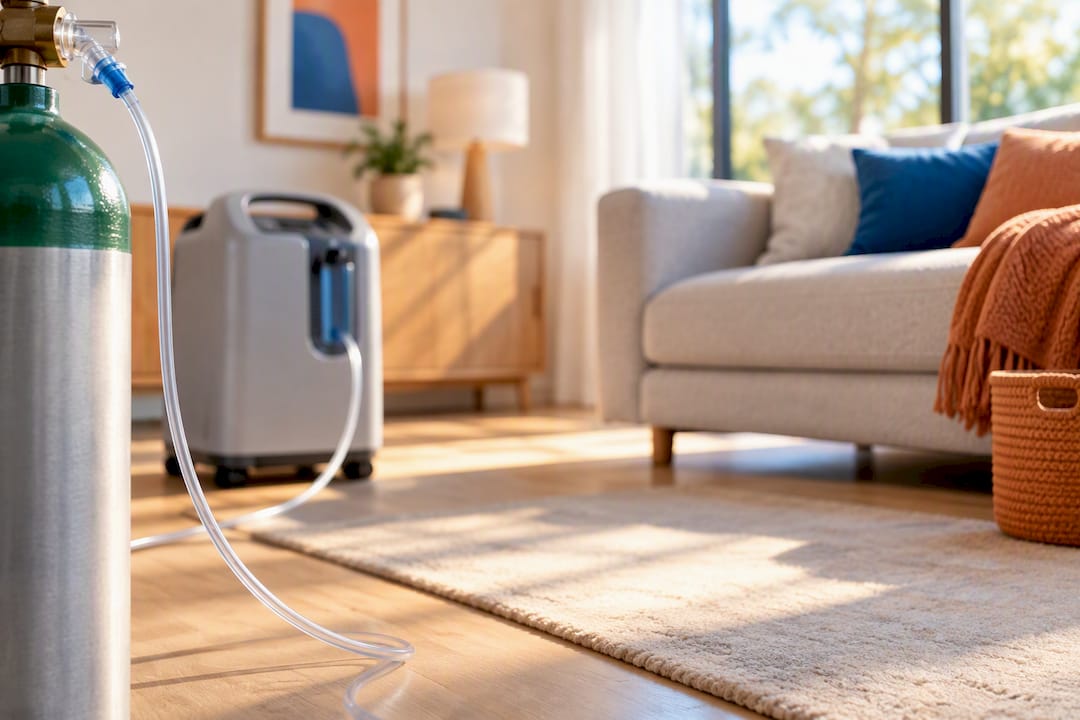
Home oxygen is a prescribed medication for children with chronic hypoxemia, and it’s only appropriate when a child’s oxygen levels meet specific clinician-defined thresholds. Once that prescription is in place, three rules govern everything else: never change the flow rate without your clinician’s order, use pulse oximetry exactly as directed, and follow fire-safety precautions around the equipment at all times.
TL;DR:
Pediatric home oxygen is prescribed based on blood gas thresholds, with a typical PaO2 below 55 mm Hg or SpO2 below 88% qualifying children for therapy.
Equipment includes stationary concentrators and portable cylinders, with proper sizing, humidification, and caregiver training critical for safe and effective use.
Pulse oximeters are standard for monitoring, but readings can be inaccurate with movement or cold extremities; correct probe placement and alarm settings are essential.
Fire safety measures prevent ignition risks, especially avoiding petroleum products near oxygen sources and ensuring cylinders are stored upright and away from open flames.
Reassessment and weaning require clinician oversight, with regular follow-ups, gradually reducing oxygen flow, and using objective data like continuous oximetry to confirm improvements.
Table of Contents
What Are the Clinical Thresholds for Pediatric Home Oxygen?
A child qualifies for home oxygen therapy when blood gas or oximetry readings drop below defined safety margins, not simply because breathing “looks hard” during a cold or a bad night. The American Thoracic Society’s clinical practice guideline sets the benchmark most U.S. pediatric pulmonologists use today.
By the numbers: The ATS guideline defines the qualifying thresholds as PaO2 below 55 mm Hg or SpO2 below 88%. A slightly higher range, PaO2 of 55 to 59 mm Hg or SpO2 of 89%, still qualifies if the child also has cor pulmonale, elevated hematocrit, or edema related to right heart strain.
Those numbers aren’t arbitrary. Below that oxygen floor, tissues, including the developing brain and heart, don’t get what they need to function and grow normally. Above it, supplemental oxygen usually does more harm through cost, hassle, and unnecessary tethering than good.
Several diagnoses show up again and again on home oxygen referrals:
Chronic lung disease of prematurity (bronchopulmonary dysplasia). Underdeveloped lungs need extra support while alveoli continue maturing, often for months after a NICU discharge.
Pulmonary hypertension. Extra oxygen reduces pressure in the pulmonary arteries and eases strain on the right side of the heart.
Cystic fibrosis. Progressive lung scarring and mucus buildup can drop resting or exertional saturations, especially during flares.
Interstitial lung disease. These are rarer pediatric conditions, but they share the same pattern: stiff, scarred lung tissue that can’t move oxygen into the blood efficiently.
Confirming the need for pediatric oxygen therapy isn’t a single spot check. Clinicians typically order overnight oximetry, sometimes paired with daytime monitoring, and want to see a pattern of low readings sustained over roughly two weeks rather than a single rough night. That window matters because saturations naturally dip during sleep and during illness, and a one-off low reading doesn’t tell you much about a child’s baseline.
Here’s the part most parents aren’t told upfront: the ATS guideline itself acknowledges that pediatric evidence on optimal oxygen implementation, dosing, and discontinuation is thin. Much of what pulmonologists do is grounded in expert consensus rather than large randomized trials, simply because running controlled oxygen-withholding studies in medically fragile infants raises obvious ethical barriers. That doesn’t make the guidance weaker. It means your specialist’s clinical judgment, informed by your child’s specific growth trajectory and activity tolerance, carries real weight alongside the numbers on the monitor.
Which Equipment Do Families Use for Home Oxygen?
Most families managing home oxygen for children rely on two delivery systems working together, not one or the other. A stationary oxygen concentrator stays plugged in at home, pulling ambient air and concentrating the oxygen fraction continuously. Portable cylinders, either compressed gas tanks or smaller lightweight versions, cover trips outside the house and serve as backup if the concentrator loses power.
Each has real tradeoffs:
Concentrators run on electricity, hum audibly (which matters in a nursery), and can’t leave the house, but they never run out of gas and cost less per day to operate.
Cylinders are portable and don’t depend on the power grid, but they have a finite supply, need regular refills or exchanges, and are heavier to haul around than most people expect.
The nasal cannula is the standard interface for most kids, and getting the size right matters more than parents usually assume. Cannula prongs come in infant, pediatric, and adult sizes, and a poorly fitted cannula either leaks oxygen around the nose (undermining the prescribed flow) or irritates delicate nasal skin with constant friction. FiO2, the actual concentration of oxygen the child receives, isn’t fixed. It shifts with flow rate and with the child’s own tidal volume and breathing pattern, which is exactly why clinicians prescribe an exact liter flow rather than a general “some oxygen” instruction and why caregivers should never adjust that number on their own.
Humidification comes standard on most pediatric setups, especially at flows above 1 to 2 liters per minute, because dry oxygen dries out nasal passages fast. The Children’s Colorado home oxygen guide recommends keeping the humidifier bottle upright at all times, particularly in a portable setup where a tipped bottle can flood the tubing or stop delivering moisture altogether.
Pro Tip: Pack a “go bag” that stays by the door: a fully charged spare cylinder, extra tubing, a backup cannula, and a laminated card with your child’s prescribed flow rate and clinician contact number. Rebuilding that kit from scratch every time you leave the house is how families end up canceling outings.
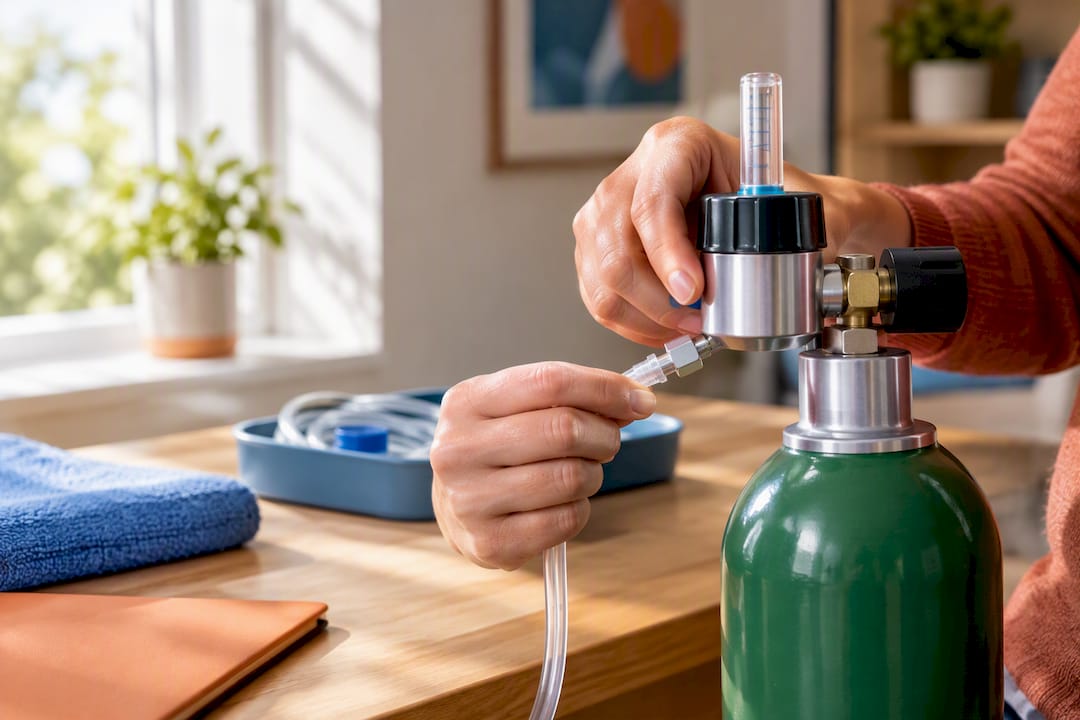
Your equipment supplier should walk you through setup in person, not just drop off a box. Expect training on how to read the concentrator’s flow dial, how to swap a cylinder regulator, and how to recognize a low-battery alarm on portable units. If a delivery arrives with no walkthrough, ask for one. Reliable pediatric respiratory care at home depends as much on caregiver confidence with the gear as it does on the gear itself.
How Do You Use a Pulse Oximeter With a Child at Home?
A pulse oximeter clipped to your child’s finger or toe estimates blood oxygen saturation by shining light through the skin, and it’s the primary tool for pediatric oxygen therapy monitoring at home. It’s remarkably good at what it does, with a known limitation worth understanding before you rely on it daily.
Readings from home pulse oximeters typically run about 2 to 3 percentage points above true arterial saturation, and that gap widens once SpO2 drops below 90%, the exact range where accuracy matters most. Motion, cold extremities, and poor circulation all degrade the signal further, which is why a single scary number on the screen doesn’t always mean a genuine emergency.
Setting up monitoring correctly cuts down on false alarms:
Use a pediatric-sized probe. An adult clip on a toddler’s finger reads inconsistently because it doesn’t seat against the skin properly.
Place it on a warm, still limb. Cold fingers and toes constrict blood flow and produce unreliable readings before you’ve even started troubleshooting.
Set alarm thresholds exactly as your clinician ordered, not to a default factory setting. Some children run a baseline saturation in the low 90s and don’t need an alarm tripping every few minutes.
Decide upfront: continuous or spot checks? Continuous monitoring suits infants, unstable conditions, or overnight use; spot checks work for stable older kids during waking hours.
When a nuisance alarm goes off, work through it in order: check that the probe hasn’t slipped, warm the extremity if it feels cold, confirm the sensor cable isn’t kinked or disconnected, and only then consider whether the reading reflects something real. The ATS patient guide is explicit on this point: check the equipment first, because tubing disconnections and kinks are a far more common cause of a low reading than an actual medical event.
Outpatient continuous oximetry studies, typically a 12 to 24 hour recording sent home with the family or done in a sleep lab, give clinicians objective data beyond a single office visit. These studies show up again at reassessment time and matter just as much for confirming ongoing need as they did for the original diagnosis.
What Fire Safety Rules Apply to Oxygen at Home?
Oxygen itself doesn’t burn, but it makes anything that catches fire burn faster and hotter. That single fact drives every safety rule pediatric oxygen households need to follow, and a few of the real hazards aren’t obvious until someone points them out.
Petroleum-based products are the sneaky one. Petroleum jelly, many lip balms, and oil-based facial creams are common around a cannula site because they soothe irritated skin, but they’re also flammable and sit directly next to an oxygen source. Water-based moisturizers do the same soothing job without the risk. Friction toys, lighters, and even some battery-operated devices that spark can also ignite in an oxygen-enriched environment faster than most people expect.
A short list covers the essentials:
No smoking anywhere in the house or car, ever, including by visitors.
Skip petroleum-based creams, balms, or jelly near the face and cannula; use water-based products instead.
Keep the concentrator and cylinders at least 4 to 6 feet from any open flame, stove, space heater, or candle.
Store cylinders upright, secured so they can’t tip or roll, in a ventilated area, never in a closed closet.
Label the equipment and the child’s bedroom door so emergency responders know oxygen is in use.
Pro Tip: Call your electric utility and your home insurer as soon as oxygen equipment arrives. Utilities often flag homes with life-sustaining medical equipment for priority restoration during outages, and some insurers ask about medical devices for liability and coverage reasons. Both calls take ten minutes and cost nothing.
How Do You Handle Daily Care and Common Equipment Problems?
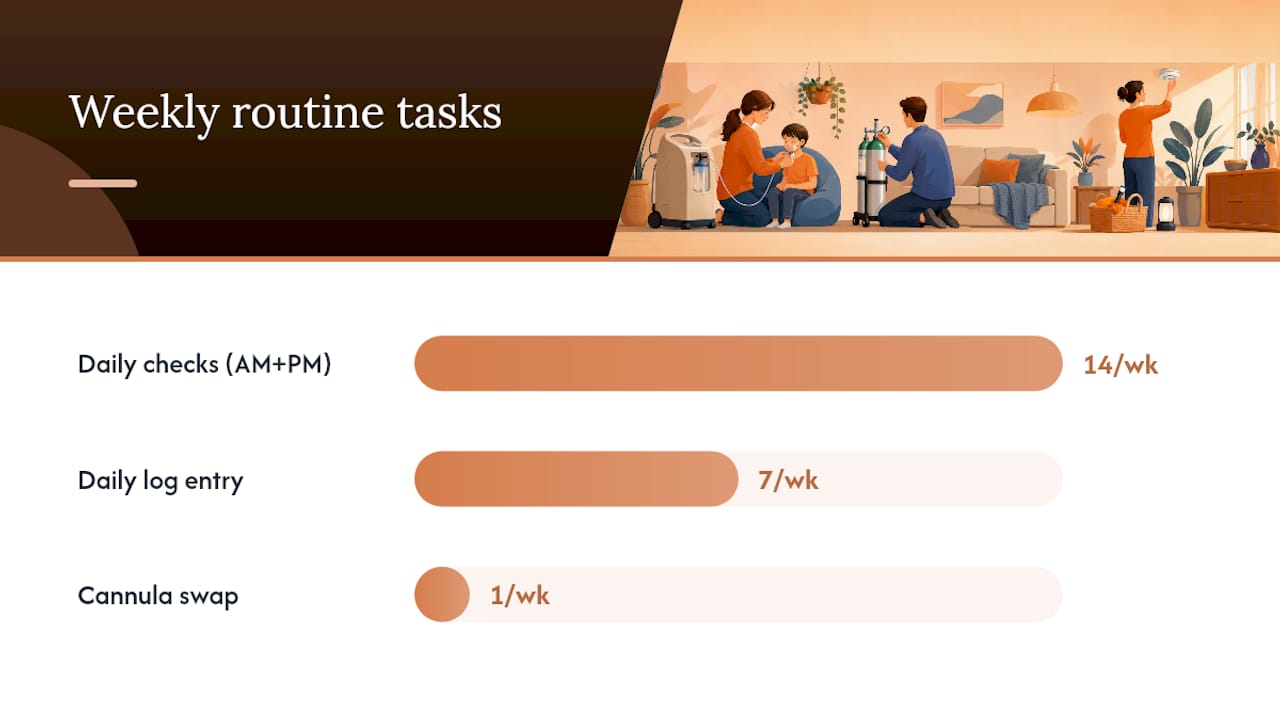
Home oxygen for children runs smoothest on a routine, not on reacting to problems as they pop up. A short morning and evening check catches most issues before they become urgent.
Inspect the tubing for kinks, cracks, or pinholes, and check the connection at the concentrator or cylinder outlet.
Check supply levels. Read the concentrator’s oxygen concentration indicator if it has one, or check the cylinder gauge, every morning without exception.
Confirm cannula fit and skin condition. Look at the nose and ears where straps sit for redness, breakdown, or pressure marks.
Clean the humidifier bottle on the schedule your supplier gave you, using water-based cleaning solutions, never petroleum-based products near any part of the setup.
Swap the cannula when it looks discolored, feels stiff, or shows any blockage, which for most families lands somewhere around once a week.
A concentrator that suddenly runs louder than usual, or whose sound changes pitch, is often signaling a filter problem or a mechanical issue worth a call to the supplier before it fails outright. If the unit stops delivering flow altogether, switch to the backup cylinder immediately and call the supplier. Don’t wait to see if it “comes back on.”
Keeping a simple log pays off more than most parents expect. Jot down daily flow settings, any alarms and what triggered them, supplier calls, and notes from clinic visits. That log becomes invaluable at the next pulmonology appointment, when a clinician asks how many nights the alarm sounded last month and you actually have an answer instead of a guess. The Nationwide Children’s Hospital home oxygen guide covers many of these same daily steps in more depth if you want a second reference alongside your supplier’s instructions.
What Should You Do in an Oxygen Equipment Emergency?
The best emergency plan is the one you never have to improvise, because most oxygen crises are actually logistics failures, not medical ones.
Order refills early. Call your supplier at least 24 hours before you expect a cylinder to run low, not after the gauge hits empty. Emergency same-day deliveries cost more and aren’t always available.
During a power outage, switch concentrator users to backup cylinder immediately, then contact your electric utility. Many utilities maintain priority restoration lists for homes with life-sustaining equipment, and you need to be on that list before an outage, not during one.
If using a generator as backup power, run it outdoors and never in a garage or near windows; generator exhaust and oxygen equipment are a genuinely dangerous combination when carbon monoxide builds up indoors.
Watch for clinical red flags: worsening work of breathing, visible retractions, blue or gray coloring around the lips (cyanosis), or a child who’s unusually hard to wake or console. These need immediate medical attention, not a wait-and-see approach.
Who you call depends on what’s wrong. Equipment problems, empty tanks, malfunctioning concentrators, go to your supplier first. Concerning symptoms that aren’t immediately life-threatening go to your child’s clinician or their after-hours line. Anything that looks like a true emergency, severe breathing distress, unresponsiveness, blue lips that don’t resolve, means calling 911 without hesitation. Families managing a child on both a ventilator and oxygen support should also review a written emergency plan with every caregiver in the household, not just the primary parent.
When Does a Child Get Reassessed or Weaned Off Home Oxygen?
Home oxygen isn’t meant to be permanent for most kids, and clinicians build in regular checkpoints to figure out when it’s safe to reduce or stop. Reassessment usually tracks more than just the oximeter number: your pulmonologist is watching growth curves, feeding tolerance, and how well your child handles activity, alongside the raw saturation data.
Follow-up visits happen on a schedule your specialist sets, often more frequently for infants and less often as a child stabilizes on a steady flow.
Outpatient continuous oximetry studies get repeated periodically to document objective readiness, the same tool used to establish the original diagnosis now works in reverse to confirm improvement.
Weaning is always clinician-directed and stepwise, meaning small, planned flow reductions monitored over days to weeks, never a parent’s own decision to “try without it for a night.”
Caregivers are told exactly which signs, increased work of breathing, dropping saturations, feeding changes, mean restoring the previous flow rate and calling the clinic right away.
Your supplier’s job doesn’t end at delivery. A good one provides setup training, ongoing troubleshooting support, and stays reachable as your child’s prescription changes over the weaning process, which can stretch over several months for chronic lung disease of prematurity. If your current supplier feels absent during this stretch, ask your care team about switching, or look into continuity-focused home care support that keeps one team tracking the whole process rather than starting over with new faces each visit.
What Legal and Insurance Steps Come With Home Oxygen?
Getting home oxygen approved and keeping it covered involves paperwork most families don’t expect on top of the medical side. Insurance, whether private or Medicaid-based, typically requires a documented prescription tied to the specific SpO2 or PaO2 thresholds a clinician recorded, plus periodic re-certification to keep coverage active. Missing a recertification window is one of the more common reasons supply gets interrupted, not equipment failure.
Home oxygen equipment is usually billed as a rental rather than a purchase, meaning the supplier remains responsible for maintenance, filter replacement, and eventual equipment swaps under most insurance arrangements. Ask your supplier directly whether your plan classifies the concentrator as a rental or a capped purchase, since that changes who you call when something breaks.
Notifying your insurer that a household includes life-sustaining medical equipment can also affect homeowner’s or renter’s policy terms, and it’s worth a quick call to confirm nothing changes unexpectedly. Families going through Medicaid-funded programs in Georgia specifically, such as the Georgia Pediatric Program, often need help coordinating authorization paperwork alongside nursing services, and agencies that handle that administrative load can prevent gaps in both equipment and caregiver support. If your family is navigating a transfer between home care agencies while managing an oxygen prescription, understanding the agency transfer process upfront avoids losing continuity during the switch.
Opulent Private Care’s Perspective on Supporting Families Through Home Oxygen
The clinical guidance on pediatric home oxygen is solid, but it assumes someone is consistently present to execute it. That’s the gap most families actually live in. A prescription with exact flow rates and alarm thresholds means little if the person managing it changes every week and has to relearn your child’s baseline each time.
A reliable in-home nursing model can require approval from the family, caregiver, and agency before care begins to ensure a nurse fits a family’s routine and stays longer. Publishing shift fill rates and nurse retention numbers publicly helps families managing complex equipment understand the agency’s reliability.
In practice, a consistent nurse catches the small things that prevent big problems: a cannula that’s starting to irritate skin, a concentrator that sounds slightly off, a supplier call that needs to happen before a cylinder runs low. That same nurse becomes the liaison between your pulmonologist’s orders and your day-to-day routine, instead of you relaying instructions to a new face every shift.
None of this replaces your child’s clinician. Every flow setting, every alarm threshold, and every weaning step still comes from your prescribing physician. What consistent in-home nursing changes is who’s there to execute those orders reliably, day after day, without your family shouldering every equipment check alone.
— Opulent
How Opulent Private Care Supports Families Managing Home Oxygen
If your child needs oxygen alongside tracheostomy, ventilator, or G-tube support, you need a nurse who can manage all of it as one coordinated routine, not separate specialists who never talk to each other. Opulent Private Care is built around exactly that: statewide, in-home skilled nursing in Georgia matched to your child’s specific clinical needs.
We handle the GAPP program paperwork on your behalf, match nurses based on both clinical fit and family fit, and publish our shift fill and retention rates so you know what reliability actually looks like before you commit. For children with tracheostomy, ventilator, or G-tube needs alongside oxygen therapy, our specialized pediatric nursing team trains specifically on that combination of equipment. If your family currently works with a family caregiver model instead of a skilled nurse, we support that path too. Start by requesting a consultation through our GAPP program page to see how nurse matching and continuity-focused staffing could fit your child’s care plan.
This article is general information, not a substitute for advice from a qualified doctor. Consult a qualified healthcare professional about your own circumstances before acting on anything here.
Sources
FAQ
Can I Give My Child Oxygen at Home?
Only with a clinician’s prescription specifying the exact flow rate and delivery method. Home oxygen is a controlled medication, and the ATS guideline ties eligibility to specific SpO2 and PaO2 thresholds your pulmonologist confirms through testing, not to how your child looks or sounds on a given day.
What Are the Guidelines for Pediatric Oxygen Therapy?
The ATS guideline sets thresholds of PaO2 below 55 mm Hg or SpO2 below 88% for qualification, with a higher range of PaO2 55 to 59 mm Hg or SpO2 89% accepted if the child also has cor pulmonale, elevated hematocrit, or edema. The guideline also notes that much pediatric-specific evidence relies on expert consensus rather than large trials, so ongoing clinical judgment matters alongside the numbers.
What Qualifies a Patient for Home Oxygen?
A documented pattern of low oxygen saturation or blood gas readings, confirmed through overnight or daytime oximetry over roughly a two-week window, qualifies a child for home oxygen under ATS criteria. Common underlying diagnoses include chronic lung disease of prematurity, pulmonary hypertension, cystic fibrosis, and interstitial lung disease.
Are There Pediatric Nasal Cannulas?
Yes, nasal cannulas come in infant, pediatric, and adult sizes, and correct sizing matters because a poor fit either leaks oxygen or irritates the skin around the nose. Suppliers fit the cannula to your child’s prescribed flow rate at setup, and it should be swapped roughly weekly or sooner if it looks discolored or blocked, per guidance from Children’s Colorado.
How Much Does In-Home Nursing for a Child on Oxygen Cost?
Pricing for Opulent Private Care’s in-home skilled nursing services depends on your child’s specific care plan and Medicaid or GAPP authorization, so current details are available directly through the GAPP program page rather than a fixed rate listed here.
Recommended
Comments