
Pediatrics Supporting Parents: A Guide for Special Needs Families


Pediatrics supporting parents is defined as a model of care where pediatric providers actively partner with families to nurture children’s physical, emotional, and social development through trusted, long-term relationships. This approach, recognized formally by the American Academy of Pediatrics and embedded in the Bright Futures guidelines, treats parents as essential members of the care team rather than passive observers. Children who receive consistent pediatric primary care have a 40% lower risk of hospitalization for preventable illnesses. For families managing complex or chronic pediatric conditions, that number represents real lives protected and real crises avoided.
What does pediatrics supporting parents actually look like in practice?
The Pediatrics Supporting Parents initiative, developed in partnership with ZERO TO THREE, redesigns well-child visits to address relational health alongside physical health. The goal is not to lengthen appointments but to make every visit count more. Nearly 40 family leaders have been engaged over seven years as paid co-architects of this model. That level of family involvement is rare in clinical settings, and it produces care models that actually reflect what families need.
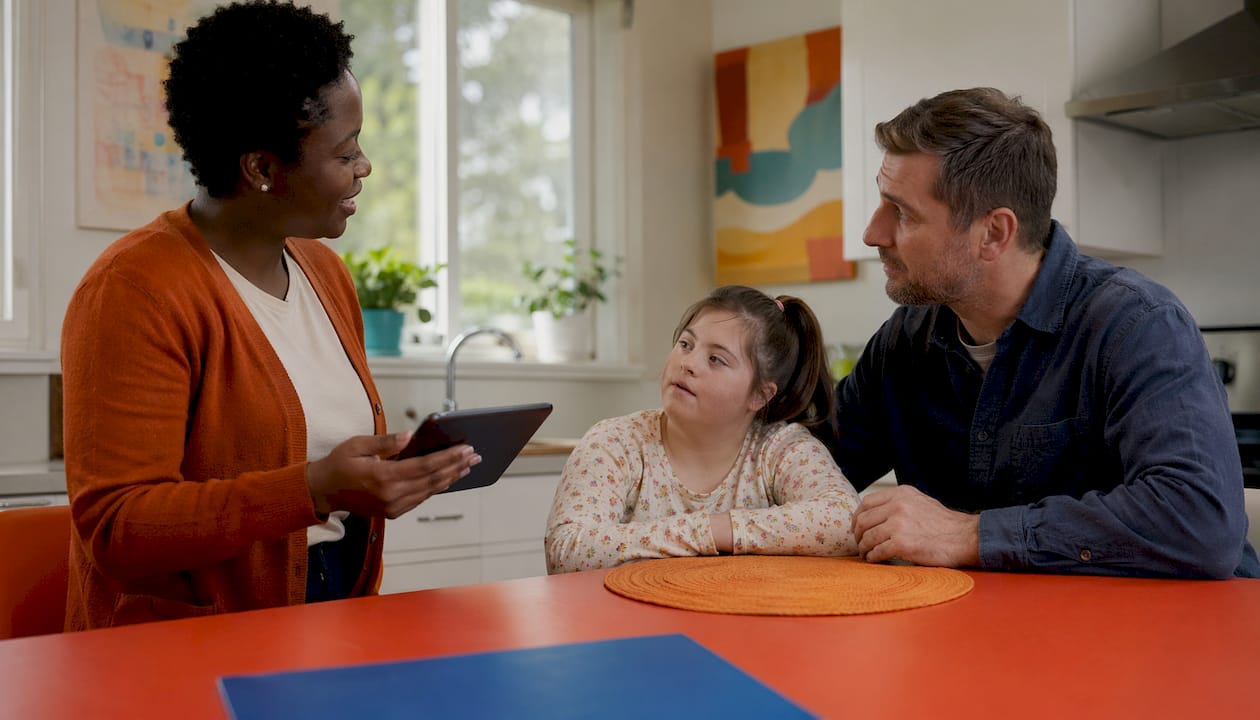
The initiative identifies 14 common practice models built around three goals: empowering families, connecting them to community resources, and building team-based support within the practice. These models range from embedding child development specialists in primary care offices to training pediatric residents in relational, family-centered communication. Embedding specialists directly into pediatric practices helps families receive whole-child supports without navigating a separate referral maze. That matters most when a child has complex needs and a parent is already stretched thin.
Practice model | Core benefit |
Embedded care coordinators | Families get one consistent point of contact for medical, school, and community needs |
Family engagement activities | Parents build confidence and reduce isolation through peer connection |
Relational health screening | Developmental and emotional concerns are caught earlier in well-child visits |
Staff wellness programs | Providers who feel supported deliver more consistent, empathetic care |
Resident training in family-centered care | New pediatricians enter practice equipped to partner with parents, not just treat patients |
Pro Tip: Ask your child’s pediatric practice whether they use a care coordinator or community health worker. If they do, request an introduction at your next well-child visit. That one relationship can open access to resources you did not know existed.
How does consistent pediatric care benefit children with special healthcare needs?
Consistent care by a dedicated pediatrician creates a longitudinal health record that no urgent care visit can replicate. Longitudinal tracking enables earlier detection of subtle developmental or behavioral shifts that only become visible over time. For a child with a neurological condition or a feeding disorder, catching a regression early can prevent a hospitalization or a setback in development.
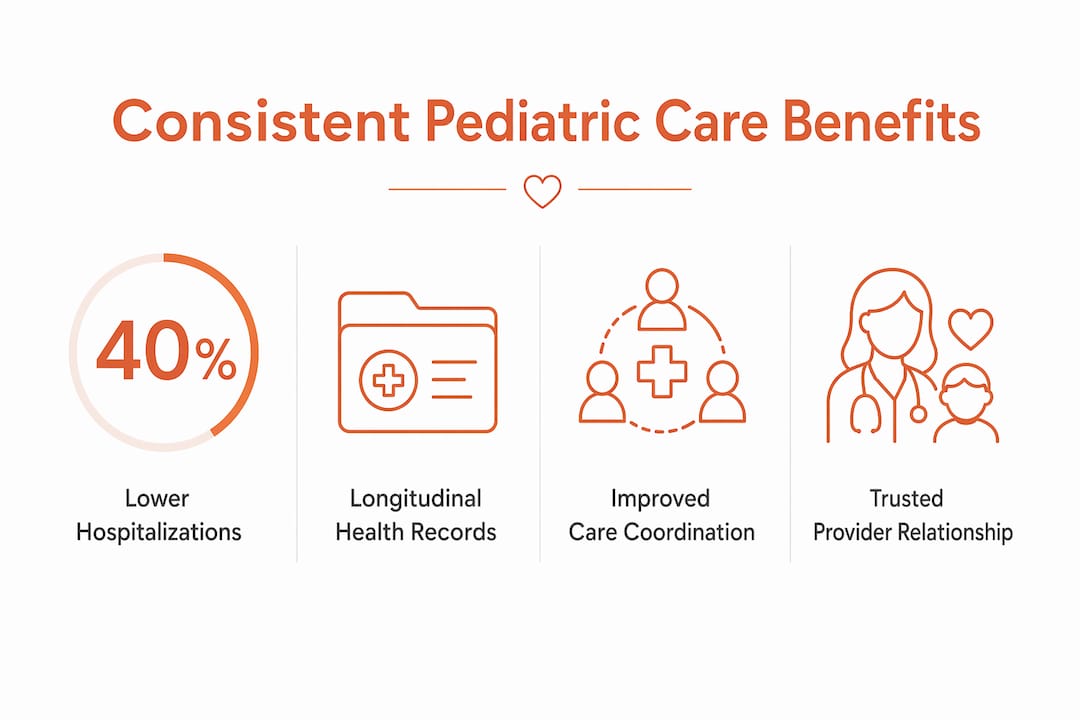
The medical home model, endorsed by the American Academy of Pediatrics, coordinates all aspects of a child’s care under one roof. It includes developmental surveillance, care coordination, specialist referrals, and family education. Family-centered care improves communication, builds trust, and reduces caregiver stress by keeping parents informed and involved at every step. For parents of children with special healthcare needs, that trust is not a luxury. It is the foundation that makes every other part of care work.
Fragmented care, such as rotating through urgent care clinics or seeing a different provider at each visit, breaks that foundation. A provider who does not know your child’s baseline cannot recognize when something has changed. The difference between a medical home and a fragmented model is the difference between proactive management and reactive crisis response.
Pro Tip: When choosing a pediatrician for a child with complex needs, ask specifically about their experience with your child’s condition, their after-hours communication policy, and how they coordinate with specialists. These three questions reveal more about fit than any online review.
The 40% reduction in preventable hospitalizations tied to consistent pediatric care is not just a statistic. It reflects the cumulative effect of a provider who knows your child, tracks patterns, and intervenes before small problems become emergencies.
What supportive care options exist for families managing serious conditions?
Supportive care is defined as an added layer of services provided alongside curative or ongoing treatment at any stage of illness. It does not replace your child’s primary treatment plan. Supportive care programs provide symptom and pain management, emotional support, and care coordination that reduce both parental stress and child discomfort. The Children’s Hospital of Orange County Supportive Care program is one example of how this model operates in a major pediatric setting.
The services available through supportive care teams typically include:
Pain and symptom management: Specialists work alongside your child’s primary team to control discomfort from procedures, medications, or the condition itself.
Emotional and psychological support: Social workers and counselors address anxiety, grief, and adjustment challenges for both the child and the family.
Care coordination: Specialized care managers bridge communication gaps between pediatricians, schools, insurance systems, and community services.
Family education: Parents receive clear explanations of diagnoses, treatment options, and what to expect at each stage of care.
Goal alignment: The team helps families clarify what matters most to them and ensures the care plan reflects those priorities.
Supportive care teams are particularly valuable when a child’s condition involves multiple specialists who do not always communicate with each other. A care manager who sits inside the pediatric practice, or who is accessible by phone, becomes the parent’s advocate across every system the child touches. For families managing tracheostomy care, feeding support, or neurological conditions, that coordination is not optional. It is what keeps care from falling apart between appointments.
You can learn more about how these services apply to complex pediatric caregiving in home settings where nursing support extends what the clinical team starts.
How can parents engage with pediatric providers to get better outcomes?
Parents are the most consistent presence in a child’s care, and the most underused resource in most clinical settings. Early relational health formed during the birth-to-three window shapes a child’s social, emotional, and developmental trajectory for years. That means the conversations you have with your child’s pediatrician in those early years carry real clinical weight.
Effective parent engagement starts before the appointment. Here are the practices that produce the best outcomes:
Prepare a written list of concerns before each visit, ranked by priority. Pediatric visits are short. A written list keeps you from forgetting the concern that matters most.
Bring a second person to appointments for children with complex needs. One person can listen while the other asks questions.
Request shared decision-making explicitly. Tell your provider you want to understand the options, not just receive a recommendation.
Ask for a care summary in writing after each visit. This creates a record you can share with specialists, schools, and therapists.
Use virtual visit options for follow-up questions that do not require a physical exam. This reduces the barrier to staying in contact between appointments.
Connect with a parent support group linked to your child’s condition. Peer knowledge fills gaps that clinical visits cannot.
Pro Tip: If you feel unheard at a visit, say so directly: “I want to make sure we covered my main concern before we finish.” Most pediatricians respond well to that kind of direct communication. The ones who do not are telling you something important about fit.
Some pediatric practices now offer limited medical services to parents during children’s visits, recognizing that a parent’s health directly affects a child’s care. This evolution in family-centered care models reflects how seriously leading practices take the parent-provider partnership. When you find a practice that operates this way, stay with it.
For families managing pediatric home visits as part of their care plan, the same engagement principles apply. Bring your questions, track patterns, and treat every clinical interaction as a two-way exchange.
Key Takeaways
Pediatrics supporting parents works because it places the family at the center of clinical decisions, builds long-term trust, and integrates emotional and social supports directly into pediatric care.
Point | Details |
Consistent care reduces hospitalizations | Children with a dedicated pediatrician have a 40% lower risk of preventable hospitalization. |
Family partnership improves care design | Paid family co-architects in programs like Pediatrics Supporting Parents produce more relevant, effective care models. |
Supportive care is not a last resort | Supportive care teams provide symptom management and coordination at any illness stage, alongside ongoing treatment. |
Parent engagement changes outcomes | Prepared, vocal parents who request shared decision-making get more from every clinical visit. |
Longitudinal care catches what urgent care misses | A dedicated pediatrician tracks developmental patterns over time, enabling earlier intervention. |
What I’ve learned from watching families navigate pediatric care
The families I see who do best are not the ones with the most resources. They are the ones who treat their child’s care team as a genuine partnership and refuse to accept a passive role. That sounds simple. In practice, it requires confidence that many parents have to build deliberately, especially when their child’s condition is serious and the medical system feels overwhelming.
The most undervalued part of pediatric care is relational health. Clinicians who take time to ask how a parent is doing, not just how the child is doing, change the entire dynamic of a visit. A parent who feels seen and supported communicates more clearly, follows through on care plans more consistently, and catches problems earlier. That is not soft care. That is clinical effectiveness.
What I have also seen is that continuity matters more than any single intervention. A family that stays with one practice, builds a relationship with one care coordinator, and shows up consistently gets compounding returns over time. The pediatrician who has known your child for five years sees things a new provider simply cannot. For children with tracheostomy care, neurological conditions, or feeding challenges, that longitudinal knowledge is irreplaceable.
At Opulentprivatecare, the families we work with in Georgia have taught us that what they need most is not just clinical skill. They need a team that shows up reliably, communicates honestly, and treats their child as an individual. That is the standard every family deserves, and it is the one worth holding every provider to.
— Opulent
Specialized in-home nursing care for Georgia families
Families managing complex pediatric conditions often reach a point where clinical visits alone are not enough. The care your child needs between appointments, at home, overnight, or during school hours, requires a different kind of support.
Opulentprivatecare provides Georgia pediatric in-home nursing for children with specialized care needs, including tracheostomy management, feeding support, and neurological care. The 3 Thumbs Up Rule means care only begins when the family, the caregiver, and Opulentprivatecare all agree on the match. That process protects your child and gives you a consistent nurse rather than rotating staff. Families looking for Georgia pediatric home care can learn more about what makes in-home nursing a practical extension of your child’s primary care plan.
FAQ
What is the Pediatrics Supporting Parents initiative?
Pediatrics Supporting Parents is a program developed with ZERO TO THREE that redesigns well-child visits to address relational health and family support alongside physical health. It has engaged nearly 40 family leaders as paid co-architects over seven years to shape its 14 practice models.
How does consistent pediatric care reduce hospitalizations?
Children who receive regular care from a dedicated pediatrician have a 40% lower risk of hospitalization for preventable illnesses. Longitudinal tracking allows the provider to detect changes early and intervene before a condition escalates.
What questions should parents ask pediatricians about special healthcare needs?
Ask about the provider’s experience with your child’s specific condition, their process for coordinating with specialists, and whether the practice has a care coordinator. These questions identify whether the practice can function as a true medical home for your child.
What is supportive care in pediatrics?
Supportive care is a layer of services, including pain management, emotional support, and care coordination, provided alongside curative treatment at any stage of illness. It does not replace primary treatment. It reduces family stress and improves the child’s quality of life throughout the care process.
How can parents become more active partners in their child’s pediatric care?
Prepare a written list of concerns before each visit, request shared decision-making explicitly, and ask for a written care summary after each appointment. Family-centered care consistently shows better outcomes when parents are treated as active members of the care team.
Recommended
Comments