
Feeding Tube Care for Children: A Parent's Guide

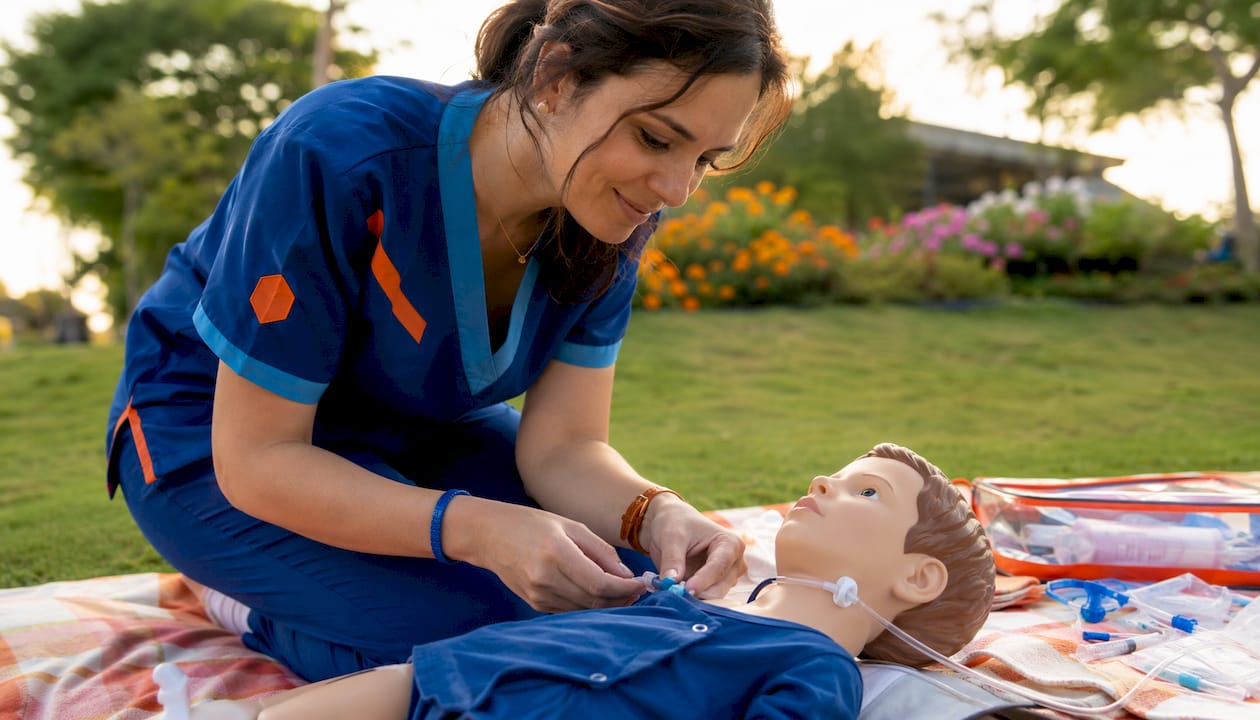
More than 200,000 children in the U.S. rely on feeding tubes at home, and for most families, the learning curve is steep. Feeding tube care for children covers everything from cleaning the tube site and administering formula to spotting early signs of infection and knowing when to call the doctor. The good news: once you understand the basics, daily management becomes routine.
Here is what you need to know right away:
Types of tubes: G-tube, PEG tube, and balloon-type feeding tubes are the most common in pediatric care.
Daily cleaning: Clean the skin around the tube 1–3 times a day with mild soap and water.
Flushing: Flush with 30–60 mL of water before and after every feeding and medication.
Red flags: Fever, pus, persistent bleeding, or severe pain require immediate medical attention.
Replacement: Balloon tubes need replacement every 3–6 months; non-balloon types every 6–12 months.
Seek help early: When in doubt, call your child’s care team rather than waiting.
What are the different types of feeding tubes used in children?
Not all pediatric feeding tubes work the same way, and the type your child has shapes every aspect of home care.
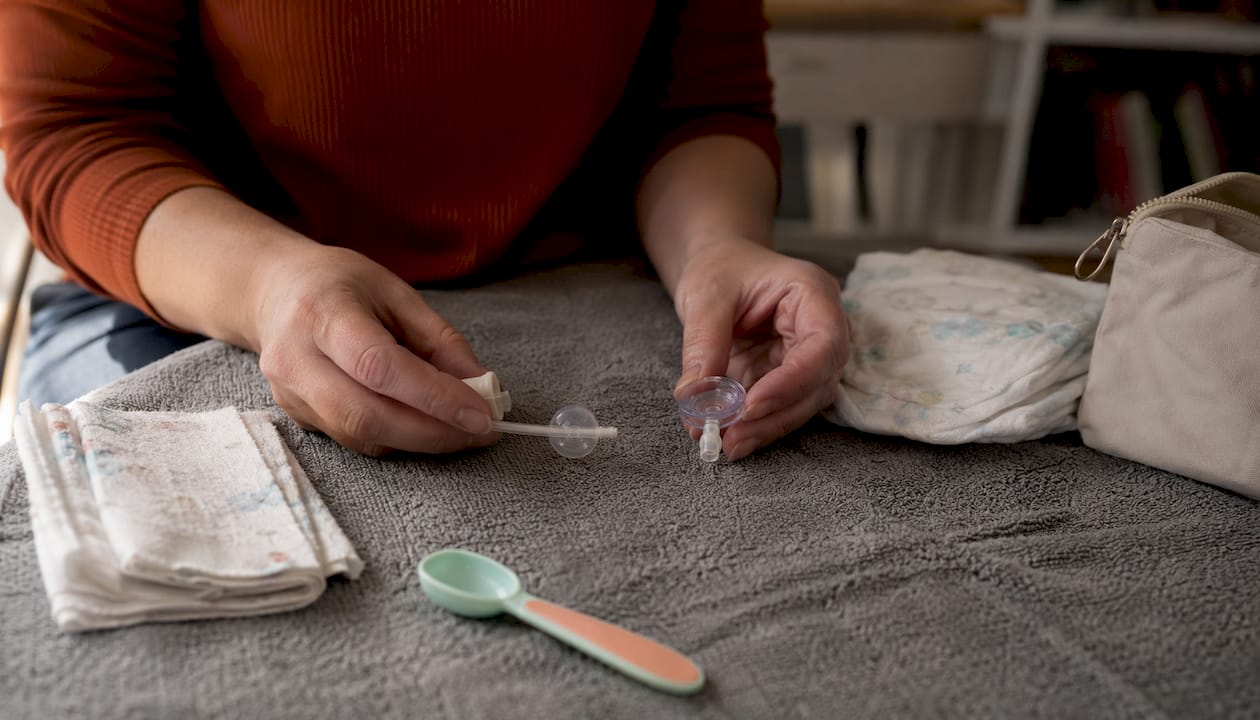
G-tube (gastrostomy tube) is placed directly through the abdominal wall into the stomach. It is the most common long-term option for children who cannot eat by mouth. G-tubes come in two main styles: a traditional tube that extends outside the body, and a low-profile “button” device such as the Bard Button or MIC-KEY, which sits flush against the skin. Buttons are typically placed 3–8 weeks after the initial surgery once the stoma tract has healed.
PEG tube (percutaneous endoscopic gastrostomy) is a specific type of G-tube placed using an endoscope. The procedure is minimally invasive, and the tube is anchored internally with a bumper or balloon. For home care purposes, a PEG tube and a G-tube are managed almost identically.
Balloon-type feeding tubes use a small water-filled balloon on the internal end to hold the tube in place inside the stomach. They are easier to replace at home once the stoma matures, which is why many families transition to them after the initial healing period.
Tube Type | Placement Method | Typical Duration | Home Replacement? |
G-tube (standard) | Surgical or endoscopic | Long-term | No, clinic-based |
PEG tube | Endoscopic | Long-term | No, clinic-based |
Balloon G-tube | Surgical or endoscopic | 3–6 months per tube | Yes, once trained |
Pro Tip: Ask your child’s gastroenterologist whether a low-profile button device is appropriate. Buttons reduce the risk of accidental tube pulling, especially in active toddlers.
How do you care for a feeding tube site every day?
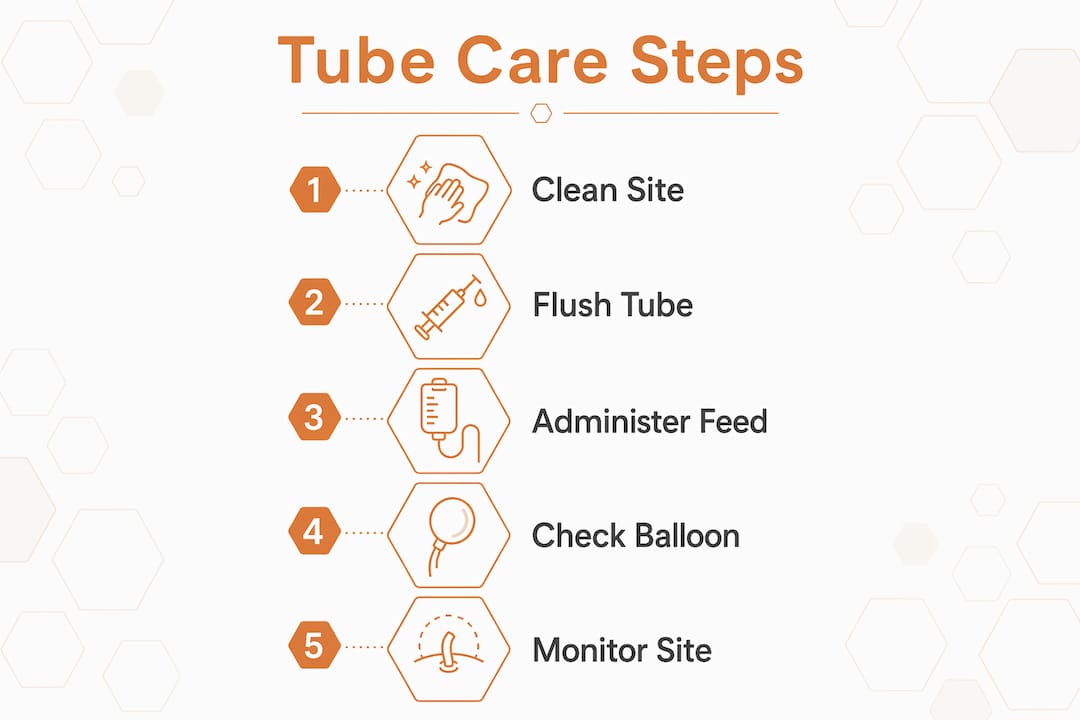
Consistent daily hygiene is the single most effective way to prevent infection and skin breakdown around the tube, as detailed in expert clinical education resources covering daily care routines.
Clean the skin around the tube 1–3 times a day using mild soap and warm water. Gently remove any drainage or crusting that collects around the tube’s base. Pat the area dry with a clean towel rather than rubbing, since moisture trapped under the tube is a common cause of granulation tissue.
Wash your hands thoroughly with soap and water before touching the tube or site.
Dampen a soft cloth or gauze with warm, soapy water.
Clean in a circular motion around the tube, moving outward from the site.
Rinse with clean water and pat completely dry.
If your provider recommends a gauze pad, change it at least once daily or whenever it becomes wet or soiled.
Avoid ointments, powders, or sprays around the site unless your nurse specifically approves them. One important safety note: if your child uses home oxygen, do not use petroleum-based products like Vaseline near the tube site. Petroleum products near home oxygen create a fire hazard. Use a clinically approved, oxygen-safe barrier cream instead.
Pro Tip: Build site care into the same time slot every day, such as after the morning bath. Consistent daily routines significantly reduce the risk of granulation tissue, skin breakdown, and tube clogging over time.

How do you feed a child through a tube safely?
Preparation matters as much as technique. Before every feeding, check that your formula or blended food is at room temperature. Taking it out of the refrigerator 30–40 minutes ahead works well. Never add extra formula or solid foods without talking to your child’s dietitian first.
Before feeding, gather your supplies:
Prescribed formula or blended food at room temperature
Syringe (for bolus feeding) or feeding pump with feeding bag and tubing
Extension set if your child uses a button device
A measured amount of water for flushing
Positioning during feeding:
Sit your child upright in your arms or in a high chair throughout the feeding.
Keep them upright for at least 30 minutes after the feeding ends to reduce the risk of reflux and aspiration.
If your child fusses or cries mid-feeding, pinch the tube to pause the flow until they settle.
Flushing is non-negotiable. Flush with 30–60 mL of water before and after each feeding, 20 mL before and after each medication, and at least 60 mL twice daily on days when the tube is not used. Feeding bags should be replaced daily, and formula should not sit in the bag for extended periods.
Step | Action | Why It Matters |
Pre-feeding flush | 30–60 mL water | Clears tube, confirms patency |
Feeding position | Child sitting upright | Reduces aspiration risk |
Bag change | daily | Prevents bacterial growth |
Post-feeding flush | 30–60 mL water | Clears residual formula |
Post-medication flush | 20 mL water | Prevents drug-nutrient interactions |
For medications, give them before a feeding when possible. Crush solid tablets finely and dissolve in water, or use liquid formulations. Always flush between separate medications and never mix them together in the syringe.
When should you contact a healthcare provider about the tube?
Some symptoms are manageable at home. Others need a phone call or an emergency room visit within the hour.
Call your child’s care team if you notice:
Redness, swelling, or irritation around the tube site that is getting worse
Leakage of formula or stomach contents around the tube
Your child seems hungry after a full feeding
Hard or swollen belly one hour after feeding
Diarrhea, constipation, or signs of pain
Go to the emergency room or call 911 if:
Fever exceeds 100.4°F, especially with pus or persistent bleeding at the site
The tube falls out and your child is within the first 6–12 weeks after surgery
That last point deserves emphasis. The stoma tract takes 6–12 weeks post-placement to fully mature. If the tube comes out during that window, the tract can close quickly. That is a medical emergency, not a wait-and-see situation.
If the tube is blocked:
Check that the tube is not kinked externally.
Gently squeeze the visible portion of the tube along its length.
Attach an appropriately sized syringe and use a gentle push-pull motion to create suction.
If the blockage does not clear, call your care team.
Do not use home remedies like soda or meat tenderizer to clear a clog. Home remedies for clogged tubes can cause chemical damage to the tube. Enzymatic declogging kits used by clinical teams are the safer option, and your nurse can walk you through the process.
Pro Tip: Keep your care team’s after-hours number saved in your phone. Many pediatric feeding programs have a nurse line available around the clock.
How often does a feeding tube need to be replaced?
Replacement schedules depend on the tube type. Balloon-type G-tubes require replacement every 3–6 months; non-balloon tubes generally last 6–12 months, though your child’s care team sets the exact schedule based on the specific device and how the site is healing.
Signs that early replacement may be needed:
The balloon deflates or the tube moves more than usual
Leakage around the tube that does not resolve with repositioning
Visible cracking or discoloration of the tube material
Granulation tissue that is not responding to treatment
Routine maintenance between replacements includes checking the balloon water volume weekly (your nurse will tell you the correct amount), flushing on schedule, and inspecting the external bumper or disc for wear. Coordinate all planned replacements with your child’s gastroenterologist or home health nurse rather than attempting them independently unless you have been specifically trained and cleared to do so.
How do you manage the emotional weight of pediatric tube care?
Caring for a child with a feeding tube is physically demanding and emotionally exhausting. Many caregivers describe a persistent low-level anxiety about doing something wrong, and that feeling is completely normal. The American Academy of Pediatrics recognizes caregiver emotional strain as a real clinical concern and encourages families to seek support proactively rather than waiting until they are burned out.
Practical ways to reduce caregiver strain:
Share the care tasks with a partner, family member, or trusted friend so no single person carries the full load.
Ask your child’s care team for a written care plan you can hand off to others.
Connect with other tube-feeding families through hospital support groups or online communities.
Look into respite care options so you can take breaks without guilt.
Feeding time does not have to feel clinical. Talk to your child, make eye contact, and treat it as a social moment. Children pick up on caregiver stress, and a calm, warm feeding environment supports their development even when oral feeding is not possible.
For families in Georgia managing complex pediatric conditions at home, Opulentprivatecare offers in-home pediatric nursing that includes feeding tube support, consistent nurse assignments, and help navigating Medicaid-funded programs like GAPP. Their “3 Thumbs Up Rule” means the family, the nurse, and Opulentprivatecare all agree on the match before care begins, which cuts down on the rotating-staff problem that exhausts so many families.
Pro Tip: At your next care team appointment, ask specifically about pediatric caregiver resources and whether a social worker or family support coordinator is available through your child’s program. Many families do not know to ask.
If you are in Georgia and want a consistent, trained nurse who knows your child’s tube care routine, Opulentprivatecare can help you find the right fit through their in-home pediatric nursing program.
Key Takeaways
Successful feeding tube management at home depends on consistent daily hygiene, proper flushing technique, knowing your tube’s replacement schedule, and acting quickly on red flag symptoms.
Point | Details |
Daily site cleaning | Clean around the tube 1–3 times daily with mild soap and water; pat dry completely. |
Flushing protocol | Use 30–60 mL of water before and after each feeding, and 20 mL before and after each medication. |
Replacement schedule | Balloon tubes need replacement every 3–6 months; non-balloon types every 6–12 months. |
Emergency threshold | Fever, pus, or tube dislodgement in the first 6–12 weeks post-surgery requires immediate care. |
Caregiver support | Share care tasks, use respite options, and ask your care team about family support resources. |
Recommended
Comments