
Pediatric Caregiver: A Guide for Complex Medical Needs

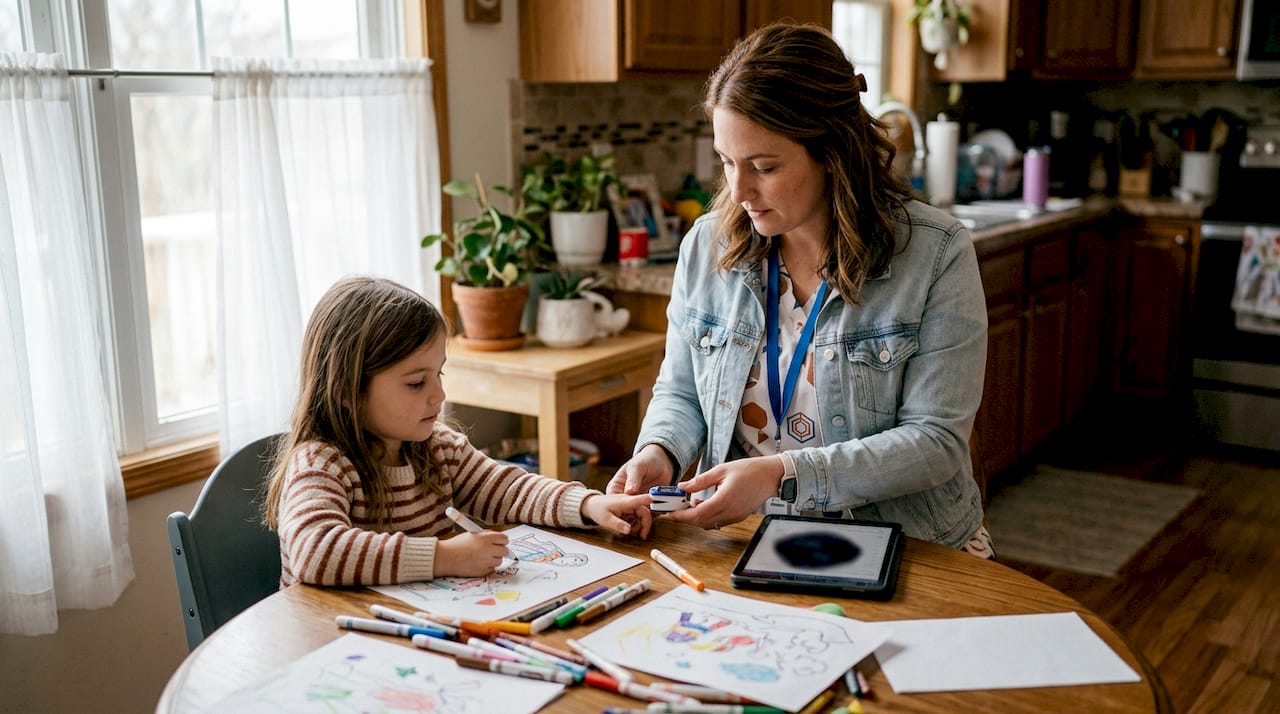
A pediatric caregiver is a specialized provider who delivers both medical and daily living support to children with complex health and developmental needs, primarily in the home setting. This role goes well beyond what a standard nanny for children or general child care provider offers. It combines clinical tasks, developmental support, and emotional care into one consistent presence. With 1 in 36 children in the United States now diagnosed with autism spectrum disorder as of 2023, the demand for skilled, specialized in-home support has never been greater. Families navigating tracheostomy care, ventilator dependence, feeding tubes, or neurological conditions need a care partner who understands both the medical stakes and the child’s daily world.
What services does a pediatric caregiver provide?
A qualified pediatric caregiver delivers two distinct categories of support: medical tasks and non-medical daily living assistance. Understanding the difference between these two categories is the first step in building a care plan that actually works.
Medical services a trained children’s health aide or pediatric nurse may provide include:
Medication administration and management
Ventilator and tracheostomy care
Vital signs monitoring and documentation
Gastrostomy tube (G-tube) feeding support
Seizure observation and response protocols
Wound care and catheter management
Non-medical daily living support includes:
Bathing, dressing, and grooming
Toileting and continence care
Mobility assistance and positioning
Feeding support for children without tube dependence
Sensory and behavioral routine management
Pediatric home care covers both medical and non-medical daily support for infants, children, and adolescents. That breadth means families must clearly define which services their child needs before selecting a provider. A child on a home ventilator requires a licensed pediatric nurse, not a general infant caregiver. A child with autism spectrum disorder may need a special needs caregiver with behavioral training rather than clinical nursing skills.
Pro Tip: During your initial intake conversation with any provider, give a written list of every task the caregiver will need to perform. Verbal descriptions leave room for misunderstanding. A written task list protects your child and sets clear expectations from day one.
Technology-dependent children present the most complex scenarios. A child with both a tracheostomy and a G-tube, for example, requires a caregiver trained in airway management, suctioning, and enteral feeding simultaneously. Families should verify that any candidate has documented, hands-on experience with each specific device their child uses, not just general familiarity.

How does care coordination improve outcomes for medically complex children?
Care coordination is the single most effective structure for managing a medically complex child’s needs at home. The model places the child’s physician or care coordinator at the center, with the pediatric caregiver serving as the primary link between the family and the clinical team.
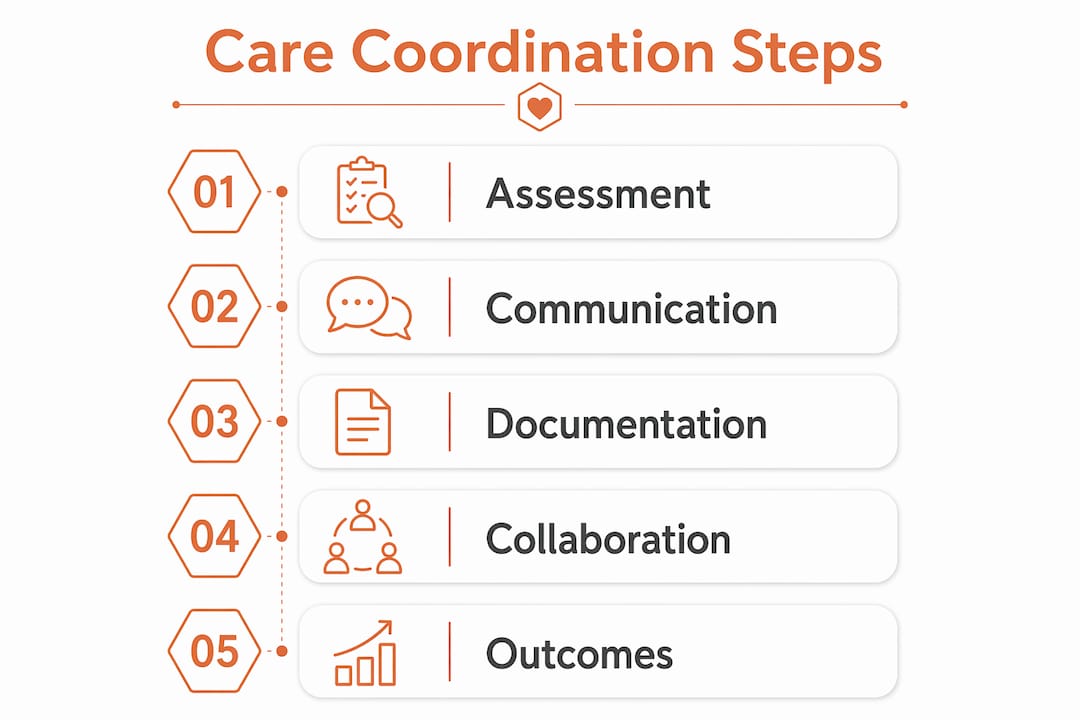
Facilitating communication between the family and the clinical team is the caregiver’s primary responsibility in this model. That means the caregiver is not just executing tasks. They are observing, recording, and reporting changes that a specialist who sees the child for 20 minutes every few weeks cannot detect on their own.
Effective care coordination depends on several practices:
Daily documentation of symptoms, behaviors, and responses to treatment
Clear escalation protocols defining when to call the nurse, the physician, or 911
Regular family briefings after each shift
Participation in care plan reviews when the clinical team updates treatment goals
Consistent use of shared documentation tools accessible to all team members
Detailed documentation such as seizure logs and feeding diaries directly informs clinical treatment decisions. A neurologist adjusting seizure medication relies on the caregiver’s daily log, not on a single office visit. That log is a clinical instrument, not paperwork.
Medical boundaries between caregivers and clinicians must be clearly defined to avoid unnecessary hospitalizations or unsafe home adjustments. A caregiver who independently adjusts a ventilator setting without physician authorization creates serious risk. Equally, a caregiver who escalates every minor issue to the emergency room creates unnecessary disruption and cost. The care plan must specify exactly where the caregiver’s authority ends and the clinician’s begins.
Families who build this coordination structure see measurable benefits. Children experience fewer emergency hospitalizations. Caregivers feel more confident because they know exactly what falls within their scope. Physicians receive better data to guide treatment. The entire system functions more reliably when roles are explicit and communication is consistent.
What challenges do pediatric caregivers face, and how can families help?
Pediatric caregiving is physically and emotionally demanding in ways that most families do not fully anticipate. Recognizing these challenges is not a sign of weakness in the care relationship. It is a prerequisite for sustaining it.
Caregiver stress directly impacts care continuity. When a caregiver burns out, families face sudden gaps in coverage, inconsistent care, and the exhausting process of finding and training a replacement. Family-centered care models that include structured guidance and clear support systems improve both caregiver retention and patient outcomes.
Common challenges pediatric caregivers face include:
Physical fatigue from high-dependency care during long shifts
Emotional weight of caring for children with serious or life-limiting conditions
Isolation from professional peer support networks
Unclear expectations from families or agencies
Limited access to mental health resources specific to caregiving
Families can reduce caregiver burden in practical ways. Providing a detailed written care plan before the first shift eliminates guesswork. Offering a brief daily check-in at shift handoff gives the caregiver a space to flag concerns early. Treating the caregiver as a professional partner rather than a task executor builds the mutual respect that sustains long-term relationships.
The Lifespan Respite Care Act, Public Law 109-442, authorizes time-limited relief for family caregivers, though funding and availability vary by state. Families who also serve as primary caregivers should actively pursue respite options through their state Medicaid program or local Area Agency on Aging. Respite care is not a luxury. It is a clinical support tool that protects care quality.
Pro Tip: Ask your care agency whether they offer structured onboarding for new caregivers. Agencies that provide written protocols, supervised orientation shifts, and a named clinical contact for questions produce caregivers who stay longer and perform more consistently.
How do you choose a pediatric caregiver and build a personalized care plan?
Choosing the right in-home care provider requires evaluating specific qualifications, not just general experience with children. The stakes are too high for a generalist approach.
Use this numbered framework when evaluating any candidate or agency:
Verify licensure and certification. A pediatric nurse must hold a current RN or LPN license. A special needs caregiver should have documented training in the child’s specific condition.
Confirm device-specific experience. Ask for documented proof of hands-on training with tracheostomy care, ventilator management, or G-tube feeding if your child uses these.
Assess communication skills. The caregiver must be able to write clear shift notes and communicate changes to the clinical team without prompting.
Check for family compatibility. The caregiver will be in your home daily. Personality fit, cultural sensitivity, and communication style matter as much as clinical skill.
Review the agency’s reliability metrics. Shift fill rates and nurse retention figures tell you whether the agency can deliver consistent coverage or will leave you scrambling.
Once you select a provider, personalized care plans co-developed by clinicians, caregivers, and families produce the best outcomes. The plan should address medical tasks, daily routines, behavioral strategies, emergency protocols, and transition milestones.
Care plan element | What to include |
Medical task list | Every clinical procedure, frequency, and required equipment |
Daily routine schedule | Wake time, meals, therapy sessions, and sleep routine |
Behavioral strategies | Sensory triggers, calming techniques, and communication methods |
Emergency protocols | Escalation steps, emergency contacts, and nearest hospital |
Transition planning | Goals for aging into adult services or school-based care |
For children with autism spectrum disorder, the care plan must address sensory sensitivities, communication preferences, and behavioral triggers specific to that child. A plan written for a neurotypical child will fail. For technology-dependent children, the plan must include equipment troubleshooting steps and backup power protocols. Personalization is not optional. It is the mechanism that makes care safe.
Families should also plan for transitions. As children age, their care needs shift. A care plan built for a 4-year-old with a tracheostomy looks very different from one designed for a 12-year-old with the same condition. Reviewing and updating the plan every six months keeps it aligned with the child’s current needs and developmental stage. Opulentprivatecare builds this review cycle into its care model, treating the plan as a living document rather than a one-time intake form.
Key Takeaways
Effective pediatric caregiving requires a coordinated team, a personalized care plan, and consistent documentation to protect both the child and the caregiver.
Point | Details |
Define services clearly | Separate medical tasks from non-medical support before selecting any provider. |
Prioritize care coordination | Place the physician at the center and define the caregiver’s communication role explicitly. |
Document every shift | Seizure logs, feeding diaries, and daily notes are clinical tools, not optional records. |
Support caregiver well-being | Structured onboarding and respite access reduce burnout and protect care continuity. |
Build a living care plan | Co-develop the plan with clinicians and update it every six months as the child grows. |
What I have learned about pediatric caregiving partnerships
The families who struggle most are not the ones with the most medically complex children. They are the ones who treat caregiving as a transaction rather than a partnership. I have seen this pattern repeat itself across many care relationships.
A caregiver who feels respected, informed, and supported shows up differently. They notice the subtle change in a child’s breathing pattern before it becomes a crisis. They flag a feeding intolerance before it leads to a hospital admission. That level of attentiveness does not come from a job description. It comes from a relationship built on trust and clear communication.
The hardest conversation I have with families is about caregiver turnover. Rotating staff is not just inconvenient. It is genuinely harmful for medically complex children who depend on routine and familiarity. Every new face is a disruption. Every retraining cycle is a risk window. Families deserve a caregiver who knows their child, and caregivers deserve families who invest in that relationship.
The Georgia Pediatric Program (GAPP) offers a framework for understanding how skilled nursing hours are allocated and advocated for. Families who understand this system are better positioned to secure the level of care their child actually needs. Knowing your rights within the system is part of the caregiving partnership too.
My honest advice: choose an agency that publishes its reliability metrics. Shift fill rates and nurse retention numbers are not marketing figures. They are the clearest signal of whether a provider will actually show up when your child needs them.
— Opulent
Pediatric in-home nursing in Georgia with Opulentprivatecare
Families in Georgia caring for children with tracheostomies, ventilator dependence, G-tubes, or neurological conditions need more than a general caregiver. They need a clinical partner who shows up consistently and knows their child.
Opulentprivatecare specializes in Georgia pediatric in-home nursing for medically complex children. The agency’s “3 Thumbs Up Rule” requires approval from the family, the caregiver, and Opulentprivatecare before any care relationship begins. That process produces better matches and longer-lasting care relationships. Opulentprivatecare publishes shift fill rates and nurse retention figures so families can evaluate reliability before committing. Families also benefit from skilled nursing hours advocacy support through the GAPP program. Contact Opulentprivatecare to start the matching process.
FAQ
What is a pediatric caregiver?
A pediatric caregiver is a trained professional who provides medical and daily living support to children with complex health or developmental needs, typically in the home. The role may be filled by a licensed pediatric nurse, a certified special needs caregiver, or a trained children’s health aide depending on the child’s specific requirements.
How is a pediatric caregiver different from a nanny?
A nanny for children provides general supervision and routine childcare, while a pediatric caregiver delivers specialized support for children with medical or developmental needs. Pediatric caregivers are trained in clinical tasks such as tracheostomy care, medication administration, and seizure response that fall outside a nanny’s scope.
What qualifications should a pediatric caregiver have?
A pediatric caregiver should hold licensure appropriate to the tasks required, such as an RN or LPN license for medical care, along with documented hands-on training in any specific devices or conditions the child has. Agencies should be able to verify these credentials before placing a caregiver in the home.
Why does care documentation matter so much?
Daily documentation such as seizure logs and feeding diaries directly informs clinical treatment decisions that specialists make during brief office visits. Without accurate caregiver records, physicians are making adjustments based on incomplete information.
What is the Lifespan Respite Care Act?
The Lifespan Respite Care Act, Public Law 109-442, authorizes time-limited relief for family caregivers of children and adults with special needs. Funding and program availability vary by state, so families should contact their state Medicaid office or local Area Agency on Aging for current options.
Recommended
Comments