
Pediatric Home Visits: A Guide for Special Needs Families
- Opulent Private Care Services

- Jul 13
- 8 min read
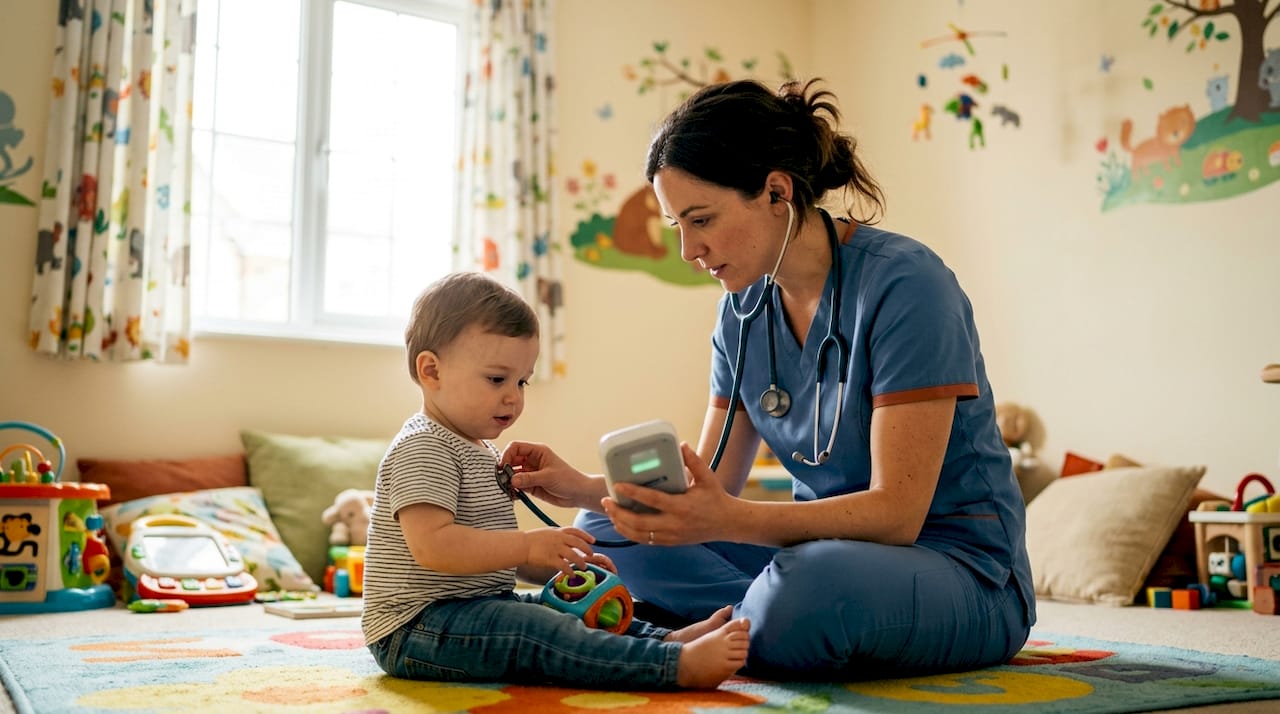
Pediatric home visits are specialized medical services delivered inside a child’s home, providing tailored clinical care to children who need ongoing or complex health management. For families raising children with special needs, these visits close the gap between hospital discharge and stable daily life. Structured newborn home visit programs catch health issues missed by families who never received them. The American Academy of Pediatrics supports early in-home assessments as a core part of preventive pediatric care, and Georgia’s Department of Public Health runs state-sponsored programs specifically designed to bring this care to families who need it most.
1. What are pediatric home visits and who qualifies?
Pediatric home visits are clinical encounters conducted by licensed nurses, visiting pediatricians, or multidisciplinary care teams at a child’s residence. The industry term for this service category is pediatric home health care, which encompasses everything from newborn wellness checks to skilled nursing for medically complex children. Understanding who qualifies is the first practical step for any family.
Children who benefit most include those with:
Chronic conditions such as asthma, epilepsy, or congenital heart disease requiring frequent monitoring
Medically complex needs including tracheostomy management, ventilator dependence, or feeding tube support
Post-discharge newborns who need follow-up within days of leaving the hospital
Developmental delays or neurological conditions where home-based assessment captures real-world function more accurately than a clinic setting
Medicaid-enrolled children in Georgia, who may qualify for the Georgia Pediatric Program (GAPP), which funds skilled nursing hours for medically fragile kids
State programs and Medicaid both accommodate a wide range of needs. Georgia’s home visit program adjusts frequency based on each family’s situation, meaning a child with a tracheostomy receives more intensive support than a healthy newborn needing a single wellness check.
Pro Tip: Call your child’s pediatrician and insurance plan before assuming your child does not qualify. Many families discover GAPP or Medicaid home nursing benefits only after a provider prompts them.
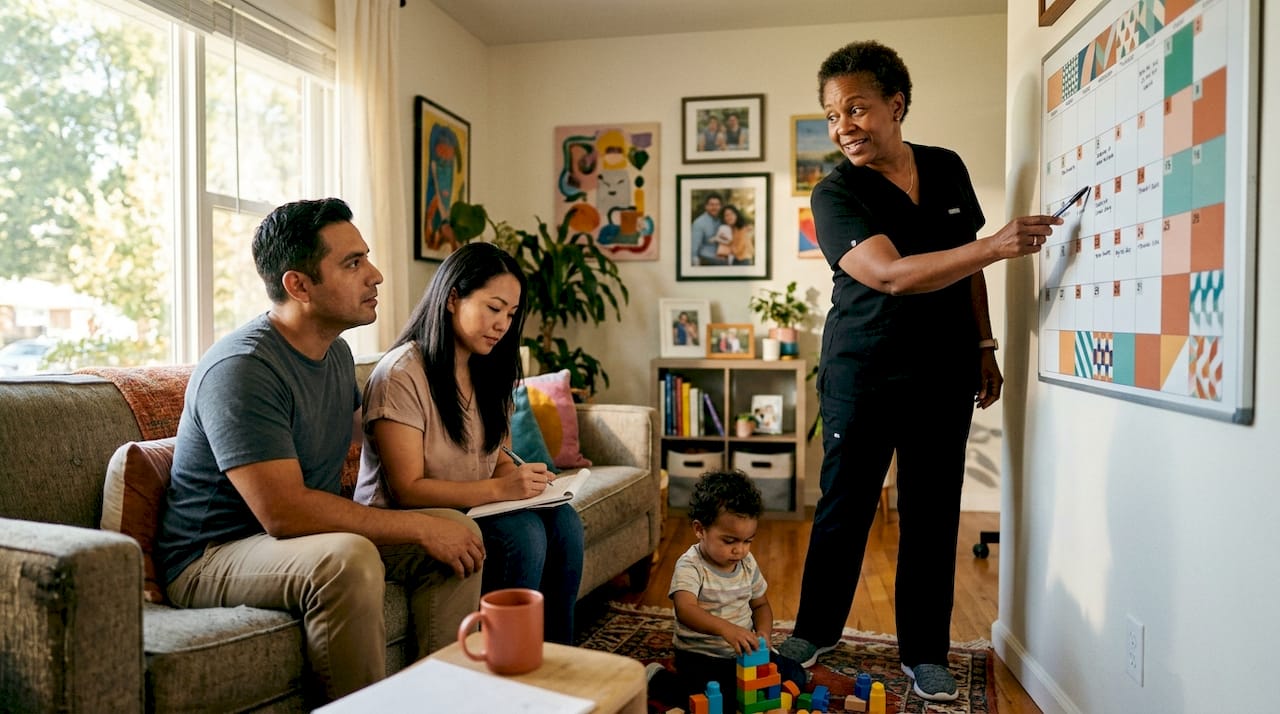
2. What services are included in a pediatric home visit?
A pediatric home visit covers far more than a basic checkup. The scope depends on the child’s diagnosis, but most visits include a structured clinical assessment combined with family education and community referrals.
Common services delivered during children’s home healthcare visits include:
Physical exams and vital sign monitoring to track growth, weight, and organ function
Feeding evaluations for infants and children with oral motor difficulties or feeding tube dependence
Developmental milestone tracking using standardized screening tools
Tracheostomy and ventilator care for children requiring airway management at home
Oral health guidance from dental nurses, which first-time parents rate as one of the most valued components of multidisciplinary home visits
Postpartum depression screening for caregivers, since caregiver mental health directly affects child outcomes
Home safety evaluations covering fall risks, medication storage, and medical equipment placement
The multidisciplinary model is what separates home care for infants and complex children from a standard clinic visit. When a pediatric nurse, a feeding specialist, and a social worker coordinate during a single home session, families receive integrated guidance instead of fragmented advice spread across multiple appointments.
Transitioning from facility-based care to patient-centered home nursing shifts the focus from institutional schedules to the child’s actual daily routines. That shift produces care plans that are far easier for families to follow consistently.
3. How home visits improve outcomes and reduce costs
The evidence behind in-home child health care is direct: children who receive structured home visits have fewer hospitalizations and fewer emergency room visits. Home visit programs catch health issues that 6% of non-participating mothers would have missed entirely. That number represents real children whose jaundice, feeding failures, or infection signs went undetected until they became emergencies.
“Nurses connect families with food banks, transportation, and baby supplies during home visits. Those connections reduce household stress and improve long-term adherence to pediatric care schedules.”
Early screening during home visits identifies problems before they escalate. A nurse who observes a child’s feeding behavior at home sees something a 15-minute clinic appointment never captures. That observation can trigger early intervention for a swallowing disorder, preventing aspiration pneumonia and a hospital stay.
The financial case is equally strong. Medicaid programs that fund pediatric nurse visits report cost savings when home care replaces repeated emergency visits. Families also benefit because home visits connect them to community resources like transportation assistance and food support, reducing the household stress that often causes families to skip follow-up appointments.
Opulentprivatecare publishes its shift fill rates and nurse retention metrics publicly. That transparency matters because continuity of caregiver is one of the strongest predictors of consistent care quality for medically complex children.
4. Practical logistics: scheduling, preparation, and what to expect
Getting started with in-home child health care involves more administrative steps than most families anticipate. Initiating home care requires physician orders, insurance verification, and agency staffing coordination. Each step takes time, so starting the process before hospital discharge is always better than waiting.
A typical timeline looks like this:
Request a physician order from your child’s pediatrician or specialist before discharge
Contact your insurance plan to confirm home nursing benefits and any prior authorization requirements
Select a home care agency and complete intake paperwork, including medical history and care plan documentation
Schedule the first visit with the agency’s care coordinator, targeting the recommended window
Prepare your home by organizing medical equipment, medications, and a written list of questions for the nurse
For newborns, the recommended window for a first home visit is 3–5 days post-discharge, with some providers able to visit as early as 48–72 hours after leaving the hospital. That window exists because jaundice, weight loss, and feeding problems typically surface within the first few days at home.
State-sponsored home visits typically last 60–120 minutes, with visit frequency adjusted to each family’s needs. For children with complex medical conditions, visits may occur daily or several times per week.
Pro Tip: You do not need a spotless home for a visit. Visits can take place on a porch or in any comfortable outdoor space if that feels easier. The nurse’s focus is your child’s health, not your living room.
5. Home visits vs. traditional clinic visits
Choosing between a clinic appointment and a pediatric home visit is not always an either-or decision. Home visits complement clinic care rather than replace it. Still, the differences in what each setting delivers are significant.
Feature | Pediatric home visit | Traditional clinic visit |
Care environment | Child’s natural home setting | Fixed clinical facility |
Appointment length | 60–120 minutes, flexible | Typically 15–20 minutes |
Infection exposure | Minimal, no waiting room | Higher risk, especially for newborns |
Multidisciplinary access | Nurses, specialists, social workers in one visit | Usually single provider per visit |
Care plan alignment | Built around home routines and equipment | Based on institutional protocols |
Family education | Hands-on, in real environment | Verbal or printed instructions only |
The infection risk difference matters most for immunocompromised children and newborns. A waiting room full of sick children is a genuine hazard for a baby with a heart defect or a child on immunosuppressants. Home visits eliminate that exposure entirely.
Patient-centered home nursing also produces care plans that integrate a child’s actual medical equipment and daily schedule. A nurse who sees a child’s feeding pump setup, sleep position, and tracheostomy supplies in context gives far more relevant guidance than one working from a chart alone.
6. How to choose a reliable pediatric home care provider
Not all home care providers deliver the same quality of care. For families managing complex conditions, the difference between a reliable agency and an inconsistent one shows up in missed shifts, rotating staff, and gaps in care continuity.
The most important factors to evaluate are nurse retention rates, shift fill rates, and the agency’s process for matching caregivers to families. High nurse turnover forces children to adapt repeatedly to unfamiliar caregivers, which is disruptive for any child and genuinely harmful for children with neurological or behavioral conditions.
Opulentprivatecare uses a “3 Thumbs Up Rule” before any care begins. The family, the caregiver, and Opulentprivatecare must all approve the match. That three-way agreement reduces the chance of a poor fit that leads to early caregiver turnover. Families in Georgia seeking specialized pediatric nursing for conditions like tracheostomy, ventilator dependence, or feeding tube management benefit directly from that structure.
Asking an agency for its published performance metrics is a reasonable and necessary step. An agency that cannot or will not share shift fill rates and retention data is telling you something important about its reliability.
Key takeaways
Pediatric home visits deliver clinical care, family education, and community support in one setting, making them the most effective care model for children with complex or ongoing medical needs.
Point | Details |
Early visits prevent emergencies | Newborn home visits within 3–5 days post-discharge catch jaundice and feeding issues before they escalate. |
Multidisciplinary care works better at home | Nurses, specialists, and social workers coordinating in one visit produce more consistent outcomes than fragmented clinic appointments. |
Administrative prep is required | Families need physician orders, insurance verification, and agency coordination before the first visit. |
Caregiver continuity matters | Consistent nurses improve care quality and reduce stress for children with neurological or complex medical conditions. |
Home visits complement clinic care | In-home visits bridge gaps between appointments; they do not replace routine pediatric checkups. |
What I’ve learned from working with medically complex children at home
The families I work with carry a weight that most people never see. Managing a tracheostomy, a feeding tube, or a ventilator at home is not just a medical challenge. It is a daily act of courage that requires skill, stamina, and a care team that shows up consistently.
What I have observed over time is that the families who do best are not necessarily the ones with the most medical knowledge. They are the ones who have a nurse they trust. When a caregiver knows a child’s baseline, their quirks, their good days and their hard ones, the quality of care changes entirely. That relationship is not a soft benefit. It is a clinical asset.
The administrative burden of starting home care catches families off guard every time. Physician orders, insurance calls, agency paperwork. It is a lot to manage when you are also caring for a medically fragile child. My honest advice is to start that process before your child leaves the hospital, not after. Every day of delay is a day without the support your child needs.
The other thing I would tell any parent is this: do not settle for rotating staff. Consistency is not a luxury in pediatric home care. It is the foundation everything else is built on.
— Opulent
Opulentprivatecare’s pediatric home nursing in Georgia
Opulentprivatecare serves families across Georgia with in-home pediatric nursing built specifically for children with complex medical needs. The team specializes in tracheostomy care, ventilator management, feeding tube support, and neurological care, with nurses matched to each child through the 3 Thumbs Up Rule.
Every family starts with a care match process that requires approval from the family, the nurse, and Opulentprivatecare before any shift begins. That process protects your child from the disruption of rotating caregivers. Opulentprivatecare publishes its shift fill rates and nurse retention data so families can evaluate reliability before committing. If your child needs consistent pediatric home nursing in Georgia, Opulentprivatecare is built for exactly that situation. Families can also review Georgia pediatric home care benefits to understand what to expect before the first visit.
FAQ
What is a pediatric home visit?
A pediatric home visit is a clinical appointment conducted at a child’s home by a licensed nurse or visiting pediatrician. Services range from newborn wellness checks to skilled nursing for children with tracheostomies, feeding tubes, or ventilator dependence.
How soon should a newborn receive a home visit after discharge?
The recommended window is 3–5 days post-discharge, with some providers visiting as early as 48–72 hours. That timing catches jaundice, feeding problems, and weight loss before they require emergency care.
Does Medicaid cover pediatric home visits in Georgia?
Georgia Medicaid covers skilled nursing home visits for medically fragile children through the GAPP program. Families should confirm eligibility with their child’s physician and insurance plan, as prior authorization is typically required.
How long does a pediatric home visit last?
State-sponsored visits typically run 60–120 minutes. Skilled nursing visits for medically complex children may be longer and occur multiple times per week depending on the care plan.
Do home visits replace regular clinic appointments?
Home visits bridge care gaps between clinical appointments but do not replace routine pediatric checkups. Both settings serve distinct purposes and work best when coordinated together.
Recommended
Comments