
What Is Pediatric Nursing? A Guide for Families

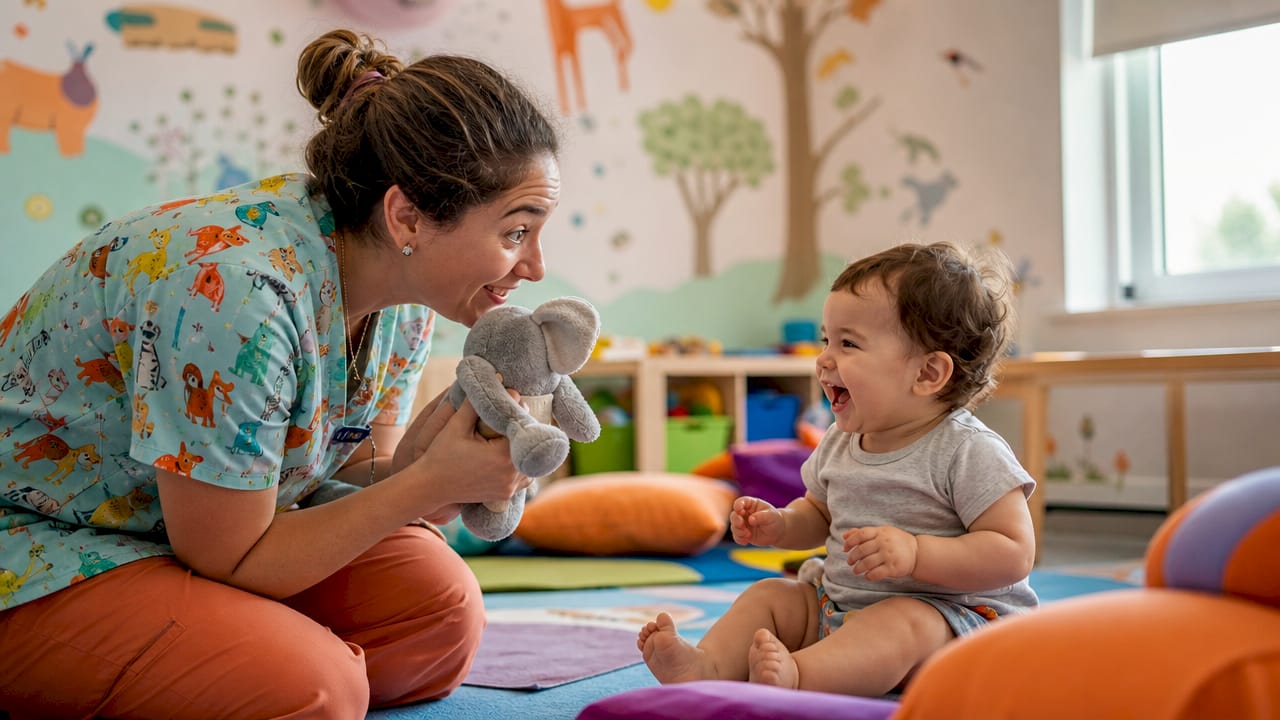
Pediatric nursing is the specialized practice of providing medical and emotional care to children from birth through age 18. Unlike general nursing, this field addresses the unique physiological and psychological needs of children at every developmental stage, from newborns to teenagers. The Pediatric Nursing Association of Europe (PNAE) defines the pediatric nurse’s core roles as caregiver, advocate, educator, and collaborator, all grounded in the UN Convention on the Rights of the Child. Opulentprivatecare works within this same framework, bringing specialized pediatric nursing directly into the home for families in Georgia who need consistent, skilled support.
What is pediatric nursing, and what do pediatric nurses do?
Pediatric nurses assess, monitor, and treat children across a wide range of health conditions. Their daily work covers growth monitoring, medication administration, wound care, and tracking developmental milestones alongside biological health. Every task is adjusted for the child’s age, size, and stage of development.
The roles pediatric nurses fill go well beyond clinical tasks:
Caregiver: Administers medications, manages medical equipment, and monitors vital signs calibrated to age-appropriate norms.
Advocate: Speaks up for the child’s rights and best interests within the health care team, as outlined by the PNAE’s revised definition of the pediatric nurse.
Educator: Explains diagnoses, procedures, and home care routines to both the child and the family in clear, calm language.
Collaborator: Works alongside physicians, therapists, social workers, and child life specialists to coordinate complete care.
Emotional support provider: Helps children and parents manage fear, anxiety, and the stress of illness or hospitalization.
Pediatric nursing duties also include helping with daily living activities such as feeding, bathing, and positioning, especially for children with complex medical needs. Strong communication skills are non-negotiable. A nurse who can explain a feeding tube change to a frightened six-year-old and then turn around and walk a parent through the same procedure at home is doing the full job.
Pro Tip: Ask your child’s nurse to walk you through every procedure before it happens. Pediatric nurses are trained to teach, and most welcome the chance to prepare you.
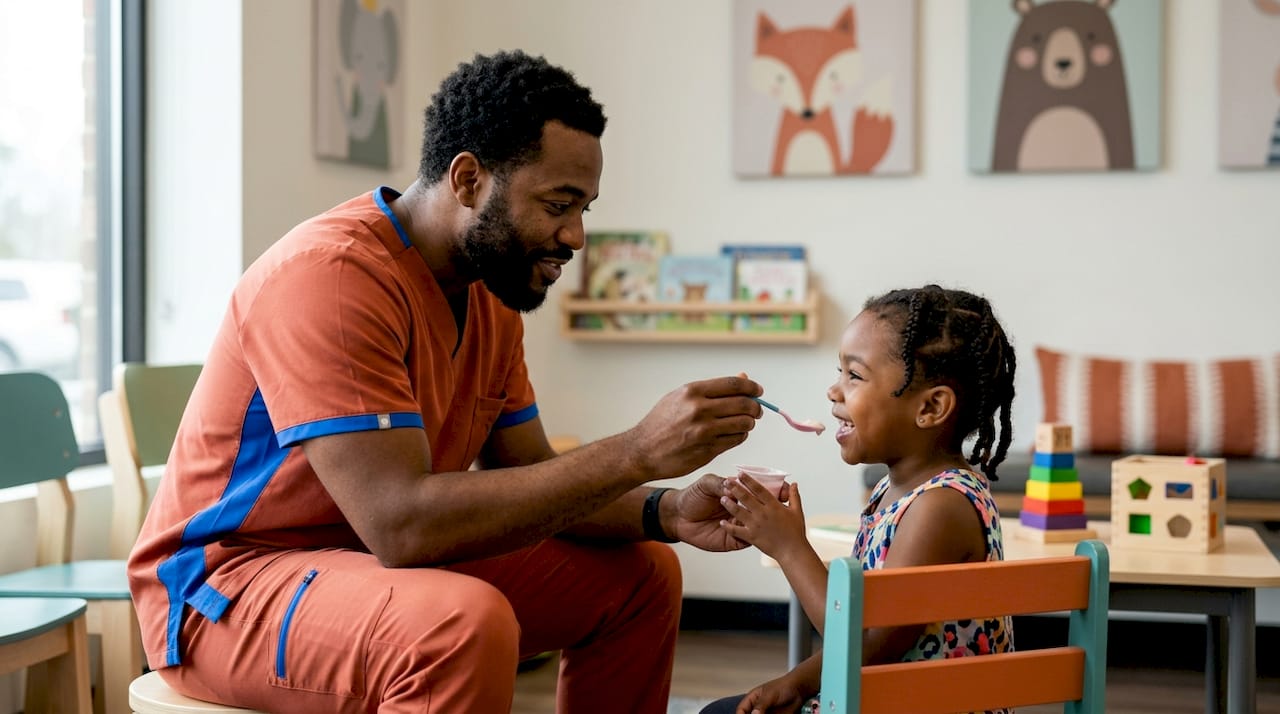
How does pediatric nursing differ from adult nursing?
Children are not small adults. That phrase sounds simple, but it carries real clinical weight. Children’s vital signs, lab values, and clinical presentations vary significantly by age and developmental stage, which means a heart rate that signals danger in an adult is perfectly normal in a toddler.
Here are four key differences that set pediatric nursing apart:
Physiological variation by age. Normal ranges for heart rate, blood pressure, respiratory rate, and blood glucose shift constantly from infancy through adolescence. Pediatric nurses must know these ranges by age group, not just by condition.
Developmental assessment alongside medical assessment. A pediatric nurse evaluates whether a child is hitting speech, motor, and cognitive milestones. A delay can signal an underlying condition that a purely medical assessment would miss.
Tailored treatment plans. Medication dosing in pediatrics is calculated by weight and body surface area, not by standard adult doses. Getting this wrong carries serious risk.
Illness presentation differs. Children often compensate for serious illness longer than adults, then deteriorate rapidly. Recognizing the early warning signs requires specialized training that goes beyond standard nursing education.
The misconception that children simply need smaller doses of adult care has caused real harm historically. Modern pediatric nursing exists precisely to correct that assumption. Every assessment technique, every intervention, and every communication strategy is adapted for the child in front of the nurse, not for a scaled-down adult.
What settings do pediatric nurses work in?
Pediatric nurses work across a broad range of environments, and the setting shapes the nature of the work considerably. Pediatric nurses serve in hospitals, outpatient clinics, community health centers, schools, and private homes.
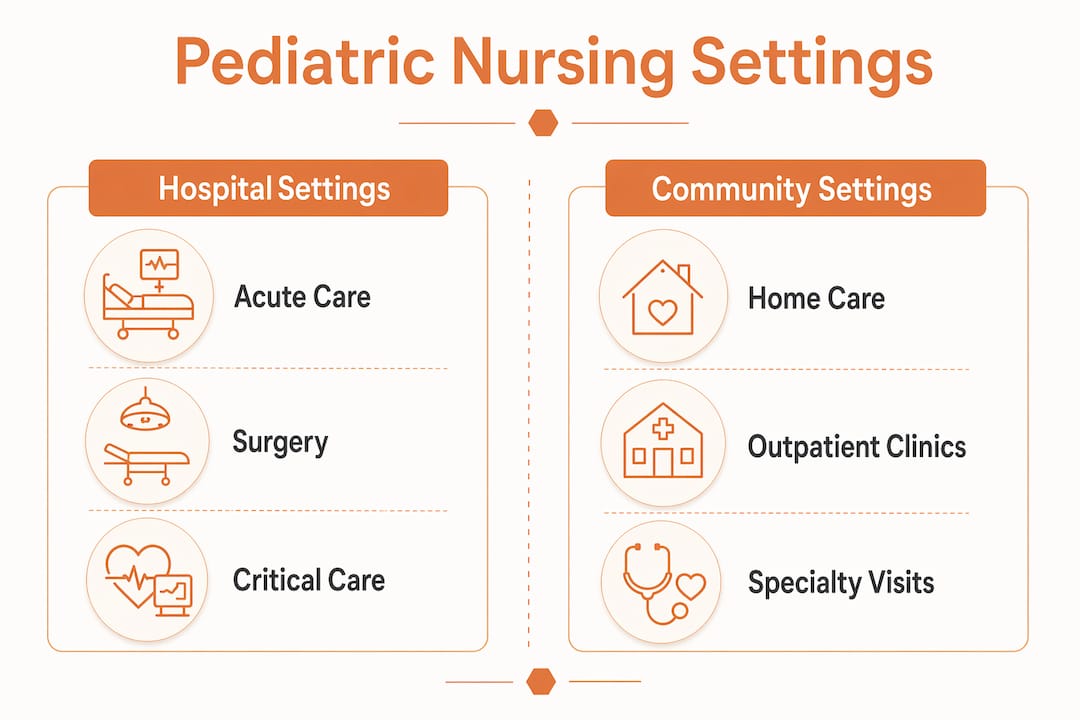
Setting | Primary focus |
Pediatric hospital units | Acute illness, surgery, and complex medical management |
Outpatient clinics | Routine checkups, chronic condition management, and immunizations |
Community and school health | Preventive care, health education, and early intervention |
Pediatric home care | Post-hospitalization support, complex equipment management, and daily skilled nursing |
Neonatal intensive care (NICU) | Premature and critically ill newborns requiring intensive monitoring |
Subspecialties within pediatric nursing include neonatal nursing, pediatric oncology, pediatric critical care, and neurodevelopmental nursing. Each requires additional training and certification beyond the base registered nurse (RN) license.
Home care deserves particular attention. Managing pediatric home care/14%3A_Planning_Care_For_The_Ill_Child/14.02%3A_Role_of_the_Nurse_When_Caring_for_Ill_or_Hospitalized_Pediatric_Clients) often involves coordinating with multiple therapists, managing specialized equipment like ventilators and feeding tubes, and connecting families with social support services. The pediatric home nurse is frequently the single point of continuity in a child’s care plan after discharge from the hospital.
Terminology also varies globally. A survey of 76 participants from 34 countries identified at least 20 international terms for pediatric nursing specialties, with “Pediatric Nurse” being the most common. That variation reflects how deeply regional health care systems shape the role, even when the core mission stays the same.
How do pediatric nurses support families for better outcomes?
Family-centered care/14%3A_Planning_Care_For_The_Ill_Child/14.02%3A_Role_of_the_Nurse_When_Caring_for_Ill_or_Hospitalized_Pediatric_Clients) is the organizing philosophy of pediatric nursing. It treats parents as active partners in care, not passive observers. This approach improves communication, reduces family stress, and produces better health outcomes for the child.
Pediatric nurses support families through several concrete strategies:
Parent education: Teaching medication administration, wound care, tracheostomy management, and feeding tube protocols so families can maintain care at home with confidence.
Psychosocial support: Acknowledging the emotional weight of caring for a sick child and connecting families with counselors, social workers, or peer support groups.
Daily care involvement: Encouraging parents to participate in feeding, bathing, and positioning during hospitalization to preserve routine and reduce the child’s anxiety.
Atraumatic care techniques: Using therapeutic hugging, distraction, and child life specialists/14%3A_Planning_Care_For_The_Ill_Child/14.02%3A_Role_of_the_Nurse_When_Caring_for_Ill_or_Hospitalized_Pediatric_Clients) to minimize stress during procedures.
Care coordination: Communicating with the full interprofessional team, including physicians, occupational therapists, and speech therapists, to keep everyone aligned on the child’s goals.
Family-centered care empowers parents to manage health at home through education and support, which is especially critical for children with chronic or complex conditions. A parent who understands their child’s care plan is a safer caregiver and a more effective advocate.
Pro Tip: Keep a written log of your child’s daily vitals, feeding amounts, and any behavioral changes. Pediatric nurses use this information to spot trends that a single clinic visit would miss.
Key Takeaways
Pediatric nursing is a distinct specialty that combines clinical skill, developmental knowledge, and family partnership to deliver safe, effective care for children from birth through age 18.
Point | Details |
Specialized scope | Pediatric nursing covers children from birth to 18, with care adjusted for each developmental stage. |
Four core roles | Pediatric nurses serve as caregiver, advocate, educator, and collaborator in every care setting. |
Not adult nursing scaled down | Children have different vital sign norms, illness patterns, and dosing needs that require specific training. |
Family-centered care | Parents are active partners in care, which reduces stress and improves outcomes at home and in hospital. |
Home care is complex | Post-discharge home nursing coordinates equipment, therapists, and daily skilled care for medically fragile children. |
What families often misunderstand about pediatric nursing
Most parents picture a pediatric nurse as someone who gives shots and checks temperatures. That picture is accurate but incomplete. What I have seen working with families of medically fragile children is that the nurse’s most powerful contribution is often invisible: it is the consistency, the pattern recognition, and the relationship built over weeks and months that catches a problem before it becomes a crisis.
Parents sometimes feel they should step back and let the nurse “do their job.” The opposite is true. The best outcomes happen when families stay engaged, ask questions, and treat the nurse as a genuine partner. A nurse who knows your child’s baseline, their quirks, and their communication style will catch a subtle change that a rotating stranger would miss entirely.
The other misunderstanding I hear often is that home nursing is a lesser form of care compared to hospital nursing. Skilled pediatric home nursing requires the same clinical competencies as hospital nursing, plus the ability to work independently, manage complex equipment, and make real-time decisions without a physician down the hall. Families who choose Georgia pediatric home care for their children are not settling for less. They are choosing a model of care that research consistently links to better quality of life and fewer unnecessary hospitalizations.
— Opulent
Opulentprivatecare’s approach to pediatric nursing at home
Opulentprivatecare provides specialized in-home pediatric nursing for families in Georgia whose children need skilled, consistent care outside the hospital. The team focuses on children with complex medical needs, including tracheostomy management, ventilator support, and feeding tube care.
What sets Opulentprivatecare apart is the “3 Thumbs Up Rule.” Before any nurse begins care, the family, the caregiver, and Opulentprivatecare must all approve the match. That process eliminates the rotating-staff problem that exhausts so many families. Opulentprivatecare also publishes shift fill rates and nurse retention metrics, so families can see the reliability record before they commit. For families navigating trach, vent, or G-tube nursing needs, Opulentprivatecare offers nurses trained specifically in those interventions, bringing hospital-level skill directly into your home.
FAQ
What is the difference between a pediatric nurse and a pediatrician?
A pediatrician is a physician who diagnoses and prescribes treatment for children. A pediatric nurse implements that treatment plan, monitors the child’s response, educates the family, and provides direct hands-on care.
What education does a pediatric nurse need?
Pediatric nurses must hold a registered nurse (RN) license, which requires completing an accredited nursing program and passing the NCLEX-RN exam. Many pursue additional certification in pediatric nursing through organizations like the Pediatric Nursing Certification Board (PNCB).
Can a pediatric nurse work in my child’s home?
Pediatric nurses work in home care settings and manage complex medical equipment, coordinate with therapists, and provide daily skilled nursing/14%3A_Planning_Care_For_The_Ill_Child/14.02%3A_Role_of_the_Nurse_When_Caring_for_Ill_or_Hospitalized_Pediatric_Clients) for children with complex needs after hospital discharge.
What conditions do pediatric home nurses typically manage?
Pediatric home nurses commonly support children with tracheostomies, ventilator dependence, feeding tubes, neurological conditions, and chronic illnesses that require ongoing skilled monitoring and intervention.
How do I know if my child qualifies for in-home pediatric nursing in Georgia?
Children with complex medical needs in Georgia may qualify for nursing hours through programs like the GAPP program, which provides Medicaid-funded skilled nursing support for medically fragile children.
Recommended
Comments