
3 Day 1 Musts for Home Nursing Start: SOC Prep and Communication


Confirm start-of-care authorization with the agency and physician, clear a safe path to the patient’s bed, and set up a printed medication list with emergency contacts visible near the care area. Those three items make or break Day 1. Everything else on a home nursing start checklist, from grab bars to communication logs, builds on that foundation once the nurse walks through the door.
TL;DR:
Ensure all start-of-care paperwork, including physician orders and hospital discharge summaries, are prepared in advance to avoid delays during the assessment.
Clear walkways, install grab bars, and position necessary items within arm’s reach to facilitate safe and efficient patient movement and response times.
Stock essential monitoring devices and confirm power sources, testing equipment with backup batteries at least two days before the first shift.
Set up a dedicated care station with medication lists, emergency contacts, and a consistent communication method to support seamless team coordination.
Create an emergency plan with visible contact numbers, safety checks, and backup caregivers to ensure readiness for urgent situations during the first week.
Table of Contents
Home Nursing Start Checklist: What the SOC Assessment Covers
The start-of-care (SOC) visit is where a nurse turns paperwork into a working plan. Before that first appointment, have the referral or physician’s orders, insurance authorization, hospital discharge summaries, and a current allergy list ready in one place. Missing paperwork is the single biggest reason SOC visits run long.
During the visit, the nurse collects clinical detail: diagnoses, a full medication reconciliation, activities of daily living (ADLs), mobility level, and cognitive status. Many home health agencies use OASIS-style items, the same structured categories Medicare uses to track outcomes, to standardize this intake. A typical start-of-care assessment runs 60 to 120 minutes, and preparation is what keeps it on the shorter end.
Families coming straight from a hospital stay have extra ground to cover. A hospital discharge to home nursing checklist can help you gather the right records before that transition, and if the case involves a NICU graduate, a NICU to home transition guide walks through what changes once equipment and monitoring move into the house. Ask your agency in advance which specific documents they require, since requirements vary slightly by state program.
Room and Home Safety Checklist, Room by Room
A nurse should be able to move around the patient’s bed without shifting furniture first. Position the bed so at least one full side stays clear, and keep the path from the door to the bed free of obstacles. This isn’t just about the nurse’s convenience. It’s about how fast someone can respond if the patient’s condition changes.
Walk through the home the way a nurse would on Day 1:
Clear walkways of rugs, cords, and clutter between the bedroom and bathroom.
Add nightlights along the bathroom route for nighttime visibility.
Install or confirm grab bars near the toilet and shower, and add non-slip mats in the tub.
Keep frequently used items (call bell, water, tissues, remote) within arm’s reach of the bed.
Position the patient’s room as close to the bathroom as layout allows, to cut down on risky ambulation.
The CDC’s guidance on healthy home environments recommends a deep clean of the patient’s space before care begins, along with separating any medical waste from regular household trash. That’s worth doing even if the space already looks clean. Medical tape residue, old dressings, and dust buildup around a bed are easy to miss until a nurse points them out.
Medical Supplies to Have Ready Before the First Shift
Stock baseline monitoring tools before anyone asks for them: a thermometer, pulse oximeter, blood pressure monitor, and a glucometer if the patient’s condition calls for one. Add consumables next, sterile gauze, tape, gloves, masks, antiseptic wipes, and dressings sized for the patient’s needs.
Durable equipment takes longer to source, so confirm it early:
A hospital bed or a firm mattress that supports safe repositioning.
An over-bed table for meals and supplies.
Suction or oxygen equipment, if prescribed, tested and ready before Day 1.
Check power access near the bed. Medical equipment often needs a dedicated outlet, and a single extension cord feeding a pulse oximeter, a suction machine, and a lamp is a fire risk waiting to happen. Home care supplies checklists generally recommend reviewing what’s on hand 3 to 5 days before the first shift, which leaves enough time to order anything missing without a last-minute scramble.
Pro Tip: Plug in and test every piece of equipment, including backup batteries, at least two days before the first visit. A dead battery on Day 1 is a preventable problem that still manages to catch families off guard.
Setting Up a Communication Log and Care Station
A care station is a fixed spot, a table, a shelf, a drawer, where the printed medication list, emergency contacts, insurance cards, and any advance directives live. Every caregiver and nurse should know exactly where to find them without asking.
Build the care station first, before worrying about anything else on the documentation side.
Pick one communication method, either a physical binder or a shared digital app, and use it consistently for shift notes.
Name a primary family contact and a backup, and agree with the agency on how the nurse should report updates: text, phone call, or a secure portal.
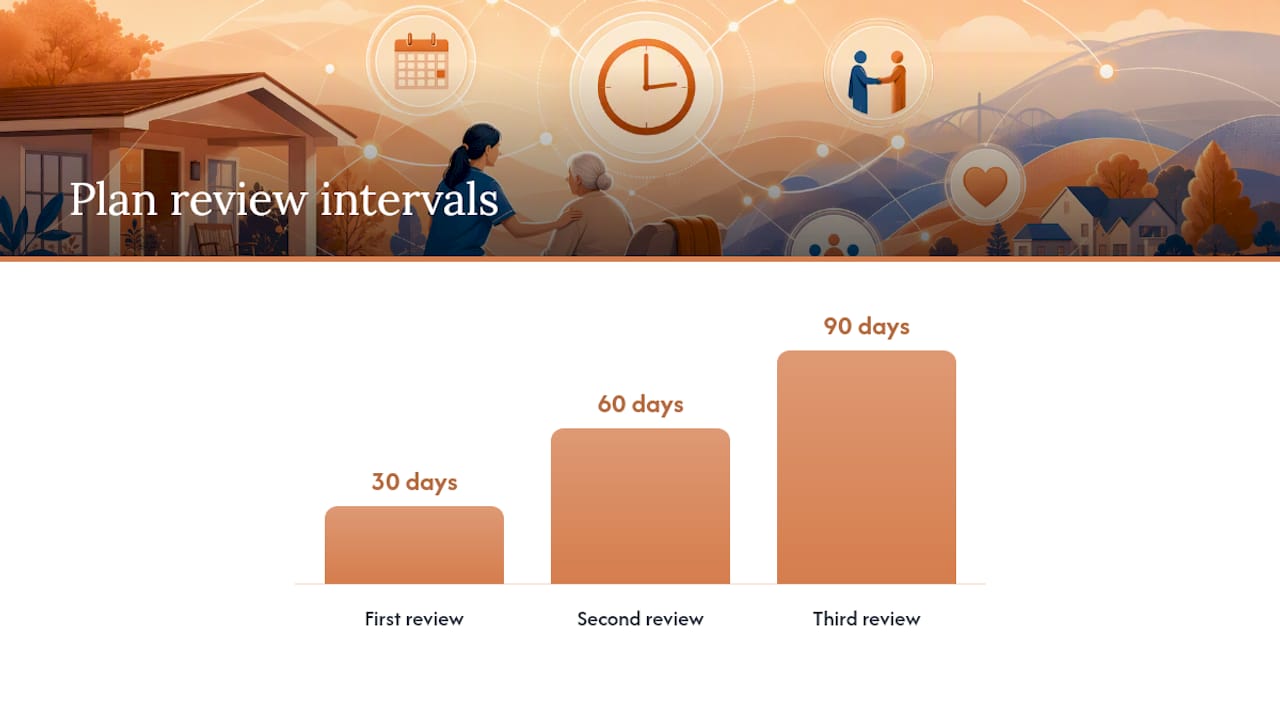
Put 30, 60, and 90-day plan reviews on the calendar now. CMS guidance on home health care points to these intervals as the standard rhythm for reassessing goals, medications, ADLs, and staffing continuity.
Shared logs matter most for continuous-care situations like seizure tracking or frequent medication changes, where relying on verbal handoffs between shifts is how details get lost. A simple one-page brief with one contact and two communication channels tends to work better than a complicated system nobody actually uses.
Pro Tip: Keep the communication log boring and consistent. The fanciest app in the world fails if a tired caregiver at 2 a.m. can’t figure out how to log a temperature reading.
Medication Management: Reconciliation and Storage
Build one printed medication reconciliation sheet listing name, dose, route, time, purpose, prescriber, and pharmacy for every medication the patient takes. This single document, more than anything else, prevents the dosing errors that happen when family members and nurses work from memory instead of a shared reference.
Store all medications in one labeled location, and use a weekly pill organizer when the regimen allows it. Then settle two questions before the first shift:
Who administers each medication, the nurse or a family member, and how is that logged?
What’s the protocol for PRN (as-needed) medications and any controlled substances, including who holds the key if they’re locked up?
Keep the pharmacy’s phone number and the prescriber’s office line on the same sheet as the medication list. When a dose needs clarifying at 9 p.m. on a Saturday, nobody wants to be searching for a phone number.
Emergency Plan Checklist for the First Week
Post the essentials where anyone in the house can see them fast: 911, the physician’s office, the pharmacy, and the home health agency’s on-call line, along with the name of the primary family contact.
Write down patient-specific red flags, seizure protocols, signs of respiratory distress, and exactly when a situation calls for 911 instead of a call to the agency.
Test smoke and carbon monoxide detectors, and confirm the first-aid kit is stocked and easy to reach.
If oxygen or suction equipment is part of care, test it and know its backup power source.
Identify at least one backup caregiver or staffing contact in case the scheduled nurse can’t make a shift.
Basic wound care matters here too. A burn treatment and first-aid checklist is worth reviewing even for households that don’t expect burns, since it covers the kind of quick response steps that apply to other minor injuries as well.
Scheduling Support and Avoiding Caregiver Burnout
Set clear shift lengths, break expectations, and an on-call backup plan before the first week, not after exhaustion sets in. Families who skip this step tend to discover the gaps at the worst possible moment, usually around week three, when the adrenaline of a new routine wears off.
Line up respite coverage in advance, and know at least one backup caregiver or agency contact by name.
Watch for burnout signs: short temper, disrupted sleep, skipping your own meals or appointments.
If those signs show up, use respite time or a caregiver support group rather than pushing through.
Assign who handles supply restocking, medication refills, and transport to appointments, so it isn’t left to whoever happens to notice first.
Consistency in staffing helps here more than people expect. Asking the right continuity questions early about how an agency handles nurse matching can save weeks of frustration later.
Why CMS and CDC Guidance Backs This Checklist
The federal Medicare home health care checklist exists precisely so families have a Day-1 reference for what quality care looks like: timely visits, trained staff, and consistent safety checks. It’s a useful yardstick even outside the Medicare system.
Families are meant to be active partners in this process, not bystanders. Nursing staff should walk through the plan of care and explain adjustments in advance, not after the fact.
Continuity of caregiver reduces the information loss that happens every time a new nurse has to relearn a patient’s history from scratch. That is why published shift-fill rates and nurse retention numbers matter as much as clinical credentials when a family is choosing who comes into their home.
Opulentprivatecare’s ‘3 Thumbs Up Rule’ requires sign-off from the family, the caregiver, and the agency before care starts, a structural attempt to reduce the mismatches that lead to rotating staff.
An Editorial Note on Starting Home Nursing
Most families over-prepare for the wrong things and under-prepare for continuity. They’ll buy every supply on a list and still get blindsided when a different nurse shows up in week two with no context on the patient’s routine.
That’s the real gap. Supplies are replaceable. A caregiver relationship that has to be rebuilt from zero every few shifts is not. Expect small snags in the first week, a missed detail on the medication sheet, a question about who calls whom, and treat them as normal, not alarming. Ask questions early. The families who do best are the ones who treat the nurse as a partner from the first visit, not a stranger to manage.
— Opulent
How Opulentprivatecare Supports Families Getting Started
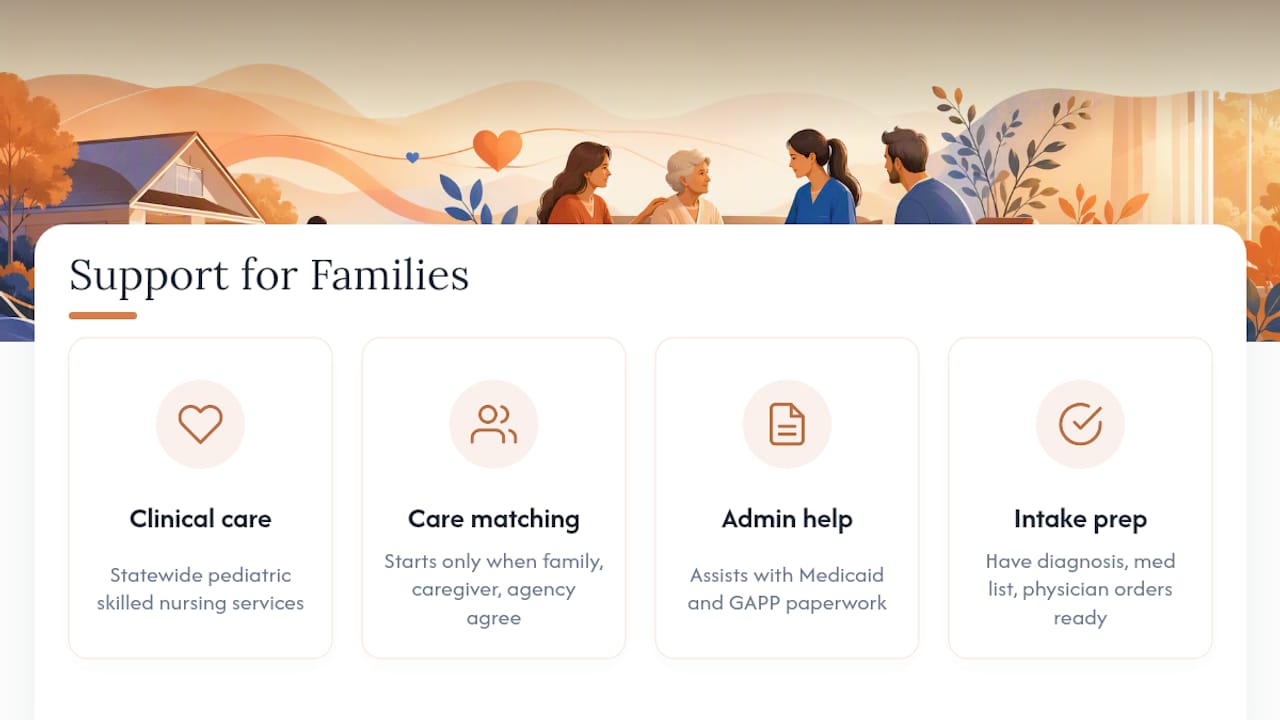
Provides statewide, in-home pediatric skilled nursing across Georgia for children managing tracheostomy care, ventilator support, feeding tubes, seizure disorders, cardiac conditions, and neurological needs.

Every match runs through a careful approval process, meaning care only begins once the family, the caregiver, and the agency all agree the fit is right. That process, paired with published shift-fill rates and nurse retention tracking, is designed to keep the same nurse coming back instead of a rotating cast of strangers learning the child’s routine from scratch. The agency also assists with Medicaid and GAPP paperwork, which removes one of the more confusing pieces of getting started.
Before an intake call, have your child’s diagnosis history, current medication list, and physician orders ready. That prep mirrors the SOC checklist above and speeds up authorization. Start the conversation on the Opulentprivatecare intake page to see what a first visit would look like for your family.
Where to Go for More Detail
For the official framework behind review timing, see CMS’s home health payment guidance. The Medicare home health checklist PDF and CDC’s healthy home guidance round out the primary sources worth bookmarking, alongside a printable home care planning checklist for room-by-room prep.
This article is general information, not a substitute for advice from a qualified doctor. Consult a qualified healthcare professional about your own circumstances before acting on anything here.
Sources
Recommended
Comments