
Medically Fragile Child Diagnosis: What Parents Must Know
- Opulent Private Care Services
- 4 hours ago
- 13 min read

A medically fragile child is one with a serious, ongoing illness or chronic condition lasting at least 12 months (or requiring at least one month of hospitalization) who depends on medical devices or assistive technology daily and faces an ongoing threat to their continued well-being. If your child relies on a ventilator, tracheostomy tube, feeding tube, or requires constant skilled nursing to perform basic life functions, they likely meet the clinical threshold used by most U.S. programs.
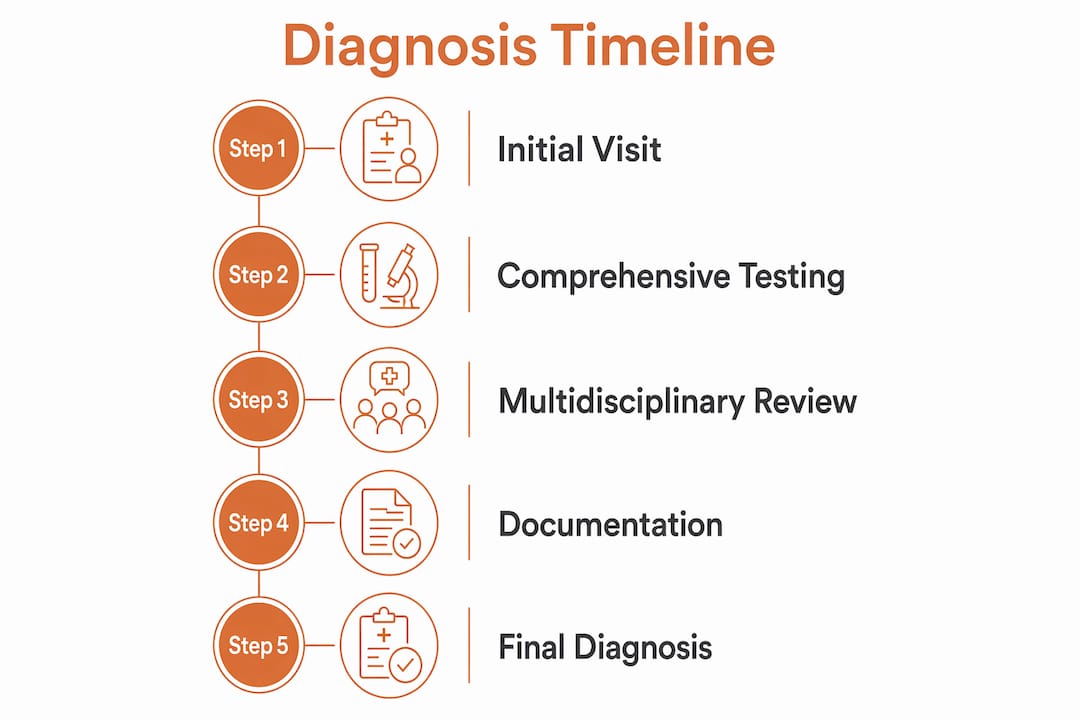
What to expect next: The medically fragile child diagnosis process typically takes months and involves your pediatrician, at least two to three specialists, and a social worker. Your primary care physician (PCP) leads coordination. Specialists in pulmonology, neurology, or genetics confirm the clinical picture. A hospital social worker or Medicaid navigator handles the paperwork side. Getting all three working together from the start cuts delays significantly.

Table of Contents
What clinical criteria actually qualify a child as medically fragile
Medically fragile vs. medically complex: why the difference changes what you get
How a medically fragile diagnosis opens doors to services, school supports, and insurance
Emotional, financial, and practical supports families should seek after diagnosis
Why caregiver continuity matters more than most families realize
Georgia families needing in-home nursing after a medically fragile diagnosis
How clinicians diagnose a medically fragile child
The process rarely moves in a straight line. Diagnosing medically fragile children often requires building what clinicians call a phenotype: an organized, documented picture of your child’s symptoms, physical exam findings, lab results, imaging, and functional limitations across multiple specialties. No single test produces the label “medically fragile.” The diagnosis emerges from the full clinical picture.

Who is involved and what each person does
Your child’s PCP or pediatrician is the anchor. They coordinate referrals and maintain continuity while specialty testing proceeds, which is exactly why establishing a formal medical home early matters so much. A medical home is not a building; it is a care model where one clinician owns the coordination, tracks all specialist input, and produces consolidated documentation. The American Academy of Pediatrics endorses this model as standard care for children with complex needs.
Beyond the PCP, the team typically includes:
Pulmonologist: Evaluates breathing support needs, ventilator settings, and tracheostomy management.
Clinical geneticist: Orders targeted genetic or biochemical testing based on the child’s phenotype. Genetic testing is frequently central to evaluation, though some children remain undiagnosed after extensive workups.
Neurologist: Assesses seizure disorders, brain structure, and neurodevelopmental function.
Physical medicine and rehabilitation (PM&R) specialist: Documents mobility limitations, equipment needs, and functional capacity.
Dietitian or GI specialist: Evaluates feeding difficulties and tube dependence.
Hospital social worker: Screens for benefits, connects families to waivers, and helps navigate Medicaid paperwork.
The timeline: months to years, not weeks
Evaluation can take months or years because a child’s symptoms evolve and test results from one specialty often trigger referrals to another. Administrative bottlenecks add more time: prior authorizations, insurance denials, waitlists for pediatric subspecialists, and delays in genetic test results. Families sometimes describe this stretch as a “diagnostic odyssey,” and the National Organization for Rare Disorders (NORD) uses that exact term for good reason.
What slows the process most: Fragmented records across multiple hospitals or clinics, missing functional limitation documentation, and the absence of a single coordinating clinician. Each of these is fixable.
Pro Tip: Ask your PCP explicitly: “Can you serve as our medical home and produce a consolidated, phenotype-focused summary letter?” Most PCPs will do this when asked directly. That letter, updated every six months, becomes the single most useful document you own.
What clinical criteria actually qualify a child as medically fragile
Programs and agencies across the U.S. do not all use identical language, but the core criteria converge around four elements. Texas PEIMS code, for example, defines medically fragile as requiring all of the following: a serious, ongoing illness or chronic condition lasting at least 12 months or requiring at least one month of hospitalization; daily, ongoing medical treatments and monitoring; routine use of a medical device or assistive technology to compensate for lost body function; and an ongoing threat to continued well-being.
North Dakota’s Department of Health and Human Services uses a clinical scoring tool that assigns care points across neurological, respiratory, and other domains to determine eligibility for medically fragile programs. The specifics vary by state, but the underlying logic is consistent.
Functional limitations often matter more than the diagnosis code
Clinical guidance recommends documenting severity of limitations in breathing, feeding, mobility, and communication because these predict in-home nursing needs more reliably than diagnosis names alone. A child with cerebral palsy who breathes independently and eats by mouth has very different care needs than a child with the same diagnosis who requires a ventilator and a G-tube. The functional picture is what drives program eligibility.
Conditions that commonly qualify
Real-world program lists, including county-level policy examples, frequently include:
Ventilator dependence
Tracheostomy dependence (breathing through a tracheostomy tube)
G-tube or gastrostomy tube dependence due to nutritional difficulties
Severe, uncontrolled seizure disorders requiring frequent intervention
Complex congenital heart disease or congestive heart problems
Apnea monitoring requirements
Kidney dialysis
Conditions requiring regular suctioning of the lungs or throat
Advanced prematurity complications with ongoing device dependence
Select metabolic or chromosomal disorders with documented functional impact
This is not an exhaustive list, and the same condition can qualify in one state program and not another depending on how functional impact is documented. That variability is exactly why your documentation strategy matters as much as the diagnosis itself.
Medically fragile vs. medically complex: why the difference changes what you get
Parents and even some clinicians use these terms interchangeably. They are not the same, and the distinction has real consequences for which services your child can access.
Medically complex describes a broader population: children with multiple chronic conditions who use health care at high rates. Medically fragile typically refers to a narrower group with acute device dependence or an immediate life-threatening risk. Think of medically complex as the wider circle and medically fragile as the smaller, higher-acuity group inside it.
Evaluation dimension | Medically complex | Medically fragile |
Condition type | Multiple chronic conditions | Serious, often progressive or life-threatening condition |
Device dependence | Possible but not required | Usually required (ventilator, trach, G-tube) |
Functional limitations | Moderate to significant | Severe; unable to perform basic life functions without assistance |
Skilled nursing need | Periodic or episodic | Daily, ongoing |
Hospitalization history | Recurrent | Prolonged or recurrent, often with ICU stays |
Waiver/program eligibility | Broader waiver programs | Technology-dependent or medically fragile-specific waivers |
Why does this matter practically? Some Medicaid waiver programs, in-home skilled nursing authorizations, and school-based service levels are gated specifically on the “medically fragile” designation. If your child’s records describe them only as medically complex, a program administrator may deny services that your child’s actual clinical picture would support. Getting the right label in the right documentation is not semantic; it is the difference between approved and denied.
Pro Tip: When applying for any state waiver or program, ask the administrator in writing: “What is your program’s operational definition of ‘medically fragile,’ and what documentation do you require to meet it?” Definitions differ by state and county. A written answer prevents denials based on mismatched terminology.
How a medically fragile diagnosis opens doors to services, school supports, and insurance
The diagnosis is not just a clinical label. It is an administrative key. Once documented correctly, it unlocks a specific set of services that are otherwise inaccessible or much harder to obtain.
Medicaid waivers and in-home nursing
Most states offer technology-dependent or medically fragile-specific Medicaid waiver programs that fund in-home skilled nursing, durable medical equipment (DME), and respite care. In Georgia, the Georgia Pediatric Program (GAPP) is the primary vehicle. Eligibility requires current medical documentation, typically within the past six to twelve months, and programs often require periodic reassessment to confirm continuing eligibility as the child’s condition evolves. If your child improves, documentation must reflect the current clinical picture accurately.
DME authorization, including ventilators, suction machines, pulse oximeters, and feeding pumps, flows through Medicaid once the diagnosis and device dependence are documented by a physician order.
School-based supports: IEP and IFSP
Children with medically fragile diagnoses qualify for Individualized Education Programs (IEPs) or, for children under three, Individualized Family Service Plans (IFSPs). Medical documentation maps directly to educational accommodations: a child who requires suctioning during the school day needs a trained school nurse present; a child on a ventilator may need a one-to-one aide. The school district’s special education team uses the physician’s functional limitation documentation to build the IEP. Bring the phenotype summary letter and the most recent specialist notes to every IEP meeting.
The American Academy of Pediatrics recommends that children with complex medical needs receive care through a patient-centered medical home that coordinates with schools, specialists, and community services to reduce duplication and family burden. That coordination starts with your PCP and extends to the school’s special education team.
What hospitals provide vs. what you must compile yourself
Hospitals typically produce discharge summaries, medication reconciliation lists, and equipment orders. What they rarely produce automatically is a consolidated, functional-limitation-focused letter written for a Medicaid program administrator or school IEP team. That letter must be requested explicitly from your PCP or specialist. Ask for it by name: “a letter documenting my child’s functional limitations and medical device dependence for Medicaid waiver purposes.”
For Georgia families, learning about GAPP and Medicaid paperwork support before you start the application process saves significant time.
What to track and prepare: your documentation checklist
Building a complete record before you apply for anything is the single highest-leverage action you can take. An organized record with dated physician letters and equipment orders reduces back-and-forth with Medicaid or waiver administrators and supports faster in-home nursing approvals.
Here is a prioritized list of what to collect and maintain:
Recent discharge summaries (last two to three hospitalizations, dated within 12 months where possible)
Current medication list with dosages, prescribing physician, and dates
Specialist letters documenting functional limitations, device dependence, and prognosis
Equipment orders and DME prescriptions (ventilator settings, G-tube specifications, suction equipment)
Therapy notes from physical, occupational, and speech therapists documenting what the child cannot do independently
Event logs including dates, duration, and severity of apneas, seizures, feeding refusals, or respiratory events
Hospitalization timeline listing dates, facilities, diagnoses, and length of stay
Photos of equipment setup at home (useful for DME reauthorization and nursing orientation)
One-page phenotype summary written by your PCP listing diagnosis, functional limitations, devices used, and daily care requirements
Signed medical records release forms for every facility your child has been seen at
How to request records quickly
Use your hospital’s patient portal (MyChart, Epic, or equivalent) to download discharge summaries and lab results directly. For records not available digitally, contact the hospital’s Health Information Management office and request them in writing. Most facilities must respond within 30 days under HIPAA, but urgent requests tied to active Medicaid applications can often be expedited.
When writing to specialists, suggest this language: “Please document the child’s functional limitations, including inability to [breathe/feed/move] without [device/assistance], and confirm device dependence and daily skilled nursing requirements.” Specific language in the letter prevents vague responses that program administrators will reject.
Pro Tip: Create a single digital folder (Google Drive, iCloud, or a HIPAA-compliant patient portal) organized by date and document type. Name files consistently: YYYY-MM-DD_ChildLastName_DocumentType (e.g., 2025-11-03_Smith_DischargeSummary). A physical binder with the same structure works equally well. Either way, maintaining an organized medical binder with a one-page phenotype summary at the front is the insider method that shortens approval cycles.
Emotional, financial, and practical supports families should seek after diagnosis
The clinical side of a medically fragile diagnosis gets most of the attention. The family side often does not. Family stress, lost work, and social isolation are predictable outcomes when caring for a medically fragile child, and connecting families to support services is considered part of clinical care, not an optional add-on.
Ask your hospital social worker for a benefits screening at every inpatient stay. Social workers can identify Medicaid waiver eligibility, Supplemental Security Income (SSI), state-funded respite programs, and local nonprofit resources in a single conversation. Most families do not know to ask.
Types of support worth pursuing
Medicaid waiver programs fund in-home nursing, respite, and DME beyond what standard Medicaid covers. Each state administers its own waivers; your state Medicaid office can tell you which programs your child may qualify for.
Family caregiver pay programs in some states allow a parent or family member to be paid as the child’s primary caregiver through Medicaid. In Georgia, this option exists through GAPP. For families in Georgia, Georgia Medicaid’s family caregiver payment options are worth understanding before you assume you need to hire outside help.
Respite care gives primary caregivers scheduled breaks. Chronic caregiver burnout is a documented risk factor for adverse child outcomes; respite is not a luxury.
Behavioral health and counseling for both the child and siblings. The American Academy of Child and Adolescent Psychiatry notes that children with chronic illness face elevated risk for emotional problems, and siblings often struggle silently.
Parent-run support groups and condition-specific nonprofits provide peer knowledge that no clinician can replicate. NORD maintains a directory of rare disease organizations. Condition-specific groups (for tracheostomy families, CHD families, and others) often have the most current, practical information about waiver programs and nursing agencies in your state.
For families navigating SSI eligibility alongside Medicaid, the SSI benefit amounts and income limits for qualifying children are worth reviewing as part of your benefits picture.
When to escalate: red flags and your emergency plan
Most families of medically fragile children develop a sixth sense for when something is off. These are the situations that require immediate action, not a wait-and-see approach.
Red flags that require urgent evaluation
Your emergency plan template
Keep a one-page emergency document posted at home and stored in your phone. It should include:
Child’s full name, date of birth, primary diagnosis, and current device list
Emergency contacts: PCP after-hours line, specialist on-call numbers, home nursing agency contact
Device troubleshooting steps (trach tube change procedure, ventilator circuit reset)
What to tell 911: diagnosis, devices in use, current medications, known allergies
Preferred hospital and any “do not resuscitate” or advance directive status if applicable
Location of medical binder and insurance cards
When to push for expedited reassessment
If your child’s condition changes significantly, whether improving or deteriorating, request an expedited specialty appointment rather than waiting for a routine follow-up. A change in ventilator settings, a new seizure type, or a significant weight loss all warrant prompt reassessment. Program eligibility and nursing authorization levels are tied to current clinical status, so a documented change in condition should trigger a review of all active service authorizations.
Key Takeaways
A medically fragile child diagnosis hinges on documented functional limitations and device dependence, not diagnosis codes alone, and parents who build organized records and establish a medical home move through approvals faster.
Point | Details |
Definition centers on function | Eligibility requires documented inability to breathe, feed, or function without medical devices or daily skilled nursing. |
Phenotype documentation speeds everything | A one-page phenotype summary from your PCP is the single most useful document for Medicaid, waivers, and IEP teams. |
Fragile vs. complex changes eligibility | “Medically fragile” unlocks specific waivers and nursing authorizations that “medically complex” alone may not. |
Records must stay current | Many programs require documentation updated within 6–12 months; outdated records are a leading cause of denial. |
Opulentprivatecare supports Georgia families | Opulentprivatecare provides in-home pediatric skilled nursing in Georgia and assists with GAPP and Medicaid paperwork for qualifying families. |
Why caregiver continuity matters more than most families realize
Most of the conversation around medically fragile care focuses on getting the diagnosis right and securing the right services. That is necessary. What gets far less attention is what happens after a family finally has nursing hours approved: the rotating-nurse problem.
Families with medically fragile children are not just managing a medical condition. They are managing a care system. Every time a new nurse walks through the door, the family spends the first hour or two teaching that nurse their child’s baseline, their quirks, their equipment setup, and the subtle signs that something is wrong. For a child on a ventilator or with a complex seizure history, that orientation gap is not just inconvenient. It is a safety variable.
At Opulentprivatecare, the position is that continuity of caregivers is a clinical issue, not a staffing preference. Families should ask any nursing agency two direct questions before signing on: What is your average nurse retention rate? And what is your shift fill rate? These numbers tell you whether you will have the same nurse consistently or whether you will be managing a different face every week. Agencies that publish these metrics are telling you something about how they operate. Agencies that cannot answer the question are telling you something too.
The burden on families during care transitions is real and measurable. A consistent caregiver who knows your child reduces the cognitive load on parents, reduces the risk of missed clinical signals, and makes the whole system more stable. That is what continuity-focused staffing actually delivers.
Georgia families needing in-home nursing after a medically fragile diagnosis
Getting the diagnosis documented is step one. Finding skilled, consistent nursing to support your child at home is step two, and for many Georgia families, it is the harder one.
Opulentprivatecare provides statewide in-home pediatric skilled nursing in Georgia for children with tracheostomies, ventilator dependence, feeding tubes, seizure disorders, cardiac conditions, and neurological needs. The difference from a standard staffing agency is the 3 Thumbs Up Rule: care does not start until the family, the nurse, and Opulentprivatecare all agree it is the right match. That process eliminates the revolving-door problem before it starts.
Opulentprivatecare also helps families navigate GAPP and Medicaid paperwork, including the documentation requirements that trip up most first-time applicants. If Georgia Medicaid will fund your child’s care, the team helps make sure the application reflects the clinical picture accurately.
Families who want consistent, qualified nursing without the stress of managing rotating staff can learn more about pediatric home care options or contact Opulentprivatecare directly to discuss your child’s specific needs and start the matching process.
Authoritative sources and next steps for parents
The organizations and resources below are the most reliable starting points for parents navigating a medically fragile child diagnosis in the United States.
Your state Medicaid office: The first call for waiver eligibility, documentation requirements, and program names. Search “[your state] Medicaid technology-dependent waiver” or “[your state] medically fragile children program” to find the relevant program page.
American Academy of Pediatrics (AAP): Provides clinical guidance on medical homes and coordinated care for children with complex needs. HealthyChildren.org is the AAP’s parent-facing resource for chronic conditions in children.
National Organization for Rare Disorders (NORD): Maintains a rare disease database and physician directory; particularly useful if your child’s condition is undiagnosed or rare. NORD’s materials on the diagnostic odyssey are written for both families and clinicians.
Hospital social work department: Request a social work consult at every inpatient admission. Social workers screen for benefits, connect families to local resources, and can initiate waiver applications from inside the hospital.
CDC school health resources: The CDC’s chronic conditions in school guidance helps parents understand what schools are required to provide and how to request it.
Your child’s PCP: The highest-priority relationship to establish and maintain. A PCP who functions as a true medical home coordinator is worth more than any single specialist.
When searching state waiver pages, look specifically for program names that include the words “technology-dependent,” “medically fragile,” “TEFRA,” or “Katie Beckett.” These are the waiver categories most likely to cover in-home nursing and DME for children with the health needs described in this article.
This article provides general information for educational purposes and does not constitute medical, legal, or financial advice. Confirm current eligibility rules, program requirements, and clinical decisions with your child’s care team and your state Medicaid office.
Recommended