
Train Three Caregivers: Emergency Plan for a Ventilator Dependent Child

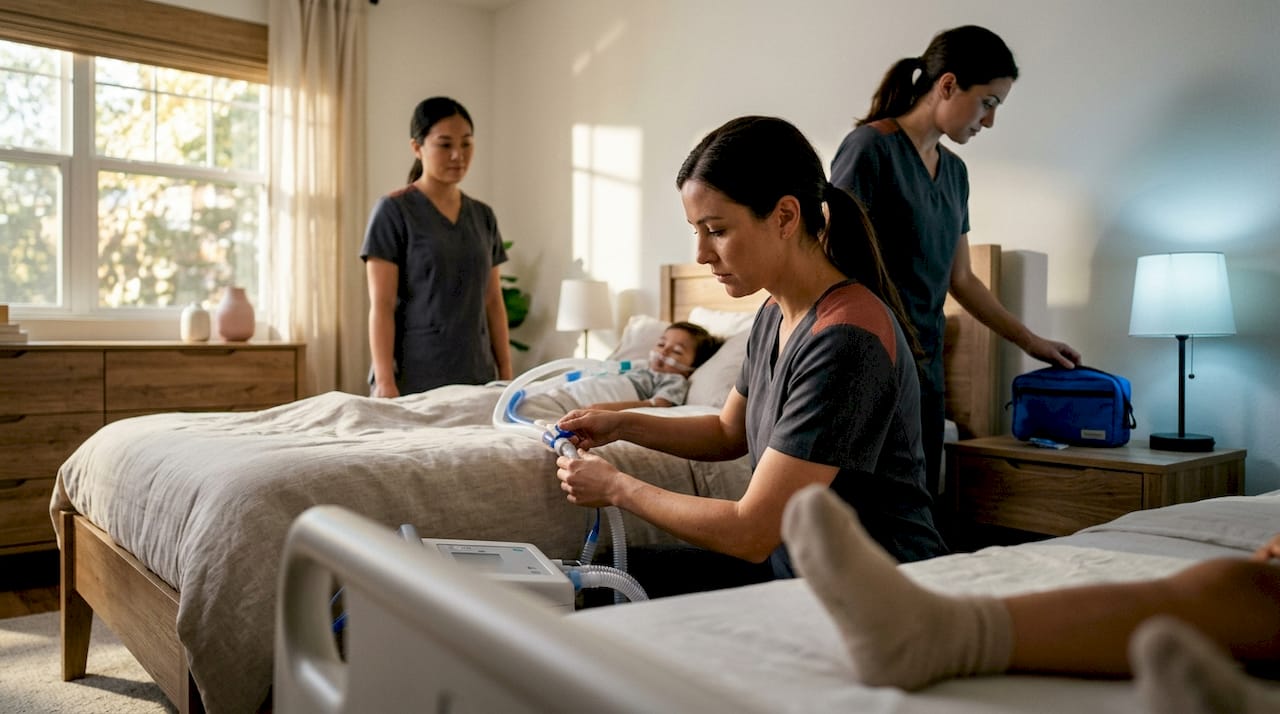
An effective emergency plan for a ventilator-dependent child rests on five pillars: a stocked go-bag with an Ambu bag and spare trach supplies, a realistic backup power strategy, at least three trained caregivers, a physician-written ER letter with current ventilator settings, and a saved list of DME and 24/7 respiratory therapist contacts. The plan only works if you check batteries and supplies weekly, update it after every clinic visit, and make sure every caregiver, not just you, knows exactly where everything lives.
TL;DR:
Families should verify their ventilator’s backup battery runtime with suppliers and prepare external power options like portable stations or marine batteries to extend power during outages.
At least three caregivers must be trained in ventilator, trach, and suctioning skills with documented competency checks to ensure continuous care during emergencies.
The go-bag should be packed with current supplies, labeled, and accessible within seconds, and updated regularly after clinical visits or during seasonal planning.
Always check the child’s airway first in an emergency, switch to backup ventilator or Ambu bag if alarms persist, and have the ER letter with baseline settings ready for first responders.
Building a support network with DME, clinicians, local resources, and possibly in-home nursing enhances emergency preparedness and fills caregiver coverage gaps during crises.
Table of Contents
Go-Bag and Supplies Checklist for a Ventilator-Dependent Child
The bag matters less than what’s inside it and whether you can grab it in under a minute. Store everything in a waterproof duffel with labeled compartments, not a loose pile of supplies in a closet.
Ambu bag sized correctly for your child, kept within arm’s reach at all times, not just packed away
Two to four spare ventilator circuits and a backup trach tube in your child’s current size, plus one size smaller
Suction catheters, a portable suction unit, and distilled water for humidification
A current medication list, extra prescriptions, and insurance and ID cards
A laminated ER letter with ventilator settings, chargers for every device, and labeled pouches so nothing gets misplaced mid-crisis
If your child uses noninvasive ventilation instead of a trach, swap the spare trach tubes for a spare mask and headgear, since interface leaks cause more emergencies than tubing failures. For short evacuations (a few hours), pack enough supplies for 24 hours; for hurricane season or wildfire evacuations, plan for 72 hours minimum. Families managing tracheostomy care at home should also review a parent’s guide to trach home care alongside the go-bag list, since suctioning technique and supply choices overlap heavily.
How Long Will Backup Power Actually Last?
Manufacturer specs on internal batteries are a starting point, not a guarantee. Older ventilator models often run only 1 to 3 hours on internal power, while some newer models reach up to 8 hours, according to federal stockpile guidance from ASPR. That range alone should tell you why guessing is dangerous. Verify your exact model’s runtime with your DME supplier rather than trusting the box label, since real-world battery health degrades with age and use.
Three practical ways to extend runtime:
Manufacturer external battery packs built specifically for your ventilator model
A 12-volt marine battery paired with an inverter, a strategy state pilot programs have used successfully to stretch power for older ventilators with weak internal batteries
Portable power stations, checking continuous wattage output and watt-hour (Wh) capacity against your ventilator’s power draw
Calculate combined watt-hour needs for the ventilator and any humidifier together, not separately, since running both draws down a battery far faster than the ventilator alone. Write your total realistic runtime on the emergency card taped to the device, and use that number to set your evacuation window before you’re ever in a storm.
How Many Caregivers Should Know Ventilator Emergency Care?
Plan on training at least three people, not two. Pediatric ventilator guidelines from the California Thoracic Society recommend three trained caregivers specifically so care continues when one parent is sick, traveling, or simply asleep after a rough night. Two is not redundancy. It’s one bad week away from nobody being available.
Each caregiver needs to demonstrate, not just watch, these skills before you consider them ready:
Ambu bag ventilation under timed, supervised practice
Trach tube change, including what to do if the tube won’t reinsert on the first try
Suctioning technique and recognizing when secretions signal a bigger problem
Switching from primary ventilator to backup device or Ambu bag
Recognizing and responding to specific alarm types, not just silencing them
Keep a written competency checklist with dates for each caregiver, an emergency contact card, and clear role assignments: who calls 911, who calls the DME supplier, who drives if a hospital run is needed. Assigning roles ahead of time prevents three adults from all reaching for the phone while nobody starts compressions or bagging.
Pro Tip: Run your caregiver training sessions on a random weeknight, not a planned Saturday. Emergencies don’t wait for convenient timing, and neither should your drills.
What Are the First Steps in a Ventilator Emergency?
Airway first, always. Check the trach or airway for obstruction, secretions, or accidental decannulation before you touch anything else. Then check the ventilator display and power source. Then assess your child’s color, chest rise, and responsiveness.
If the airway is blocked or the tube has dislodged, clear it or reinsert the spare trach tube immediately
If the ventilator alarms and you can’t identify the cause within seconds, switch to the Ambu bag rather than troubleshooting while your child struggles
If the primary ventilator fails outright, move to your backup ventilator or continue Ambu bagging until it’s ready
The Ambu bag should stay with your child at all times, not stored a room away, and every caregiver should practice bag-valve ventilation regularly under real conditions, since it’s more physically demanding than it looks on paper. Call 911 immediately if your child’s color doesn’t improve within seconds of bagging, if you can’t clear an obstruction, or if you suspect a mechanical failure you can’t resolve. When first responders arrive, hand them the ER letter first and state your child’s baseline ventilator settings, current status, and what’s already been done. That single document often does more for care quality than anything you can say under stress.
Building Your Support Network: DME, Clinicians, and Local Resources
Your DME supplier should be doing more than delivering equipment. Ask directly for your ventilator’s documented runtime figures in writing, since DME suppliers typically maintain 24/7 technical support lines and can advise on compatible external batteries for your specific model.
Request a physician-prepared ER letter listing baseline ventilator settings, alarm thresholds, and emergency contact numbers; keep copies in the go-bag and with every trained caregiver
Register with local emergency management or utility medical-needs programs where they exist, since tailored planning and registries can move your family up priority lists during widespread outages
Build a short list of nearby hospitals or shelters confirmed to have backup generator power, not just the closest ER
Keeping the Plan Alive: Testing and Drill Schedule
A plan that sits in a drawer fails exactly when you need it. Build these checks into your calendar:
Daily: confirm battery charge, suction unit function, and that chargers are actually in the bag
Weekly: inventory go-bag supplies against expiration dates
Monthly: run a dry drill switching to the Ambu bag or backup ventilator
Every six months: test smoke and carbon monoxide detectors, and refresh every caregiver’s hands-on training
Update the ER letter, medication list, and insurance contacts after any clinic visit or medication change, since an outdated letter can send first responders down the wrong path.
Opulent’s Perspective: Where In-Home Nursing Fits Into Emergency Readiness
A written plan is only as strong as the people executing it. A “3 Thumbs Up Rule” and published shift-fill and retention numbers exist because gaps in coverage are exactly when family plans get tested hardest. A consistent, trained nurse in the home doesn’t replace your three-person caregiver rule. It reinforces it, filling the hours when family caregivers are asleep, working, or simply worn down.
— Opulent
Considering Professional In-Home Support for Continuity
Training three family members to handle a ventilator emergency is achievable, but it’s not the only path to real coverage. Some in-home nursing providers work with families whose children manage tracheostomy, ventilator, and feeding tube needs, and models may focus on addressing the problem of rotating strangers showing up for shifts. Instead, Certain providers track and publish shift-fill and nurse retention numbers, and pair families with nurses matched for clinical and personal fit before care starts.
That consistency matters most during the exact scenarios this article covers: middle-of-the-night alarms, power outages, a caregiver who’s sick when your child isn’t stable enough to wait. A trained, familiar nurse covering scheduled hours means your three-person continuity plan doesn’t rest entirely on family members stretched thin. If your child manages a trach, ventilator, or G-tube, start by checking eligibility for Georgia’s Medicaid-funded GAPP program and requesting a consult through Opulent Private Care to see whether skilled in-home nursing fits alongside the emergency plan you’re already building.
This article is general information, not a substitute for advice from a qualified doctor. Consult a qualified healthcare professional about your own circumstances before acting on anything here.
Sources
Recommended
Comments